Wall‑mounted vs floor‑mounted grab rails: which is safer?
You’re thinking about making a bathroom or toilet safer, maybe for yourself, a parent, a flatmate or a client. You’ve heard the terms wall‑mounted and floor‑mounted grab rails, and you’re wondering: which one actually keeps someone steadier, safer, and less likely to fall?
Let’s get straight to it. Both types can be safe when chosen and installed correctly, but the right pick depends on the space, the walls, and what the user actually does in that spot. Below is a practical, Aussie‑friendly guide with real Aussie products you can buy today, plus clear rules of thumb to choose between wall or floor mounting.
You’ll also see examples of grab rails commonly used across Victoria and available throughout Australia. For properties that need compliant placement or secure fixing to suit different mobility needs, disability grab rails installation can be relevant when walls, floor structure, or user requirements need professional assessment.
What matters most for safety
Secure load‑bearing installation. A rail is only as safe as what it’s fixed to solid studs, reinforced walls, or the floor with a proper flange.
Positioning for daily use. Height, reach, and angle matter far more than style alone.
Compliance or guidance. A product that meets reliable standards or comes from a supplier citing compliance gives you confidence the rail isn’t some flimsy add‑on.
Real‑world advice from therapists or health bodies. Practical guidance shows how rails are meant to be used, not just sold.
A note on terminology you’ll see below: Grab Rails is the main term, but you’ll also see handrails or support rails same idea, different wording.
Best overall pick
Why this is the strongest single pick for most homes and toilets in Melbourne
Designed for wall mounting with real compliance in mind. Metlam notes this unit is accessible compliant when installed per AS1428.1 guidelines, uses 304 stainless steel, and features concealed wall fixings. That suggests proper structural intent and a professional finish for bathrooms or ambulant toilets.
Separate Metlam info also states their AS1428.1‑advertised grab rails have been tested to withstand forces of 1100 Nm, the kind of threshold many standards reference for secure rails.
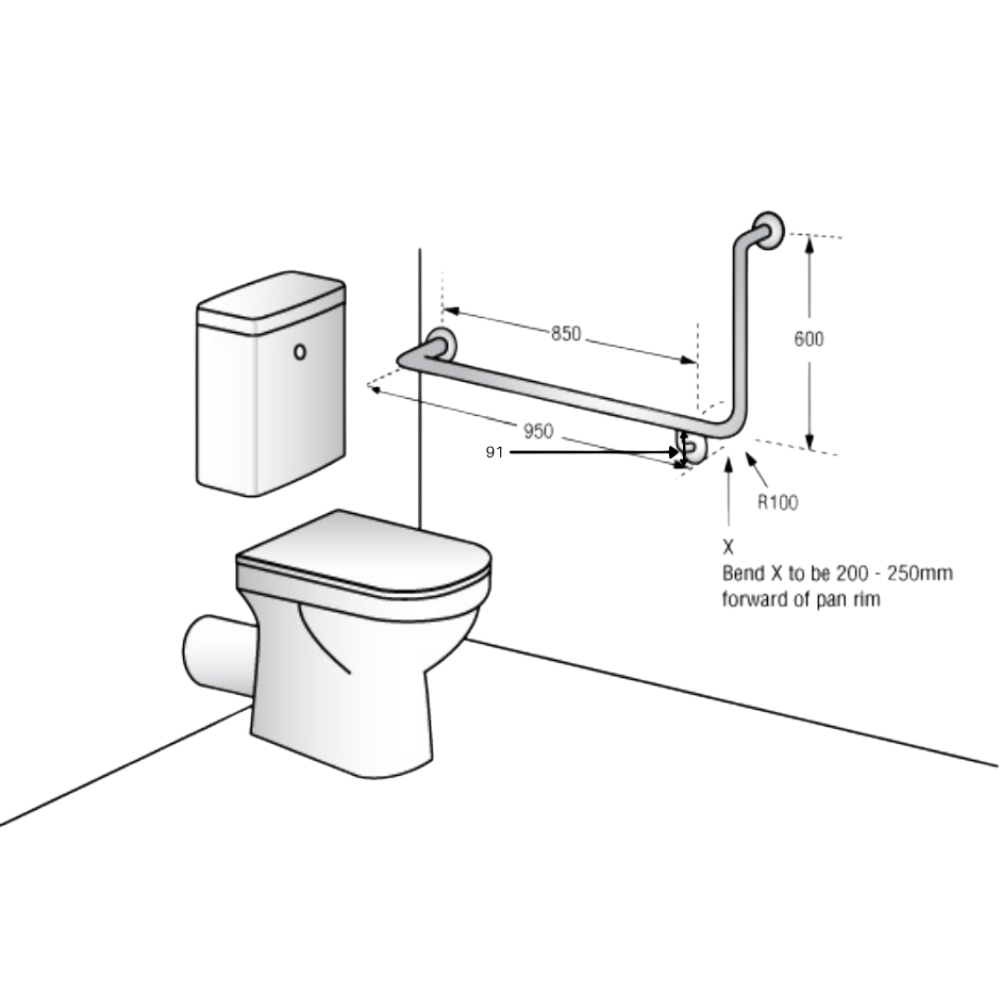
Actual, usable shape and dimensions for transfers. The L‑shape lets users brace in two directions—useful when moving on or off a toilet, or when shifting from sitting to standing. The listed dimensions around 950 mm by 600 mm give a real sense of coverage. It’s not a tiny bar; it’s a practical, full‑size support that occupies the right area next to the toilet.
Cleaner look, easier to live with. Satin stainless finish, concealed fixing covers, and sturdy stainless material mean it stays tidy, resists rust, and avoids obvious hospital vibes. Good for young professionals or modern homes where aesthetics matter but safety can’t be compromised.
Tradeoffs
Wall condition matters. This is a wall‑mounted product, so walls must be properly prepared studs, solid backing, or professional anchoring. If walls are weak or you’re renting with no option to reinforce walls, this may not be feasible without extra work.
Professional install may be needed. To get the compliance and load capacity this product is designed for, you or a tradesperson should install it correctly. That’s extra time or cost compared to stick‑on or temporary solutions.
Best fit
Bathrooms or toilets where wall strength is adequate, and where the rail will be used for daily transfers, standing support, or balance in a wet zone.
Anyone seeking a durable, standard‑aligned, long‑term solution that still looks good in a modern Australian home or apartment.
Strong alternative when wall strength is limited or uncertain
Why choose a floor‑mounted or floor‑supported rail
Works when the wall may be weak or inaccessible. If your walls are tiled over thin plaster, or you’re unsure about stud locations, a floor‑mounted or floor‑supported rail can be installed even when wall anchoring is tricky. This Con‑Serv model is described as floor or wall mounted, giving flexibility. The stainless construction and included steel fixings are practical and straightforward.
Clear price and stock visibility in Australia. Listed at $120, with stock notes showing In Stock & Ready To Ship. That helps when you want a fast, solid upgrade to a bathroom or toilet without a long wait. (Con-Serv)
High‑quality materials and long warranty from the maker. Built from 304 stainless steel, with a sturdy domed flange and supplied fixings. Con‑Serv supports long warranty coverage—20 years domestic parts warranty noted for this brandm giving confidence for long‑term use.
Tradeoffs
Takes floor space and may feel more industrial. Floor posts or supports can be visually bulkier than sleek wall bars and need some floor footprint. Depending on the layout, this might be slightly more intrusive, though often still quite acceptable.
Less subtle broad coverage than a full L‑shape wall rail. A floor stand‑alone rail is great for certain transfers standing up from a toilet or moving from the side—but may not replace the longer horizontal support you’d get from a full wall L‑shape in every scenario.
Best fit
Older homes, rentals, or apartments where wall anchoring is uncertain.
Quick upgrades when you want an immediately available rail that still feels robust and professional.
Premium style pick that still stays practical
Why this is an elegant but safety‑ready option
High‑quality build and finishes from an Australian supplier. Solid brass construction with premium PVD finishes, lead‑free manufacturing, and lifetime colour or parts support are highlighted for this product. That’s unusual at this price tier and suggests a focus on real durability, not just looks. (Blue Bathware)
Reasonable mid‑tier price with strong looks. A grab rail that is genuinely stylish helps when you want features that blend with modern bathrooms something that young professionals, landlords, or boutique renovations appreciate. It’s notably more premium than bare stainless tube rails, but not outrageous.
Good for homes where style matters without sacrificing function. The curved L‑shape looks clean, and the PVD finish keeps it looking new long‑term, helpful around moisture, cleaning products, or frequent use.
Tradeoffs
Availability varies by finish. The merchant page shows multiple finishes, but some are sold out at times. You may need to choose another finish or wait for restock. The page indicates stock control and notifications, so it’s worthwhile to check. (Blue Bathware)
Installation still requires a solid wall or professional support. Like any wall‑oriented rail, correct anchoring is essential. The rail is intended for real use, not decorative mounting.
Best fit
Renovations or new bathrooms where aesthetics and longevity both matter.
Melbourne homes where homeowners or property managers want rails that look intentional, not like afterthought safety devices.
Quick comparison
Wall‑mounted vs floor‑mounted at a glance
Attribute
Wall‑mounted grab rails
Floor‑mounted or floor‑supported grab rails
Safety when walls are strong
Very high if installed to solid backing
High, but depends on floor mounting quality
Space use
Minimal floor footprint, clean line
Needs some floor area or baseplates
Installation complexity
Usually needs professional wall reinforcement or stud mounting
Often simpler where walls are weak, but still requires securing to floor
Visual impact
Can be sleek, hidden fixing
Can be bulkier, more industrial but practical
Best use
Toilets, showers, bathtubs where walls are reliable
Older homes, rentals, uncertain wall structure
What the experts and authorities say
To keep things practical and trustworthy, it helps to check what professionals and Victoria’s health guidance suggest.
Professional occupational therapists highlight real‑world safety over temporary fixes. An Australian OT clinic notes that grab rails are a reliable support for daily activities and often preferable to suction bars, which can fail depending on surface and attachment. That underscores the value of a fixed rail, not a short‑term or portable solution.
Victoria’s health guidance stresses colour contrast and proper positioning for visibility and use. The state’s advice for dementia‑friendly bathrooms notes that grab rails should be colour‑contrasted against walls for better visibility, and mentions they help people use a toilet safely. This is a useful design cue when choosing finish or placement—to make rails easier to see, not just feel. (Health Victoria)
These points matter because safety isn’t only about strength; it’s also about whether the rail is obvious and used correctly. Colour contrast, visible placement, and a robust fix go hand in hand.
How to choose between wall and floor mounting in your space
Check the wall.
If your bathroom wall has solid timber studs, concrete, or strong backing, a wall‑mounted rail like the Metlam or Bella Vista works beautifully.
If walls are thin, tiled over lightweight plaster, or you can’t confirm backing, plan for a floor‑supported rail like Con‑Serv’s model.
Consider where the person moves every day.
Toilets: L‑shapes or rails near the wc give two directions of support.
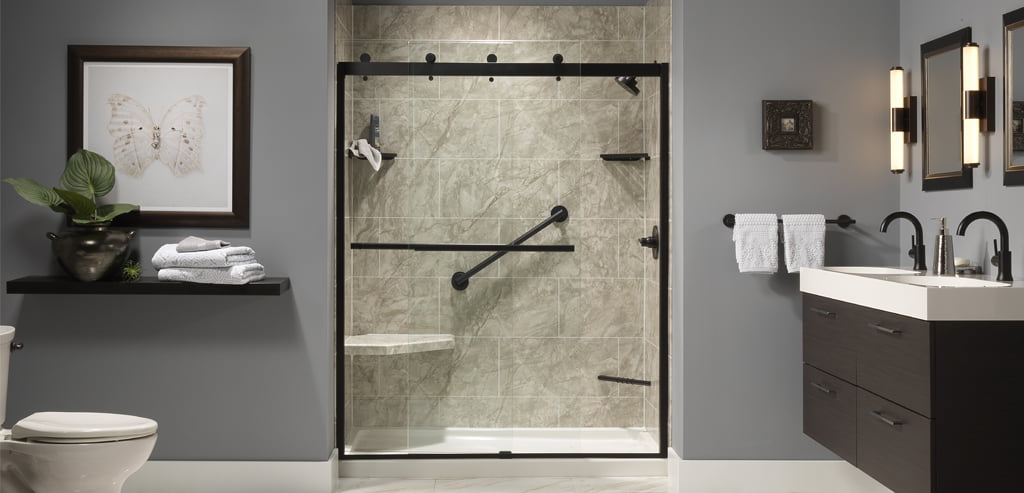
Showers: rails that are colour‑contrasted and placed near the seat or entry improve visibility and use matching Victoria’s guidance.
Decide how permanent you want the installation.
Permanent, long‑term, and professional: wall‑mounted rails with hidden fixings and stainless material.
Practical, fast, and low wall dependency: floor‑mounted rails that still offer stable grip, even if walls can’t be altered.
Match aesthetics with the home style.
Modern apartments or luxe bathrooms can show off stainless satin or polished rails.
Older homes or rentals may prioritise quick install and durability over perfect finish, but that doesn’t mean the rail can’t look tidy.
Buying and installation tips for Melbourne or wider Australia
Use a reputable supplier or installer. If you’re unsure about wall backing, call a licensed installer or look for specialist disability modification services.
Ask for colour‑contrast or finish options. Even if your walls are light, darker rails or finishes can make the grab rail easier to see for users with vision issues.
Plan around other fittings. Position rails so they don’t clash with toilet flush controls, shower fittings, or towel rails. Use guidance from authorities and professionals to avoid conflicts.
Additional picks or special cases
If your situation is very specific for example, very tight floor area or a non‑standard toilet layout talk to suppliers who can offer custom or modular configurations using the same principles: stainless material, tested compliance, and professional mounting.
Conclusion
Safer isn’t one or the other; it’s the right rail, in the right place, properly fixed.
Wall‑mounted rails are excellent when walls are strong and the layout allows clean, visible support especially with compliant products from trusted Australian makers.
Floor‑mounted rails win when walls are weak or uncertain, or when you want an immediate, stable support without heavy wall work.
Either way, pick a product from sponsors who list material, testing, or compliance, get the spacing and contrast right, and install it correctly. That combination smart choice plus secure installation delivers the real safety win.
Frequently asked questions
Which is safer, wall-mounted or floor-mounted grab rails?
Both can be equally safe when chosen and installed correctly. Wall-mounted rails are ideal where there’s solid backing (studs or reinforced board) and give a sleek look with good leverage for transfers. Floor-mounted or floor-supported rails are better when walls are weak or you can’t alter them they don’t rely on wall backing. Safety comes down to correct positioning, secure fixings and fitting the rail to the user’s movements.
How do I know if my wall can take a wall-mounted grab rail?
Check for solid studs, concrete or a reinforced backing behind the tile/plaster. If you can’t see studs, use a stud finder or get a tradesperson to inspect. Where backing is absent, installers use reinforced plates or recommend floor-supported options. If unsure, ask a licensed installer or occupational therapist it’s cheaper to check first than to fix a failed mounting later.
Can I install grab rails in a rental property?
Yes, but do it the right way. Talk to your landlord first. Options include non-destructive floor-supported rails or agreeing to professional wall reinforcements that can be restored when you leave. Avoid relying on temporary suction rails for daily support they’re not consistently reliable for everyday use.
What maintenance and checks should I do to keep a grab rail safe?
Inspect rails monthly: give them a firm tug to check for movement, look for rust or loose fixings, and wipe clean to avoid grime build-up. If a rail feels loose or shows corrosion, stop using it and arrange re-fixing or replacement. For people with higher needs, schedule a yearly professional inspection.