March 3, 2026

Your garage entry looks innocent right up until it pulls a cheap little stunt. One wet sole, one shadowy step, one bag of groceries cutting off your view, and suddenly the walk from the car to the kitchen feels like an obstacle course nobody asked for.
Melbourne weather loves a mood swing, and I plan for that every time. We get damp mornings, random drizzle, cold concrete, blown-in leaves, and those dark corners that stay slick far longer than they should. If you want your mum, dad, or older neighbour to feel steady and confident, you need to make your garage entry safer before a “small issue” turns into a very annoying hospital story.
When I talk about support, I don’t mean slapping on a rail and hoping for the best. I mean a setup that feels solid, looks sharp, and fits the way a person actually moves. If you want a practical starting point, this guide on handrail installation melbourne gives you a smart foundation you can bring straight into your garage entry plan.
I wrote this guide around one simple goal: helping you make your garage entry safer in real life, not just in theory. I’ll walk you through the checks I use first, the upgrades I rate highest, and the style-friendly choices that keep a home looking polished instead of clinical. Think less “medical fit-out” and more “quietly clever Melbourne home.”
I always start with a two-time walk-through. I do one lap in daylight and another after dark. That quick habit tells me more than any checklist on earth, because a garage entry can feel completely different at 7:00 am in clear light than it does at 6:30 pm when you’re tired, holding takeaway, and trying not to drop your keys.
Next, I study the floor like it owes me money. I look for smooth concrete, dusty grit, damp patches near the internal door, and that sneaky splash zone where umbrellas, tyres, and wet shoes leave their calling card. If the surface feels even slightly slippery under normal shoes, I move that issue to the top of the list.
Then I hunt the boring little trip hazards that cause most of the chaos. I check the threshold lip at the internal door, cracked joins in the slab, uneven pavers, a tiny step into the house, or a slope that feels harmless until someone drags a toe. Seniors rarely trip over dramatic hazards. They trip over ordinary edges that everybody else ignores.
I also check what a person reaches for when balance wobbles. If the nearest support sits too far away, if the only thing to grab moves, or if clutter narrows the walking line, I know the entry needs work. I also pay close attention to door handles, because a stiff knob and a slippery floor make a rotten combo.
I don’t rely on guesswork alone, so I keep Better Health Channel’s fall prevention advice in mind whenever I review a home. It lines up with what I see on the ground in Melbourne every week: poor lighting, clutter, and slippery or uneven surfaces create real trouble fast, especially for older people moving between the garage and the house.
Before I pick products or call a tradie, I like to map the problem clearly. This quick table shows the hazards I see most often and the first move I make to get a garage entry safer without wasting time or money.
| Garage entry risk | What I notice straight away | First fix I make | Why it matters |
| Low light | You squint at the lock, step, or handle | Add motion-sensor lighting | Good light cuts hesitation and reveals edges |
| Slippery floor | Damp slab, dust, algae, tyre moisture | Add non-slip grip on the walking lane | Traction stops slips before they start |
| Awkward threshold | Small lip, step, or uneven join | Smooth or ramp the transition | Feet, canes, and walkers move better over flat changes |
| No hand support | Nothing solid sits within easy reach | Install a handrail where the body naturally reaches | Support matters most in the first wobble |
| Cluttered route | Boxes, shoes, cords, tools in the path | Clear a dedicated walking lane | A predictable path builds confidence |
| Hard-to-use door | Round knob, heavy door, stiff latch | Fit a lever handle or easier hardware | Older hands need easy grip and quick control |
When I want to make a garage entry safer, I don’t chase fancy gadgets first. I fix the basics in the order that gives the biggest payoff: light, grip, level changes, support, and clear movement. Nail those five, and the whole space starts feeling calmer, smarter, and far more forgiving.
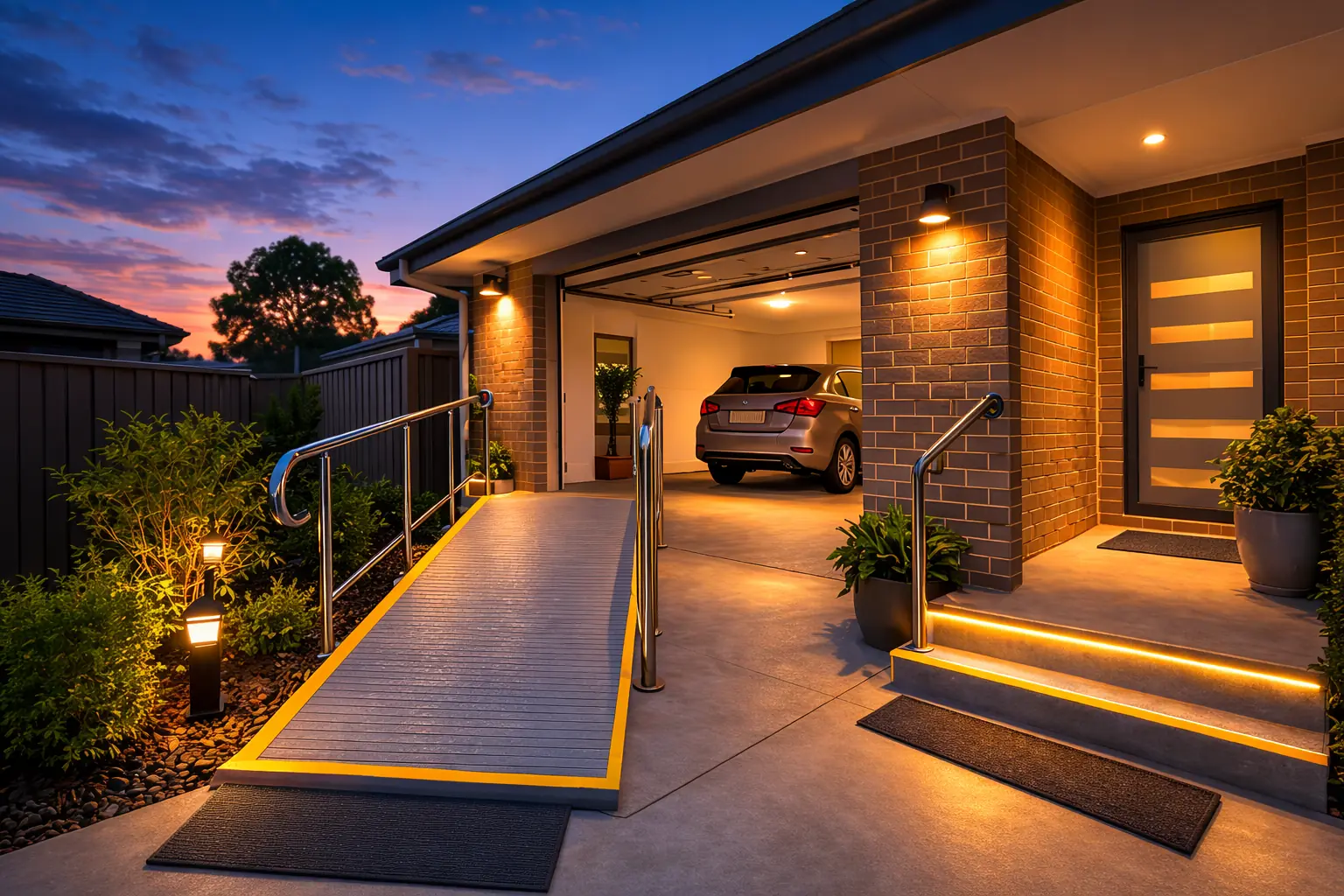
I want you to see the path instantly, not guess your way through it. Good garage lighting should show the walking line from the car door to the internal door without blasting your eyes like a prison yard floodlight. I like motion-sensor lights overhead, then I add softer lighting near the doorway or along the wall so the route feels obvious at night.
For older eyes, contrast matters almost as much as brightness. If shadows sit on the threshold or under a step, depth gets hard to judge. That’s when people slow down, shuffle, misstep, or reach for something unstable. A brighter, cleaner arrival zone makes your garage entry safer because it removes hesitation before it turns into a wobble.
A lot of people overdo the whole floor and miss the point. I focus on the walking lane first. That means the area where someone steps out of the car, turns toward the house, and reaches the internal door. If I can make that strip grippy and predictable, I’ve already done the heavy lifting.
Non-slip tape works well for quick fixes. A slip-resistant coating works well if you want a cleaner, longer-lasting finish. Rubber-backed mats help too, but I only use them if they sit dead flat and stay put. A curled corner ruins the whole game. If you want a garage entry safer in winter, start with traction where the water lands.
This one catches people out because the hazard looks small. A slight lip under the internal door, a raised weather strip, or a little change in floor level can trip an older person faster than a whole staircase. Feet don’t lift as high when someone feels tired, stiff, or distracted. Add shopping bags, and the threshold wins.
I usually solve this with a low-profile threshold ramp, a better transition strip, or a tidy repair that softens the change underfoot. If somebody uses a cane, walker, or mobility aid, this upgrade can feel brilliant straight away. You reduce the effort, the catch points, and the tiny moments that make every entry feel awkward.
A handrail only works if a person can grab it at the right moment. That sounds obvious, but I’ve seen plenty of rails installed in the wrong spot, at the wrong height, or too far from the step to help. I place a rail exactly where the hand moves during the transition, not where the wall just happens to look empty.
I also care about how the rail looks. Young professionals in Melbourne don’t want their parents’ home to feel patched together with random hardware. So I match finishes to the door furniture, choose a clean profile, and make the rail feel intentional. That way you make your garage entry safer without making the space look like an afterthought.
Older eyes often struggle with depth changes, especially in dim light. That’s why I like subtle contrast on step edges, threshold lines, and wall-adjacent rails. You do not need loud yellow hazard tape screaming for attention. You just need enough contrast for the eye to read the edge in one quick glance.
Charcoal on pale concrete, matte black against a light wall, or a clean strip that highlights the threshold can do the job beautifully. I love this move because it works hard without looking fussy. It’s one of the simplest ways to make a safer garage entry feel modern rather than medical.
Garage clutter breeds chaos. Shoes drift. Cords snake across the floor. Boxes land “just for now” and stay there until Christmas. I draw an invisible runway from the car to the internal door, then I protect that zone like a bouncer at a private event. Nothing lives there. Not tools. Not sports gear. Not random tubs.
Then I look at the door itself. Lever handles beat round knobs every day of the week, especially for older hands with arthritis or reduced grip. A lighter, smoother handle keeps movement flowing and stops that awkward stop-start moment right before the threshold. Little details like this make your garage entry safer because they reduce strain, fumbling, and rushed footing.
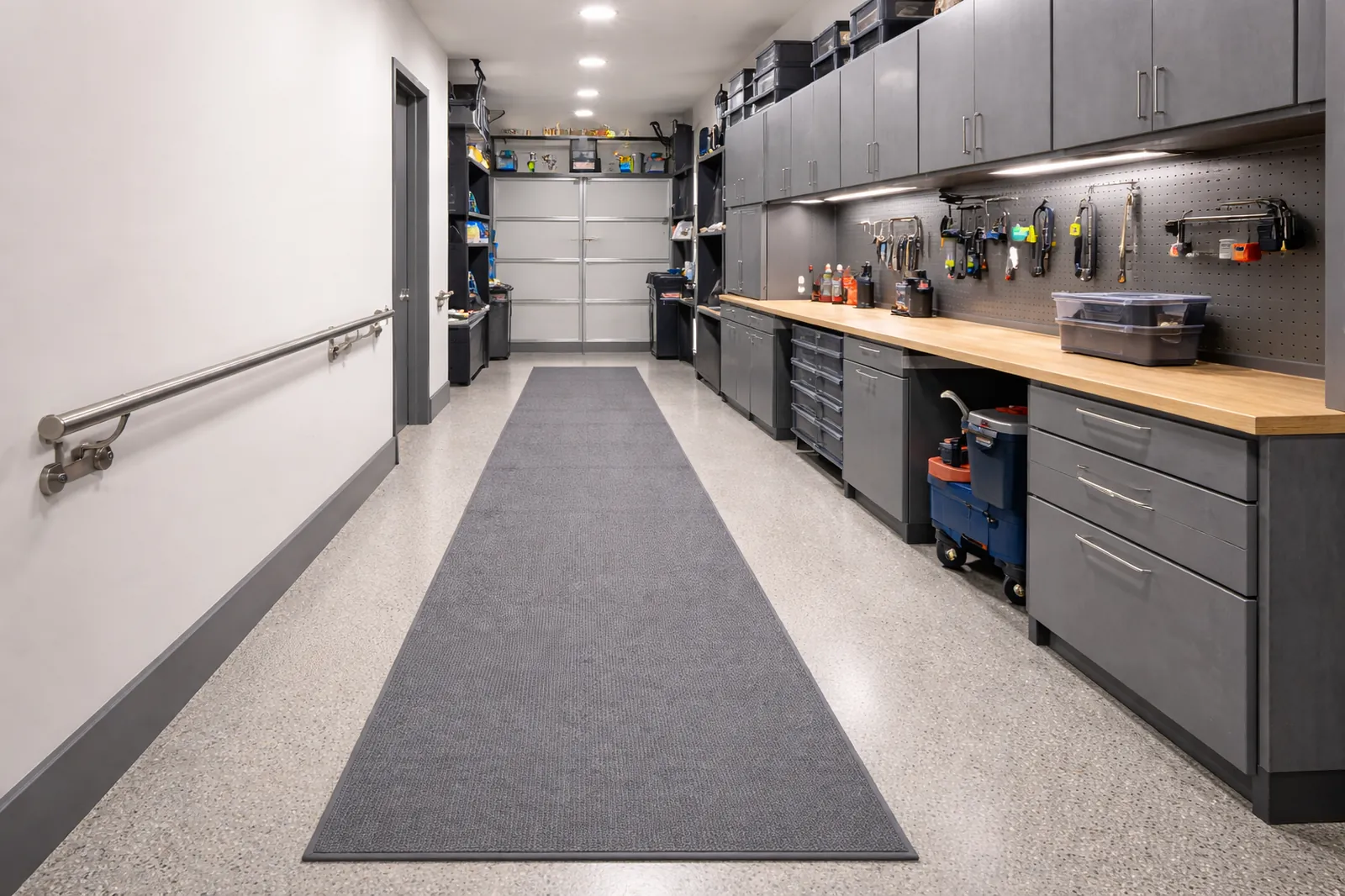
When a client asks me where to start, I don’t hand over a giant shopping list and disappear. I rank the upgrades by impact, speed, and value so you can act this week and build from there.
| Upgrade | Best for | Cost vibe | Speed | Safety impact |
| Clear the walking lane | Garages full of everyday clutter | $ | Same day | High |
| Motion-sensor lighting | Dark garages and shadowy doorways | $–$$ | Fast | High |
| Non-slip treatment on walking path | Damp or smooth concrete | $–$$ | Fast | High |
| Threshold ramp or transition fix | Raised lips and tiny steps | $–$$ | Fast to medium | High |
| Handrail beside step or slope | Poor balance or recent stumbles | $$–$$$ | Medium | Very high |
| Lever handle or easier latch | Stiff hands or awkward grip | $–$$ | Fast | Medium |
| Wall storage and shelf reset | Clutter creep near walkway | $–$$ | Medium | High |
If I wanted the quickest win in a typical Melbourne garage, I’d do three things first: improve the light, add grip to the walking lane, and clear the route completely. Those moves don’t ask for a full renovation, but they do change the feel of the space almost overnight.
I’m all for a smart weekend job, but I don’t play hero when safety depends on structural strength or wiring. I’ll happily tackle the tidy-up, storage reset, and basic non-slip improvements myself. I’ll also swap easy hardware if the job stays simple and straightforward.
I call a pro for:
If an older person has started shuffling, grabbing walls, or avoiding the garage route altogether, I’d go one step better and bring in an occupational therapist as well. That move gives you a plan shaped around the person, not just the floor plan. It also helps you make your garage entry safer in a way that supports confidence, routine, and independence.
This matters more than people admit. Nobody wants a home upgrade that shouts “problem solved” in the ugliest way possible. I always aim for safety features that blend into the design language of the house.
Here’s how I keep it stylish:
That last point changes everything. The minute you treat the entry like a proper arrival space, the decisions get better. The lighting looks better. The route feels calmer. The whole area starts working for you instead of against you.
If you want to make your garage entry safer, you do not need to rip the whole place apart. I’d focus on the moves that give the biggest return first: brighter light, stronger grip, smoother thresholds, a handrail in the right spot, and a clear path that stays clear every day.
The smartest part? These upgrades don’t just cut risk. They also make the home feel easier, sharper, and more dignified for the person using it. That matters. Safety should support independence, not embarrass it.
Walk your garage route tonight with a bag in one hand and your keys in the other. Notice where you slow down, squint, sidestep, or reach for support. Then fix the first problem you spot this week. If you want the strongest long-term result, book a qualified installer and turn that entry into a safer, smoother part of daily life.
I start with a night-time walk-through. That quick check shows poor lighting, slippery patches, awkward thresholds, and clutter in the exact conditions that usually cause trouble.
I improve grip on the walking lane first. Non-slip tape, slip-resistant coatings, and flat, stable mats all help. I also fix drainage issues and stop water from pooling near the internal door.
Yes, when you install them in the right place. A handrail helps most when it sits exactly where someone reaches during a step, slope, or threshold transition.
I like motion-sensor overhead lighting plus softer doorway or wall lighting. That combo lights the route clearly without creating harsh glare.
Not always, but a threshold ramp helps a lot when a lip catches shoes, canes, walkers, or tired feet. Even a small level change can cause regular stumbles.
Absolutely. You can make your garage entry safer with a clear walkway, better lights, stronger grip, and easier door hardware long before you consider a bigger renovation.
I remove loose cords, shoes, boxes, sports gear, and any small item that narrows the path from the car to the door. A clear route gives older people a more predictable, confident walk.
I want enough room for a person to walk naturally without turning sideways or brushing against stored items. If somebody uses a walker, I keep the route extra clear and consistent all the way through.
I call a pro for electrical work, secure handrail installation, structural changes, and anything tied to recent falls or mobility issues. Safety upgrades need to hold up under real daily use, not just look good on day one.