February 26, 2026

You walk into your living room and trip on a coffee table – it’s a sign. If we plan our spaces right, every corner of the home should feel effortless, whether you’re fitting a stroller through a doorway or helping a grandparent reach the light switch. Accessibility isn’t just a buzzword; it’s a style upgrade that works for everyone.
Think of accessibility as universal design – making rooms flexible for all abilities. In this article, I’ll guide you through each room, showing practical ways to weave accessibility into your décor. I’ll also share why these changes aren’t just for people with permanent disabilities – they make everyday life smoother for any guest, parent, or partner with sore knees.
In my experience, starting small often makes the biggest difference. For example, adding a handrail for disabled family members or older adults can transform a bathroom or hallway. Handrails (also called grab bars) give security; I love to place one by the toilet or along short stair steps.
The right rail, mounted at 68–82cm height above the floor, means people can sit or stand with confidence. It’s a simple fix that blends easily into the room’s style.
Accessibility to me means setting up every room so anyone can use it without hurdles. I’ll walk you through entryways, halls, kitchens, living spaces, bedrooms, and bathrooms. At the end, I’ve added a quick FAQ to cover common questions. Let’s start at the front door.
Your home’s front door is literally the gateway. I look at steps, slopes, and door handles first. A step-free entrance is ideal: a gentle ramp or level threshold. If you have a step, I either replace it with a ramp (blueprint courtesy: 1:14 slope max) or add bright contrast strips on the edge so you see it clearly.
Wide doorways matter a lot. I aim for at least 90cm width on main doors to fit a pram or wheelchair. Lever handles are a must (think of them as the love handles of doors) – no twisting knobs. They look sleek and any hand can grip them easily.
Inside, I like open, wide hallways. A minimum 1.2m clear path gives space to pass each other or wheel a chair. Clutter is the enemy. I advise keeping furniture pushed back and floor rugs minimal – one wrong twist and rug corners become tripping traps.
For living rooms and dining areas, I focus on layout. I place sofas and tables so there’s plenty of room to turn a wheelchair or baby stroller. I ensure at least 80cm between furniture pieces, so every adult or kid can navigate without squeezing past.
Seating height matters. Chairs around 45-48cm high make it easier to sit down and stand up. I also line up one chair with arms – it doubles as a grab rail for those who need it.
Contrast and lighting are style and safety allies. I pick furniture colors that pop against the floor and walls to avoid visual confusion – for example, a dark couch on a light rug. Dimmers and layered lighting (lamps plus overheads) give control: one switch to brighten corners for cleaning or reading, one to soften for movie nights.
Smart home tech shines here too. Voice-activated lights or blinds are fantastic for when anyone’s hands are full or mobility is limited. I often install motion-sensor lights near stairs or in dim corners – they’re a bit of home magic that keeps a room usable in one simple gesture.
Kitchens need to be user-friendly, not just Pinterest-pretty. I focus on key zones. First, a lower countertop or sliding work surface (around 75cm high) lets seated cooks reach sinks or stoves. If you have a fixed bench, I make sure knees and feet can fit under at least part of it (around 65cm deep clear space) for wheelchair access.
Cabinets get creative fixes. Pull-out shelves, lazy Susans, and vertical storage (pots hanging on racks) bring items to eye level. Handles are lever or cup-pull styles; they solve the problem of tricky knob grips.
Safety in kitchen: I like cooktops with easy push-button ignition (instead of flint). Anti-scald faucets on the sink protect everyone from surprise hot water. And good grab bars are great here too – one near the stove and sink can help steady anyone kneading dough or chopping veggies.
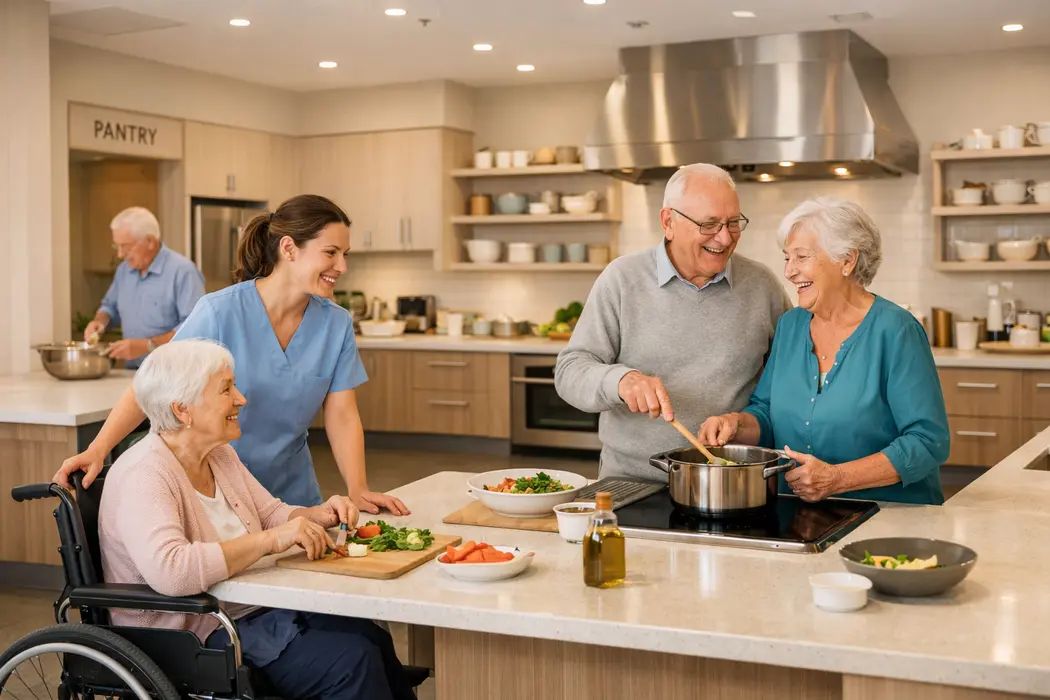
Insert image of: a kitchen with lowered counter section and accessible storage, highlighting smart design.
Bathrooms demand the most creative thinking. I see them as safety hubs. Here’s my quick checklist:
A small table or shelf within reach can hold toiletries or phones. The goal is a balance: everything within hand’s reach, but nothing to trip over.
In the bedroom, I look at bed height and flow. A bed around 55cm high works for most (me low enough for feet to reach floor, me high enough to avoid needing a boost). Clear 0.9m side spaces allow a wheelchair or walker to slide by.
I mount wardrobes and shelves not too high. Easy-pull closet rods and drawers help anyone. Also, good task lighting by the bed – a table lamp or wall sconce – means flipping through a book without fumbling for switches.
Nightlights are a small trend I love for bedrooms and halls. Motion-sensor LEDs by the floor guide midnight trips, saving bruises in the dark. It’s a tiny touch that reminds you of being cared for.
Outdoor spaces count as “rooms” too. I check paths and patios. I smooth gravel paths and keep them at least 1.2m wide. Wooden decks get anti-slip coatings. Steps get bright edge strips or, better, a ramp.
Railings on porches and along any long steps add security – even a small veranda step benefits from a rail. I choose powder-coated metal or treated timber that withstands coastal sun (especially here near the bay, where humidity and salt can corrode).
For gardening, I recommend raised planter beds or table planters so folks don’t have to bend too much. Colorful pots also act as visual cues that break up space, helping differentiate areas.
Modern homes have tech that doubles as accessibility. I advise:
– Voice control: Many people add smart speakers (like Google Home/Alexa) to turn on lights or ask for recipes. It’s not just gadgetry; it’s independence, especially if someone is cooking with full hands.
– Automated blinds and windows: Electric blinds and windows that open by remote or app means you get fresh air or sunlight with zero effort.
– Sensors and alarms: Fire and carbon monoxide alarms with lights and voice alerts ensure safety for those with hearing impairments.
The beauty of this is, it’s trend-aware: automation is just “cool tech” for some, but for others it’s life-changing. I frame it as “energy-saving home upgrades” when needed – everyone loves that.
Before I finish, here’s a quick table of features I keep coming back to for an accessible home in our Aussie setting:
| Feature | Where/When | Benefit |
|---|---|---|
| Lever-style handles (doors, faucets) | All rooms, entry, bathroom, kitchen | Easy grip; no twisting needed |
| Step-free thresholds & ramps | Front/back doors, showers, patios | Smooth transitions; safe for wheelchairs & runners |
| Grab bars/handrails | Bathrooms (toilet/shower), near stairs, along corridors | Added support for balance; confidence in sitting/standing |
| Wider doorways (≥90cm) | Throughout home | Accommodates wheelchairs, bikes, strollers |
| Non-slip surfaces | Bathrooms, kitchens, outdoors | Reduces slip/fall risk, especially when wet |
| High-contrast colors | Edges of steps, door frames, edges of furniture | Helps visually impaired identify hazards |
| Adjustable lighting (dimmers) | Living spaces, bedrooms, hallways | Flexible brightness for all ages/needs |
| Clear floor space (≥1.2m path) | Main circulation routes | Allows easy movement and turning |
| Outlets at accessible height (30-120cm) | Kitchen, bedroom, living areas | Easy to plug in devices without bending |
Accessibility is about design that works for everyone in our lives. Bringing it into each room can feel like a design adventure. You end up with a home that’s not just safer and more convenient, but also genuinely inclusive.
You don’t need to do everything at once. Start with high-use areas or quick wins (lever taps, a grab rail, more light), and go from there. Every bit helps someone feel at home in every room they enter.
Take a tour of your rooms today with an accessibility lens. Measure that doorway, test that handle, plan for a grab rail. Then share or save this post for your next home upgrade, and help turn every Melbourne home into an inclusive haven!
It means making spaces easy to use for people with mobility, vision, or strength limits. I focus on things like clear paths, no-step entries, and smart fixtures so anyone can move around easily.
Not at all. Modern fixtures (think stylish grab bars and matte floors) blend into any decor. Designing accessibility is about subtly integrating supportive features – like choosing matte black grab bars that match your taps, or a sleek ramp that looks like a design element.
Costs vary. Some changes (grab rails, better lighting, decluttering) are low-cost. Others (widening doorways, adding a ramp) can be pricier. I recommend budgeting and consulting a builder or occupational therapist. In Melbourne, some home loan or NDIS funding might help if it’s needed.
Basic mods (like adding rails inside) rarely need approval. Major changes (ramps, restructuring bathrooms) might need permits or builder certification. I always check with a local certifier or council. In fact, the National Disability Insurance Scheme (NDIS) provides guidance on home modifications to ensure they meet building codes.
Usually they increase value, by making the home versatile for more buyers (families, older adults, etc.). Universal design is a trend in housing. Even without a disability, anyone appreciates a home that’s easy to navigate and age-proofed.
Go room by room. Most people start with the bathroom or main entrance first. Small changes accumulate: today’s easy grab bar can be tomorrow’s entry ramp. I always tell friends to plan, but take it in steps – after each upgrade, test it and live with it for a while.