
In the heart of every home, the kitchen is where life happens from brewing morning coffee to whipping up family dinners. But if reaching the pantry feels like scaling a mountain, something’s off.
I remember visiting my grandma’s place after she started using a wheelchair; the kitchen, once her sanctuary, had become a maze of obstacles. Even a simple task like washing dishes turned into a daily battle. That’s where accessible kitchens come in. They transform cooking spaces into safe, welcoming spots for everyone.
Accessible kitchens do more than remove physical barriers they uplift everyday living. They let Granny bake her famous cookies on her own, and you realize these kitchens can still look stylish and modern.
In Melbourne, where many of us are aging in place or supporting older relatives, blending function with flair is key. Accessible features help a kitchen serve more people without losing any style.
Everyone deserves a kitchen that works for them. Fortunately, you don’t need to gut the whole space. Experts in Accessible Kitchens Service in Melbourne can guide you through the options.
From tweaking bench heights to rethinking layouts, they help families regain freedom at home. I’ve even seen how swapping a traditional oven door for a side-opening one can be a real game-changer.
In this article, I’ll highlight why accessible kitchens are true game-changers. We’ll explore key design features, Aussie accessibility standards, and even the latest smart home tech and funding options that make daily kitchen tasks easier and safer for everyone.
Why Accessible Kitchens Matter
Accessible kitchens are simply kitchens designed for everyone young or old, wheelchair users or those just dealing with an injury. Think of a friend recovering from a knee operation who finds normal counters painfully high.
In a well-designed accessible kitchen, benches might be a bit lower, with open space under sinks so they can cook while seated. It’s about turning what could be an obstacle course back into a practical space for daily life.
For example, providing at least a 1.5 m turning circle means a wheelchair or walker can navigate without feeling like they’re playing bumper cars. Dropping a benchtop to around 85–90 cm means the sink or stove isn’t a pain to reach. Small changes like this have a big impact on safety and independence in the kitchen.
Safety is also key. Slip-resistant flooring and bright, shadow-free lighting (around 800–1000 lux) make spills and stumbles less likely. High-contrast countertops or cabinetry help those with vision issues.
Even grab-friendly lever taps or voice-activated lights add ease without sacrificing style. A well-designed accessible kitchen looks just as stylish as any other, and can actually be more enjoyable to use.
Key Features of an Accessible Kitchen
- Benchtops at reachable heights (around 85–90 cm), or even adjustable heights, so seated users can cook without standing on tiptoes.
- Wide, wheelchair-friendly layout: Clear floor space (about 1.5 m turning radius) and aisles let mobility aids navigate without scraping counters.
- Accessible appliances: Wall ovens at mid-level, induction cooktops (cool to touch), and side-opening oven doors keep controls within easy reach. Even microwaves and dishwashers can go in drawer units at waist height.
- Pull-out shelves and storage: Instead of deep cabinets, pull-out drawers and shelves keep pots, pans and ingredients within arm’s reach. Soft-close doors and easy-grip handles make daily tasks smoother.
- Slip-resistant, flush flooring: A continuous, level surface prevents trips and allows wheels to roll smoothly. No abrupt thresholds means less stumbling.
- Good lighting and contrast: Bright task lights (800–1000 lux) and contrasting edges on benches, sinks or appliances help those with low vision see clearly and work safely.
A wheelchair user in a modern accessible kitchen, with counters at the right height and open legroom for comfort. Kitchen layouts like this remove obstacles by design: benches set to allow knee space, reachable cooktops, and no cluttered corners. These changes make the kitchen a truly inclusive space where anyone can move and work safely.
Australian building rules are catching up too. For example, the new National Construction Code 2022 mandates minimum accessibility standards for new homes. Meanwhile the federal Premises Standards (under the Disability Discrimination Act) ensure that renovated buildings have accessible features.
In practice, this means many Melbourne kitchen makeovers now must meet these official access guidelines from the start.
Tech and Trends: Beyond the Basics
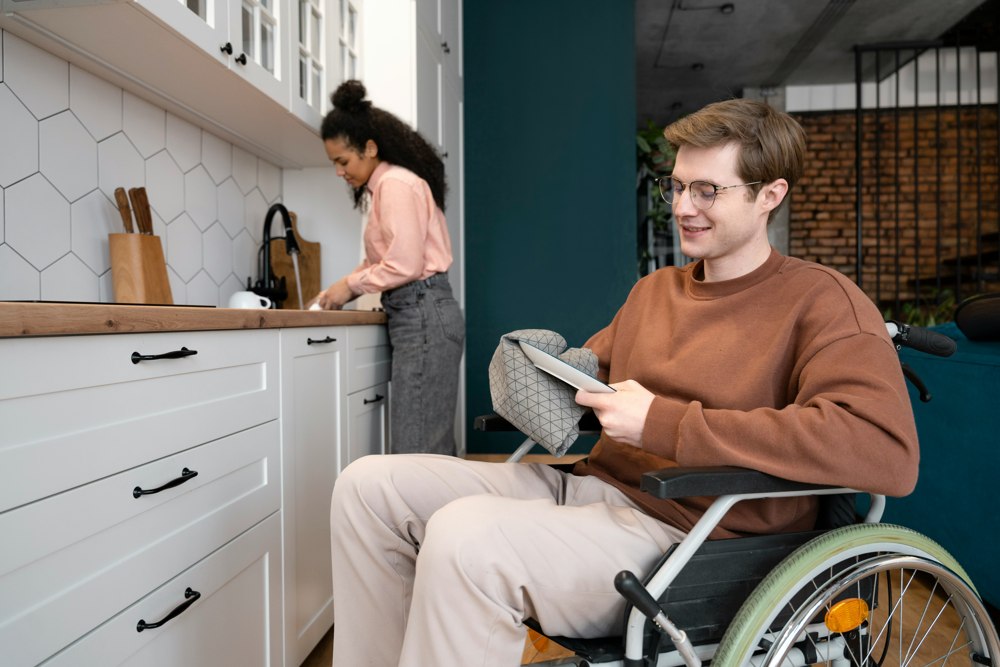
A modern accessible kitchen allows people of different heights and abilities to cook side-by-side in comfort. Now, who says accessible has to be boring? The latest kitchens out there are like James Bond gadgets for the home.
Smart fridges that track groceries, ovens you can preheat with a voice command, or benches that adjust height at the push of a button it’s all possible. For instance, I visited a remodeled kitchen where motion-sensor lights and voice-activated taps made cooking feel effortless. Studies even note a “smart kitchen” can adapt to a person’s needs and boost safety.
In Melbourne, these trends are catching on. Local designers now showcase cabinet lifts, height-adjustable benches, and hidden sensors as standard features. The best part is tech is seamlessly stylish: smart fridges remind you when you’re out of milk, under-cabinet lights turn on as you enter, and ovens that obey your voice. Your kitchen can practically think for you now. (Okay, maybe it won’t fetch a beer, but give it time.)
Making It Happen
So, you’re sold on the idea what next? First, talk to an occupational therapist or a home-modification specialist. They’ll assess your needs, like who uses the kitchen and what tasks are hardest.
This determines if you need simple fixes (lever handles, better lighting) or a big remodel (new counters, repositioned appliances). Costs vary widely: minor updates might be a few hundred dollars, while a full overhaul could be $10K–$20K or more.
The good news? You may get financial support. Programs like the NDIS often cover kitchen modifications that improve independence. For example, an NDIS plan might fund a height-adjustable bench or safer appliances.
Even if you pay yourself, spread out the upgrades. Do the low-cost changes first (non-slip mats, lever taps) and plan for bigger changes later. Each tweak makes your kitchen safer, more stylish and super user-friendly.
Conclusion
Accessible kitchens are about more than just cooking; they bring independence, dignity and joy back to the heart of home life. From making a cup of tea without help to letting kids or parents join in meal prep, these designs are life-changers. In Melbourne today, more of us are embracing kitchens that adapt to our needs, and the results are inspiring.
Ready to bring these benefits into your own home? Take the first step: chat with a home-access specialist or occupational therapist and explore your options. Even small improvements can make a big difference. Isn’t it time your kitchen worked for you? Let smart design spice up your everyday living, reach out and start your accessible kitchen journey today.
FAQs
What is an accessible kitchen?
An accessible kitchen is designed so anyone – regardless of age or mobility – can use it safely and easily. It includes features like lower counters, wider aisles, and reachable appliances. This helps people move around and cook independently.
Who benefits from an accessible kitchen?
Almost everyone benefits. It’s especially helpful for wheelchair users, seniors, and people recovering from injuries. Even able-bodied users enjoy the added safety and convenience.
What features make a kitchen accessible?
Common features include lower benchtops (85–90 cm), wide turning space (about 1.5 m), slip-resistant floors, and easy-grip handles. Pull-out shelves and well-placed appliances also improve usability. Smart controls can make tasks easier.
Can I get funding for kitchen modifications?
Yes, in Australia programs like the NDIS may cover modifications that improve safety and independence. An occupational therapist can assess eligibility. Some aged-care or renovation grants may also help.
How much does an accessible kitchen renovation cost?
Costs vary widely. Small upgrades may cost a few hundred to a few thousand dollars. Full renovations can range from $10K–$20K or more depending on design and changes.
How do I find accessible kitchen services in Melbourne?
Search for renovation specialists experienced in universal design. Community health groups and disability services often provide recommendations. You can also ask your GP or NDIS coordinator for trusted providers.