
Steps rebuilt to a deptha foot can trust.
Custom access steps for small level changes — deeper treads, consistent rises, and a rail beside them. Measured on site and built to suit the space you have.
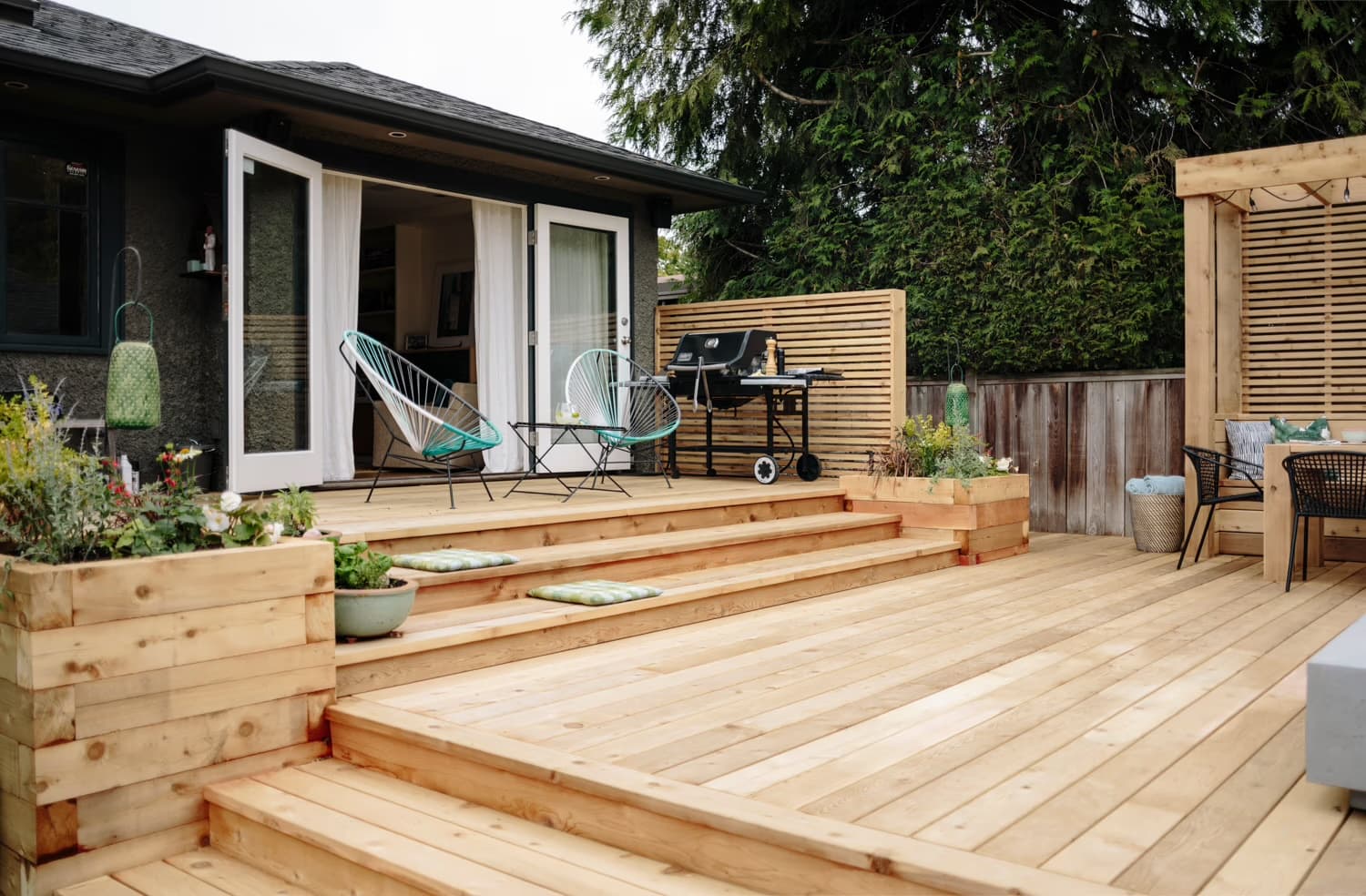
The step is the wrongshape, not too high.
Most steps that people fall on are not unusually tall. They are too shallow to get a whole foot onto, or the rise changes partway up because the ground settled, or the last one down is deeper than the rest and nobody expects it.
A foot needs somewhere to land. We build treads at around 300 to 350mm deep, which is enough for a whole adult foot rather than the front half of one, and we keep the rise and the tread the same the whole way up — because the danger in an uneven flight is the one step that is different from the others.
Width matters as much. We aim for around a metre clear, which is what lets someone come down with a hand on a rail and a carer alongside, rather than turning sideways to fit.
Step typeswe build.
Two shapes, decided by what has to get up them. If a four-wheel walker is involved, you want the other one.
Minor steps — designed for use on foot
Treads of roughly 300 to 350mm and around a metre of clear width, with the rise and the going kept consistent the whole way. Custom built to the space and the support needed, which is what lets a flight fit where a standard set would not.
Platform steps — designed for a four-wheel walker
Much deeper — roughly 900 to 1200mm — so the whole walker is on the platform before the person moves their feet. A different page, because it is a different job.
Vital Ease at a glance
- Projects completed
- 300+
Projects completed
- Agreements with Home Care Package and NDIS providers
- 100+
Agreements with Home Care Package and NDIS providers
- Valued customers
- 200+
Valued customers



Surfaceoptions.
Three materials. The right one is usually decided by whether the steps are in the weather.
Composite mesh
The most cost-effective, and the least maintenance of the three. A fibreglass and resin material that does not rust, rot, or need recoating, and holds up in weather that would grey off timber. Finished with a contrasting nosing so the edge of each tread is visible in low light.
Merbau
A hardwood that suits most settings and can be finished to sit with a deck or a verandah that is already there. Treated for weather, moisture, and termites, and paired with galvanised rails outdoors. The option most people choose when the steps are in view from the house.
Rubber
Slip resistant, weatherproof, and removable — which makes it the answer for a rental or a short stay. Set in position rather than fixed down, so nothing is drilled and nothing is damaged.
Before you book,two things to know.
It is fixed work, and it means drilling
Steps are bolted into the structure so they are weight-bearing and cannot move underfoot. There is no adhesive version of a step that will take a person’s full weight.
A removable option exists
Rubber steps are set in position rather than fixed down, so nothing is drilled. If permission is the obstacle, this is usually the way around it.
If you rent, ask first
For fixed steps you will need the owner’s or the agent’s permission before we can start. Ring us and we will tell you what they usually want to see — most say yes once they know what is involved.
We will recommend a rail with them
A set of steps without something to hold is half a job. We quote the rail alongside the steps so there is no second visit and no second approval.
Additional safetyfeatures.
The things we add to steps to make them safer, quoted at the same time so nothing needs a second approval.
Banister rails
A rail on one side or both. Two rails let someone come down facing forwards rather than turning sideways to keep a hand on the only rail there is.
Stair nosings, including on steps you already have
A strip along the front edge of each tread, in a colour that stands out from the step. It is what makes the edge visible to someone whose depth perception has changed, and it can go onto an existing flight without rebuilding it — the cheapest thing on this list by a distance.
Non-slip paint and treatments
Applied to the surface that is already there for grip in the wet. Often the right first move on a set of steps that are the correct shape and simply slippery.
Door threshold inserts
The lip at the top of the flight is often the part that actually trips people. An infill or a threshold plate takes it out so the transition into the house is level.
Door magnets
A magnetic catch that holds a swing door open frees up both hands at the top of the steps, instead of leaving someone holding a door and a rail at the same time.
Sensor lighting on the approach
Most falls on steps happen in the dark or the half-dark. A light that comes on by itself, rather than one that needs a switch found first.
Brochuresand guides.
The documents an occupational therapist, a plan manager, or a builder usually asks us for. We are preparing these now — ring or email in the meantime and we will send what you need.
Product brochures
- Minor steps and platform stepsComing soon
- Composite mesh walkwayComing soon
Quote request requirements
- Steps — what we need to quoteComing soon
How the jobactually runs.
Quoting and measurement
A licensed member of the team measures the rise, the space available for the tread, and how the person actually moves through the flight. There is no charge for the visit. Where an occupational therapist has written a specification, we quote to it.
A fixed price in writing
Set out so a plan manager, case manager, or occupational therapist can approve it without coming back to us for more detail. Funding is approved before we start.
Manufacture
Made up to your measurements rather than trimmed from stock on the day. Samples and finishes are shown at the measure so you know what you are getting.
Installation
A second visit to fit them, by the same team that measured. Most sets of steps are done in a day, and we take the offcuts and packaging with us.
Warranty
The work is carried out by licensed tradespeople and backed by the relevant warranties. If something is not right, ring the same number you rang the first time.
Steps we havebuilt.
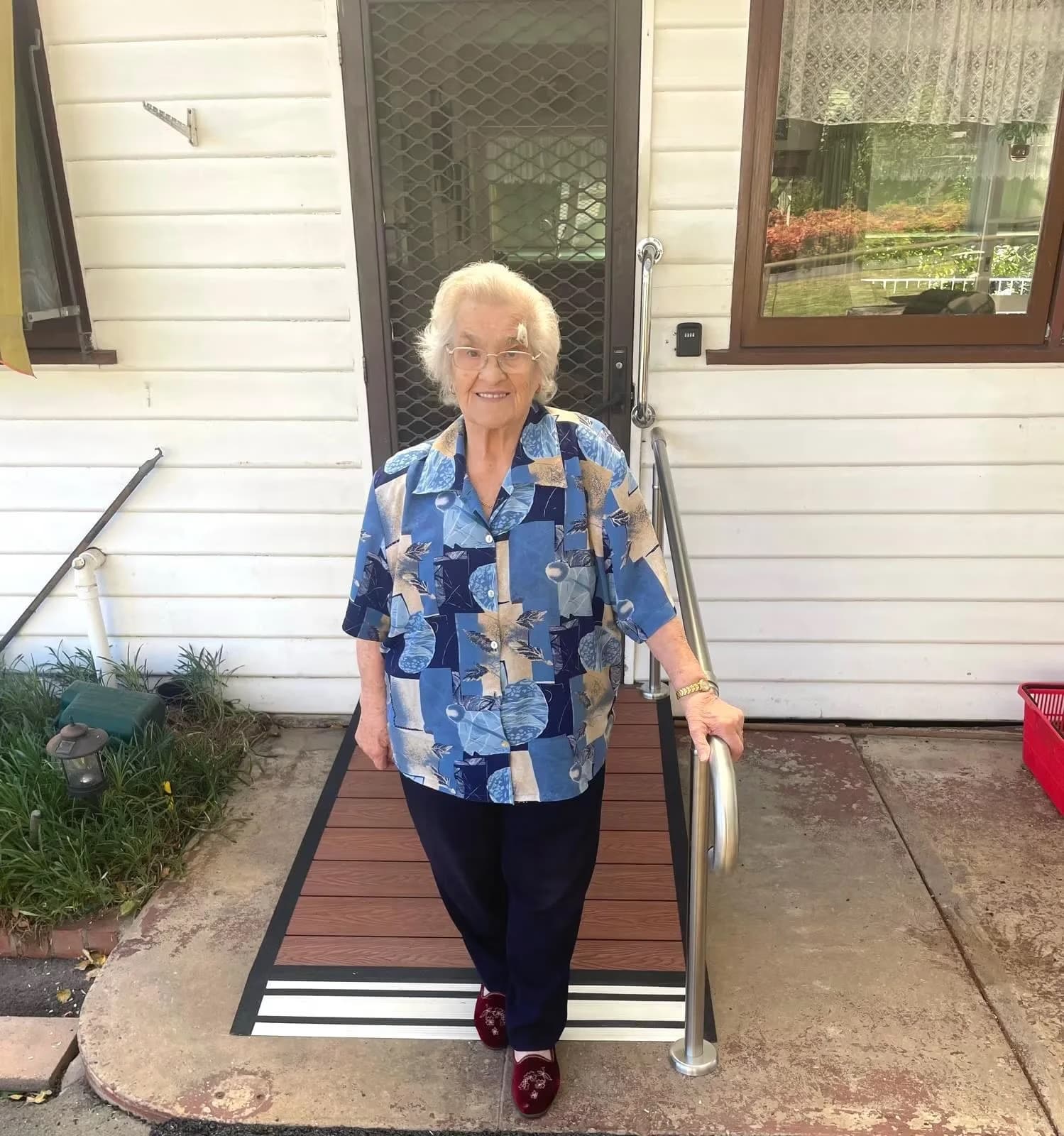
All photographs are of our own completed work in Melbourne homes.
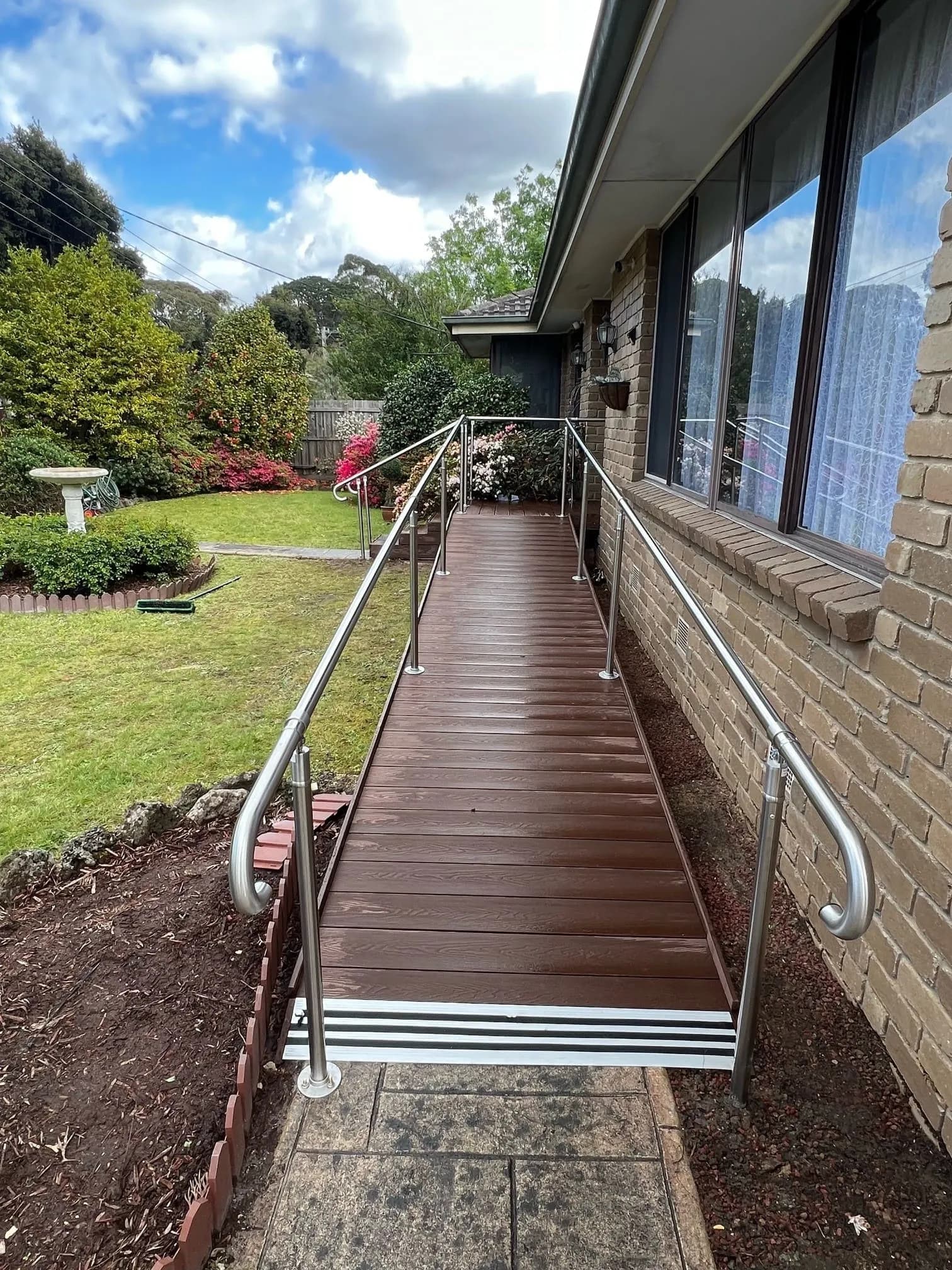
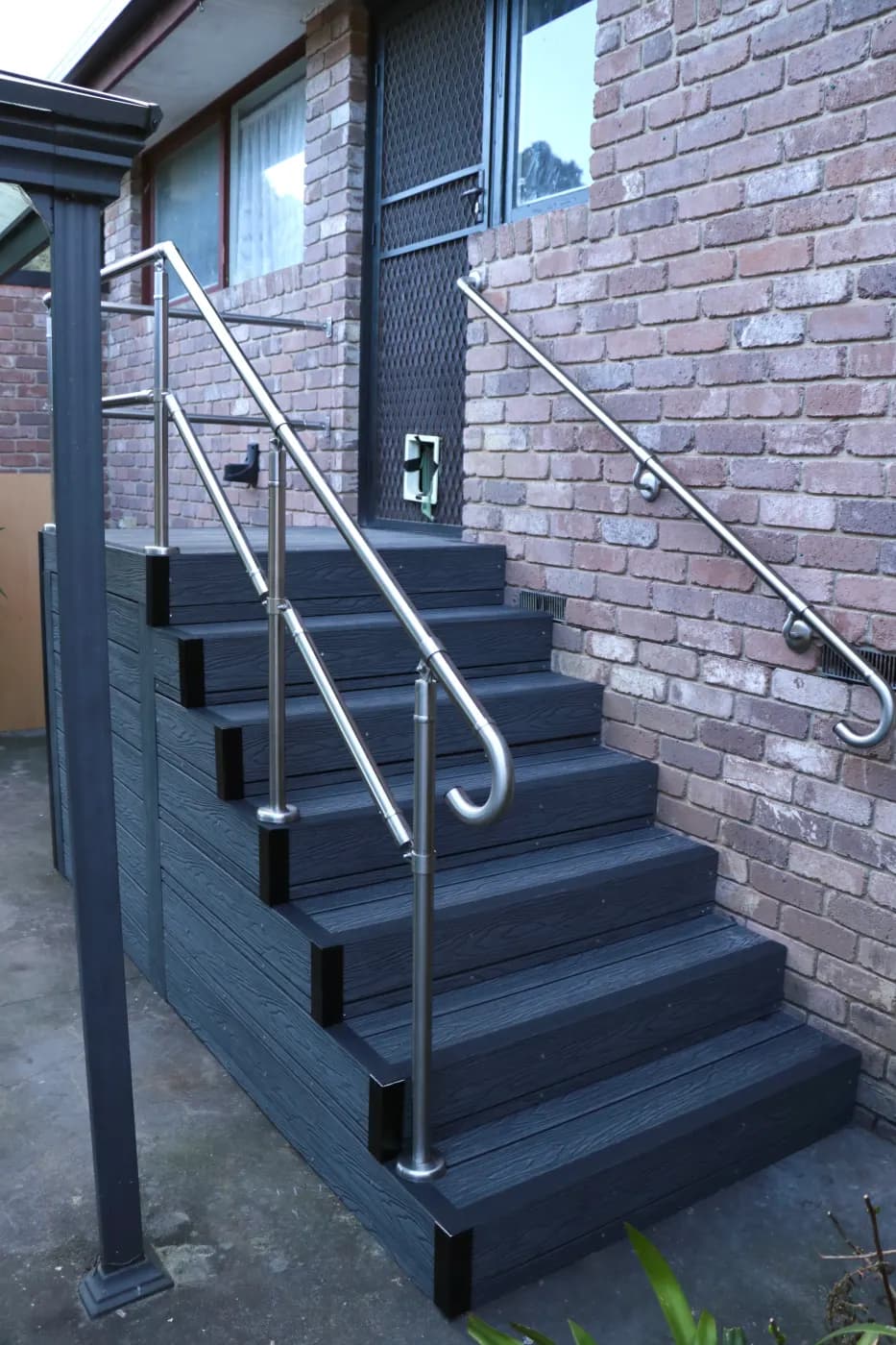
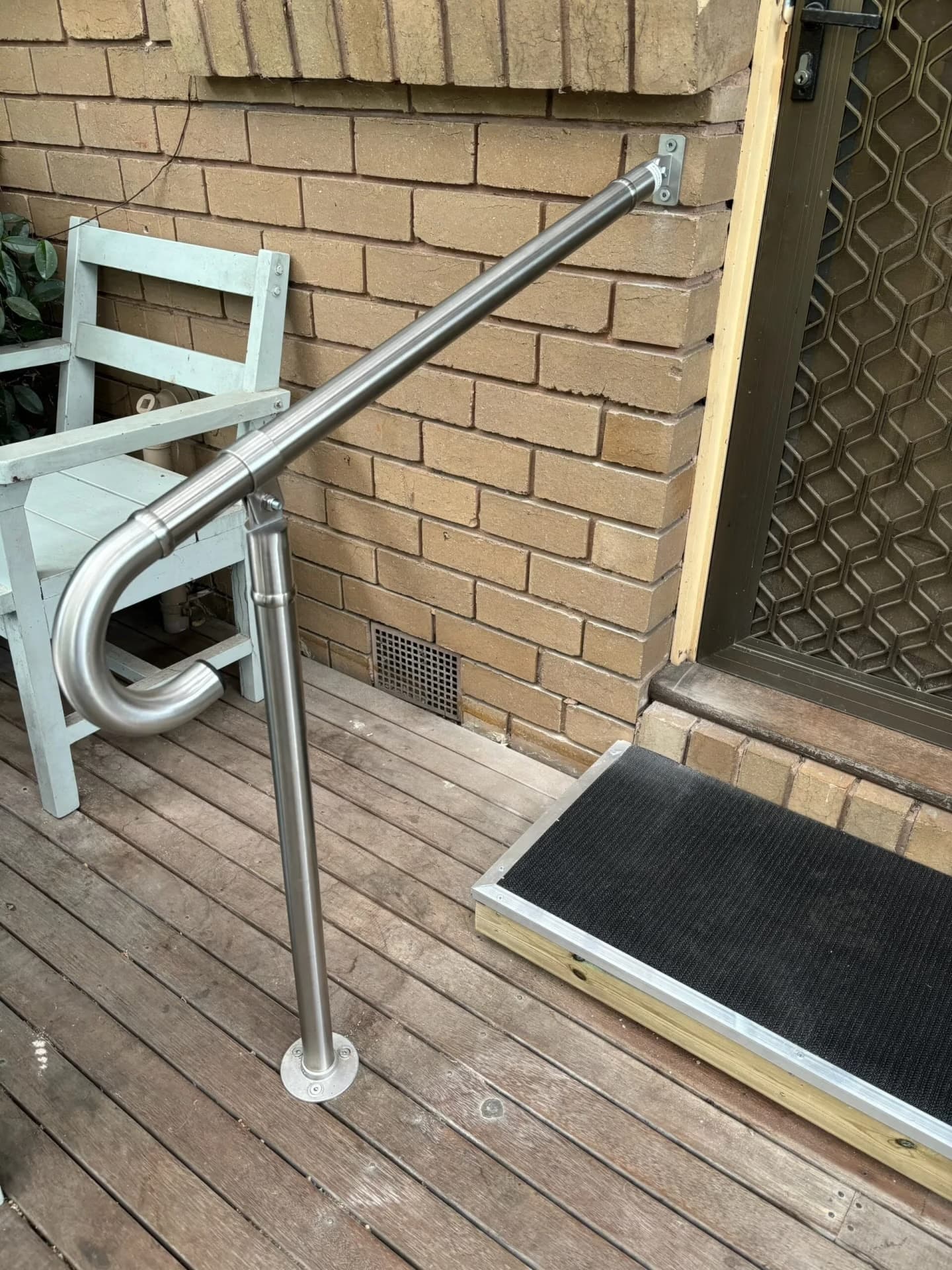
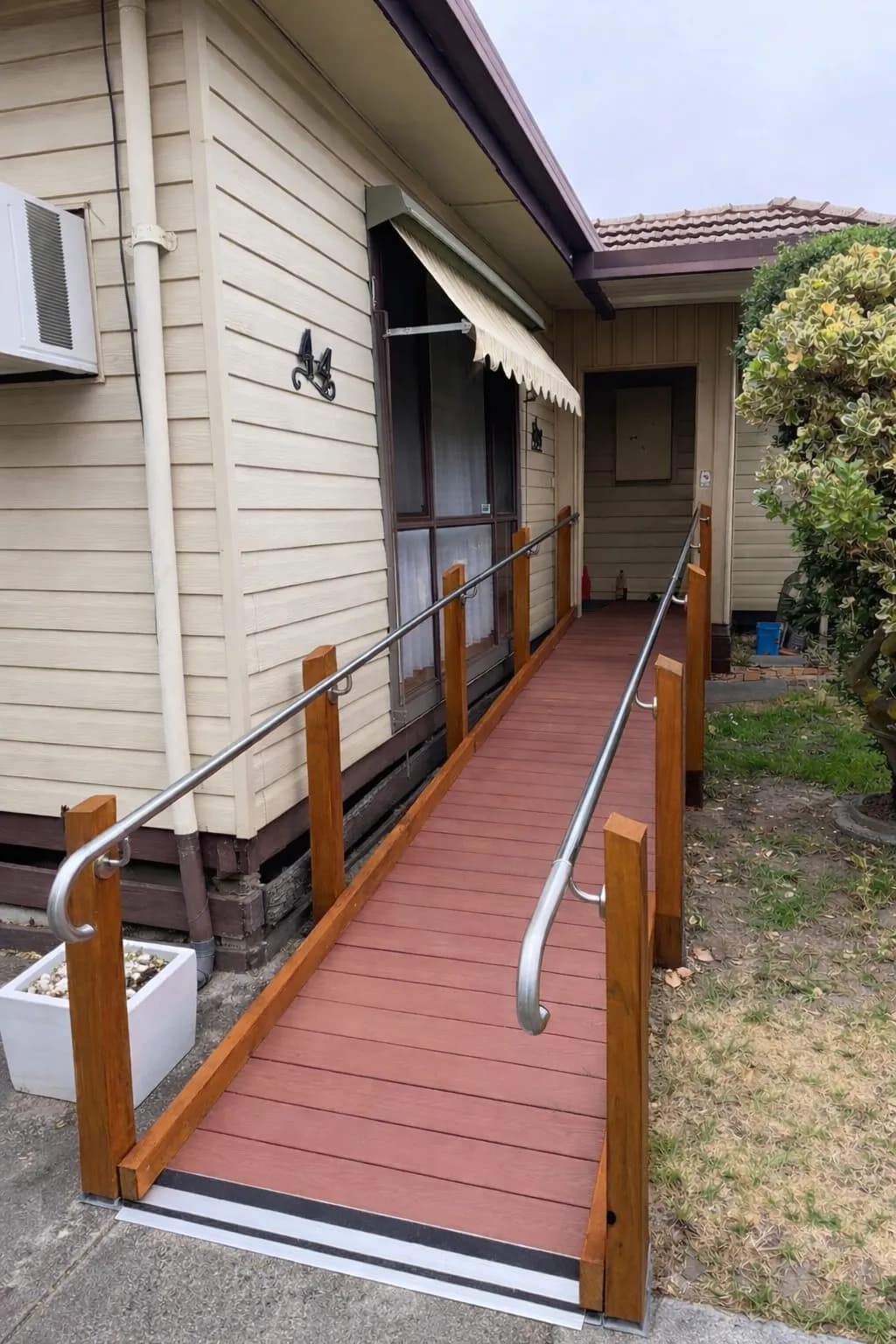
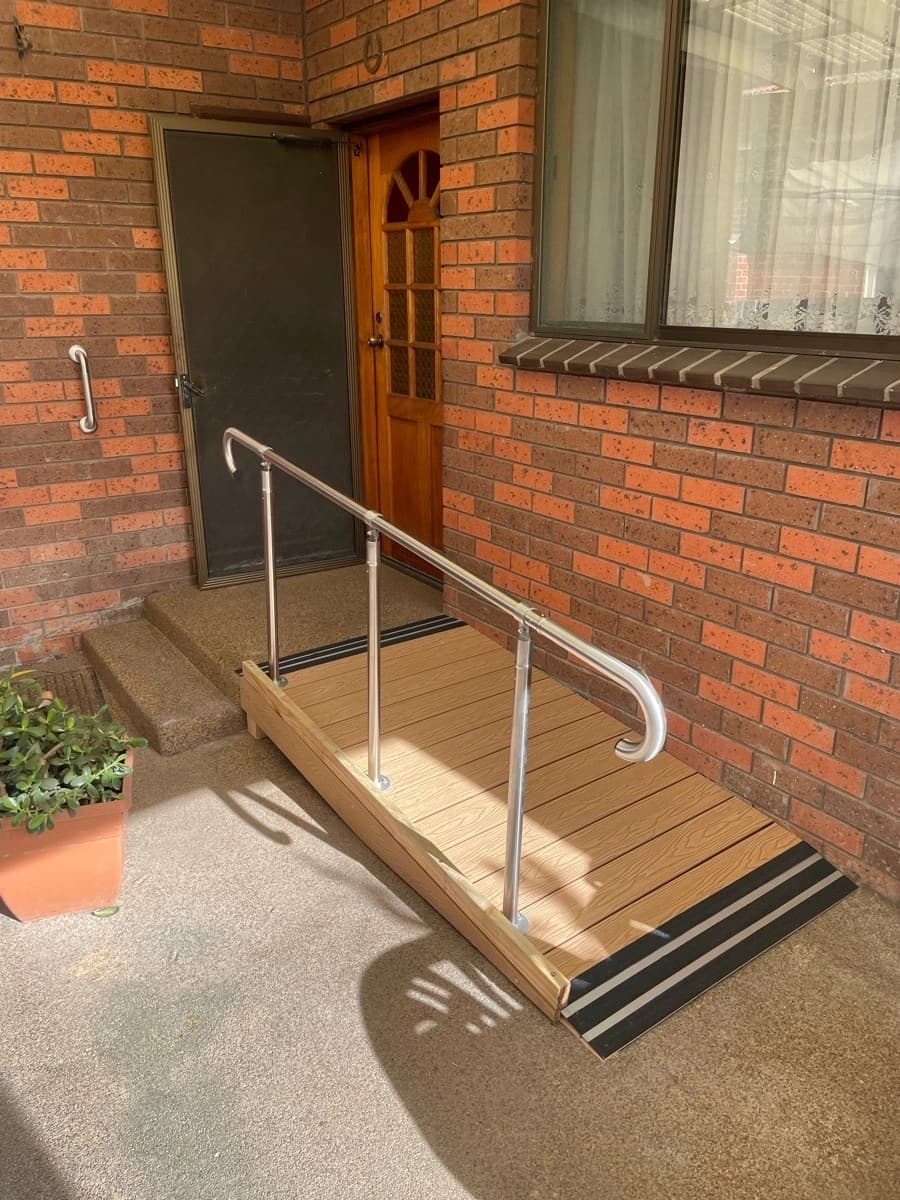
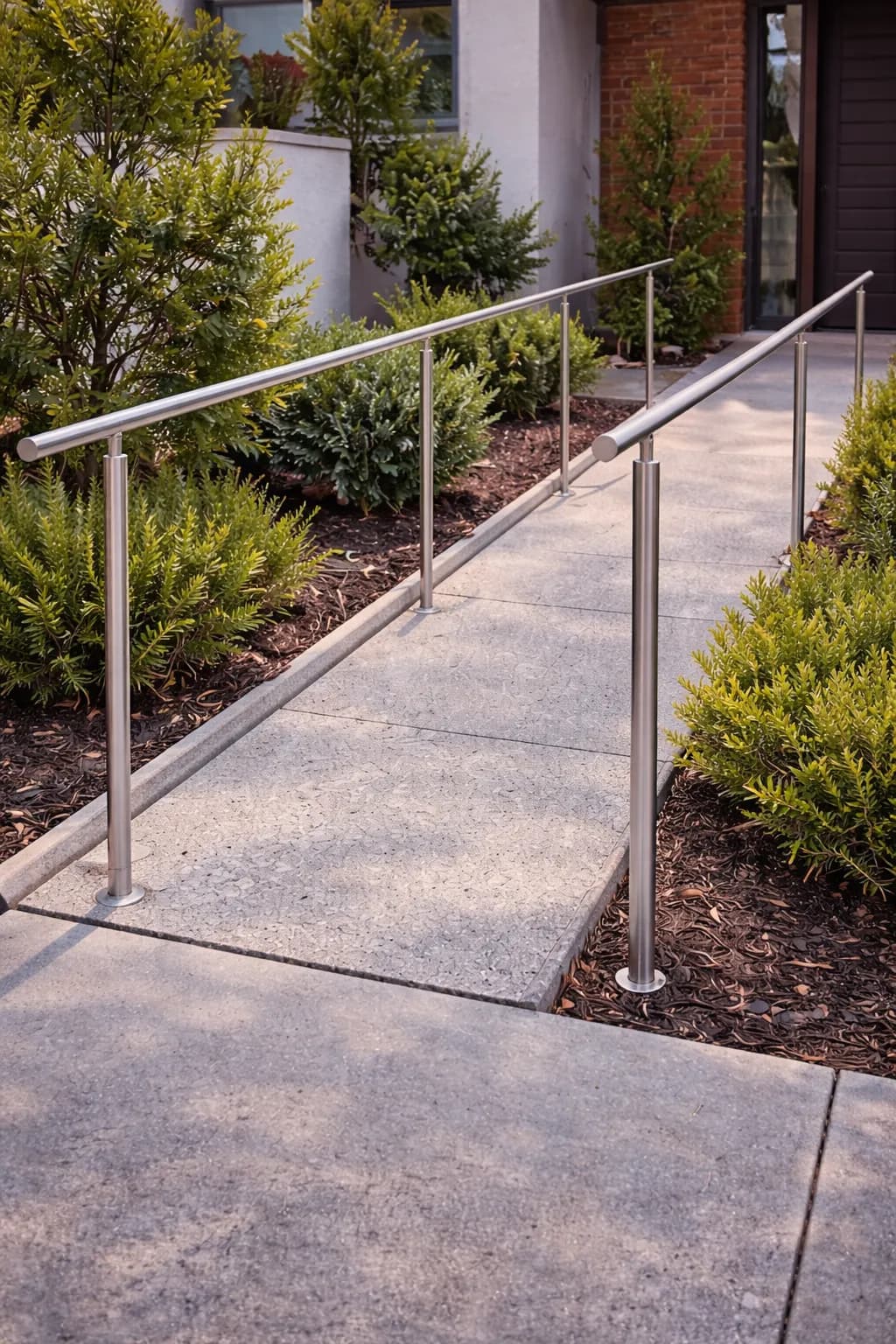
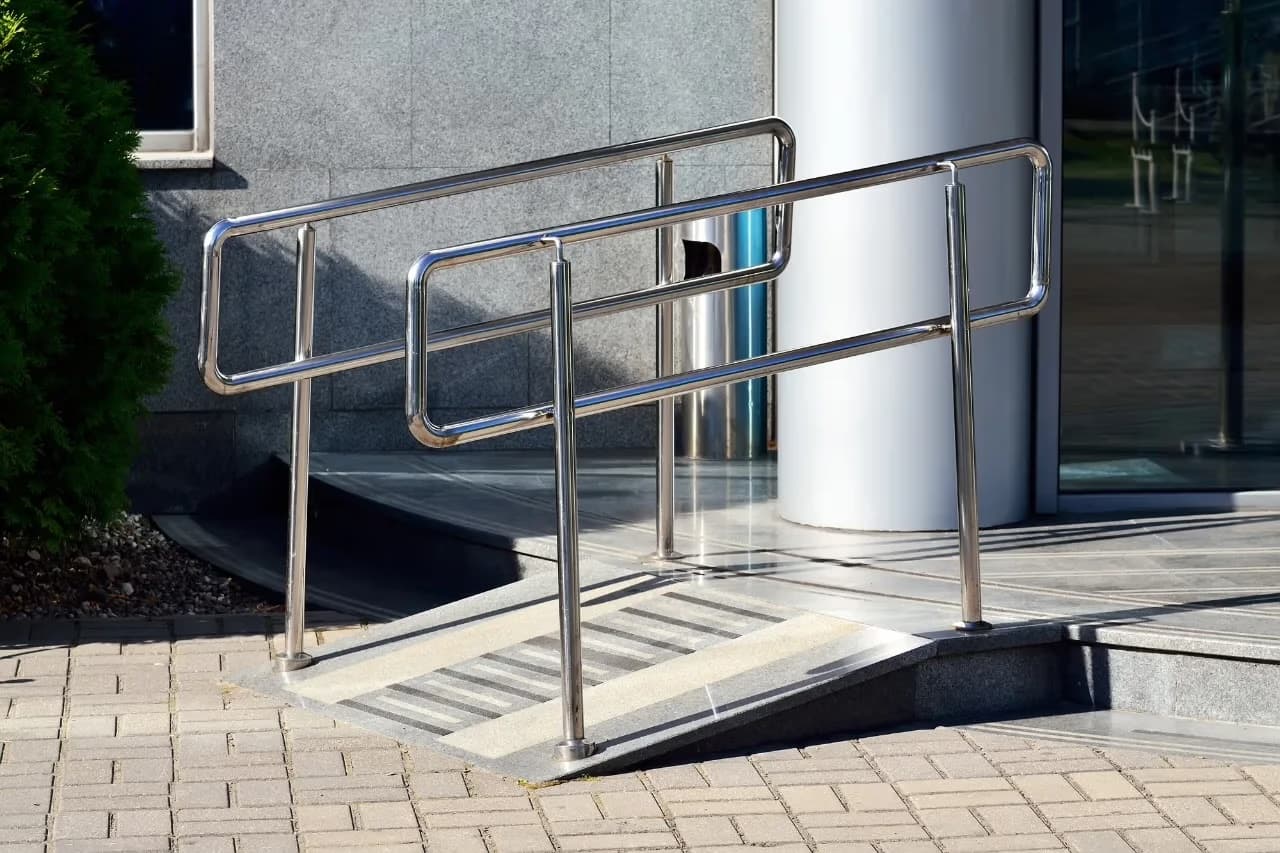
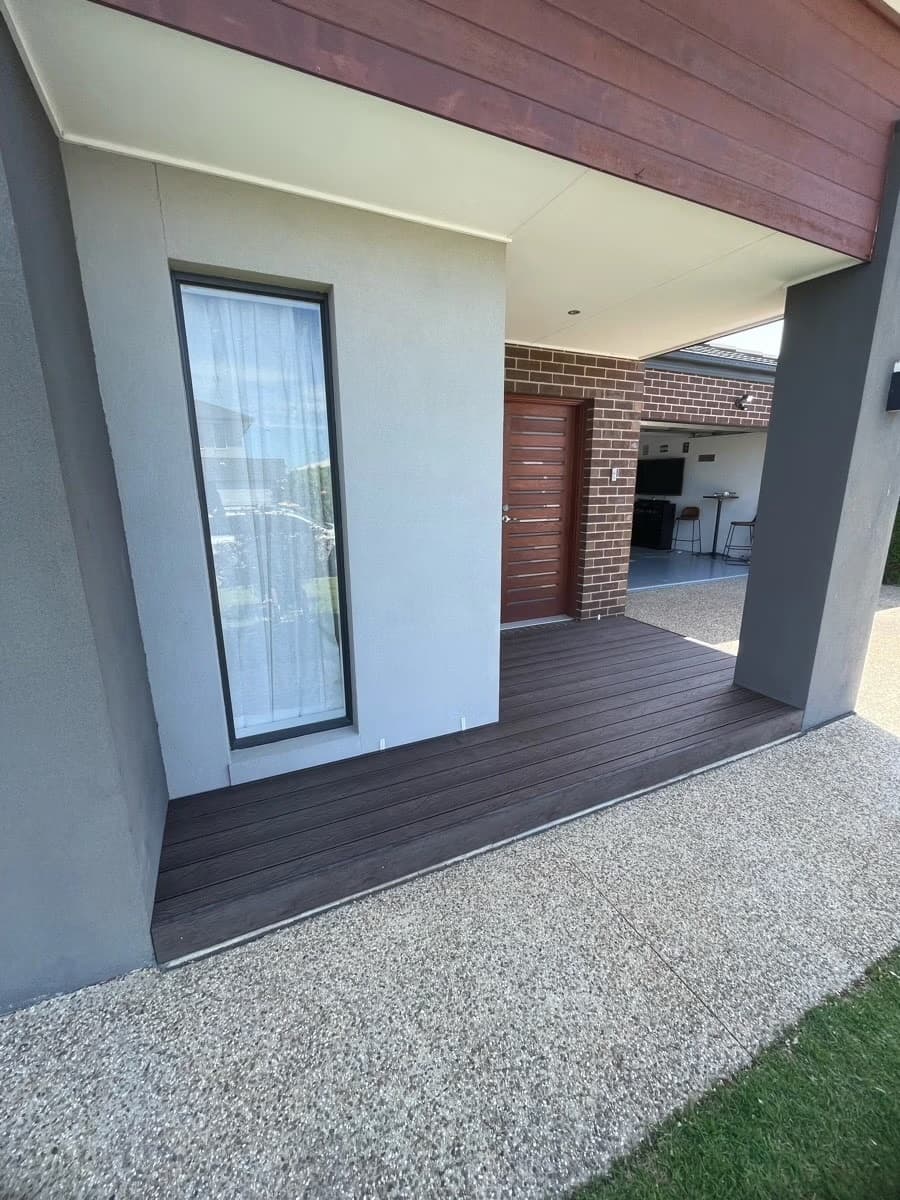
A consistent rise the whole way up, and a rail to match Rails both sides, so nobody has to turn sideways One step, one rail — and a frame that can be parked at the top One entry step is enough to need a rail The measure decides the tread, not the catalogue Steps and the deck they serve, built as one job
If a walker has toget up them.
A four-wheel walker needs a platform, not a step. The whole frame has to be on it before the person moves their feet, which means a tread of roughly 900 to 1200mm rather than 300.
It is a different build and it needs different space, so it has its own page.
Questions
What people ask aboutsteps for feet.
Frequently Asked Questions
How deep should a step be?
Can you rebuild steps that have settled unevenly?
Do I need a rail as well?
I rent. Can I still have steps done?
How long does a set of steps take?
Can’t see your question? Call us on +61 3 8658 1358 — we’re happy to talk it through.
More from Vital Ease
The rest of whatwe do.

Let us make your homework for you.
Ready to start your modification journey? Contact our team.
Ready to make your home safer and more accessible? Our team is here to help from your first consultation through to the final handover. Let’s talk about what’s possible for your home.