Skip to content

Mon–Fri: 9:00 AM – 5:00 PM

Vital Ease — home modification and maintenance solutions

Somewhere to sit, that foldsback out of the way.

Wall-mounted fold-down shower seats, fixed into the structure and set to the height that suits the person using them.

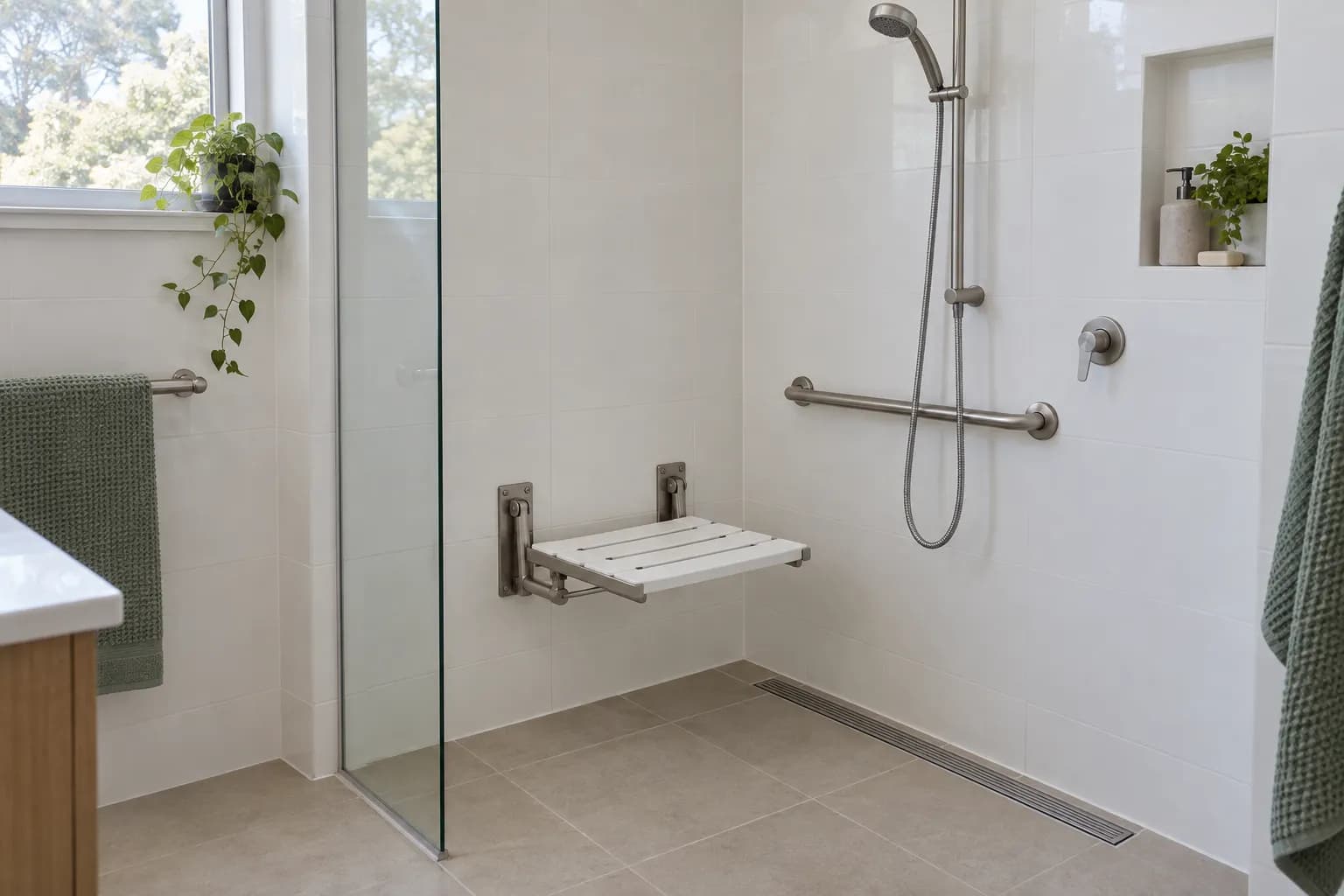
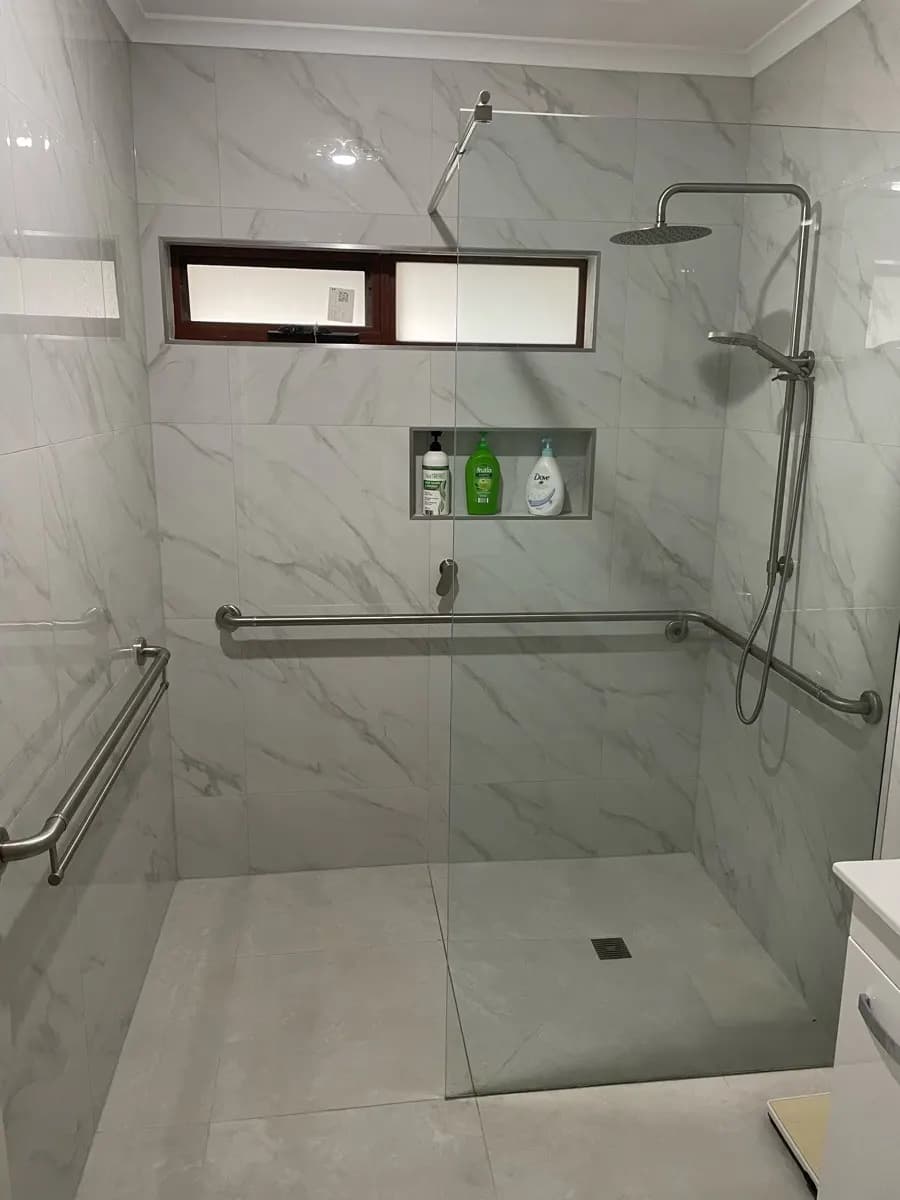
An accessible bathroom shower with a wall-mounted seat and grab rails fixed to the tiled walls

Standing up is the partthat gets hard first.

Balance in the shower goes before strength does. Closing your eyes to rinse shampoo out, turning to reach a tap, standing on one leg to wash the other — each of those is a small balance test, and the floor is wet.

Sitting down removes all of them at once. It is usually the change that keeps someone showering independently for years longer, and it is one of the least expensive things on this site.

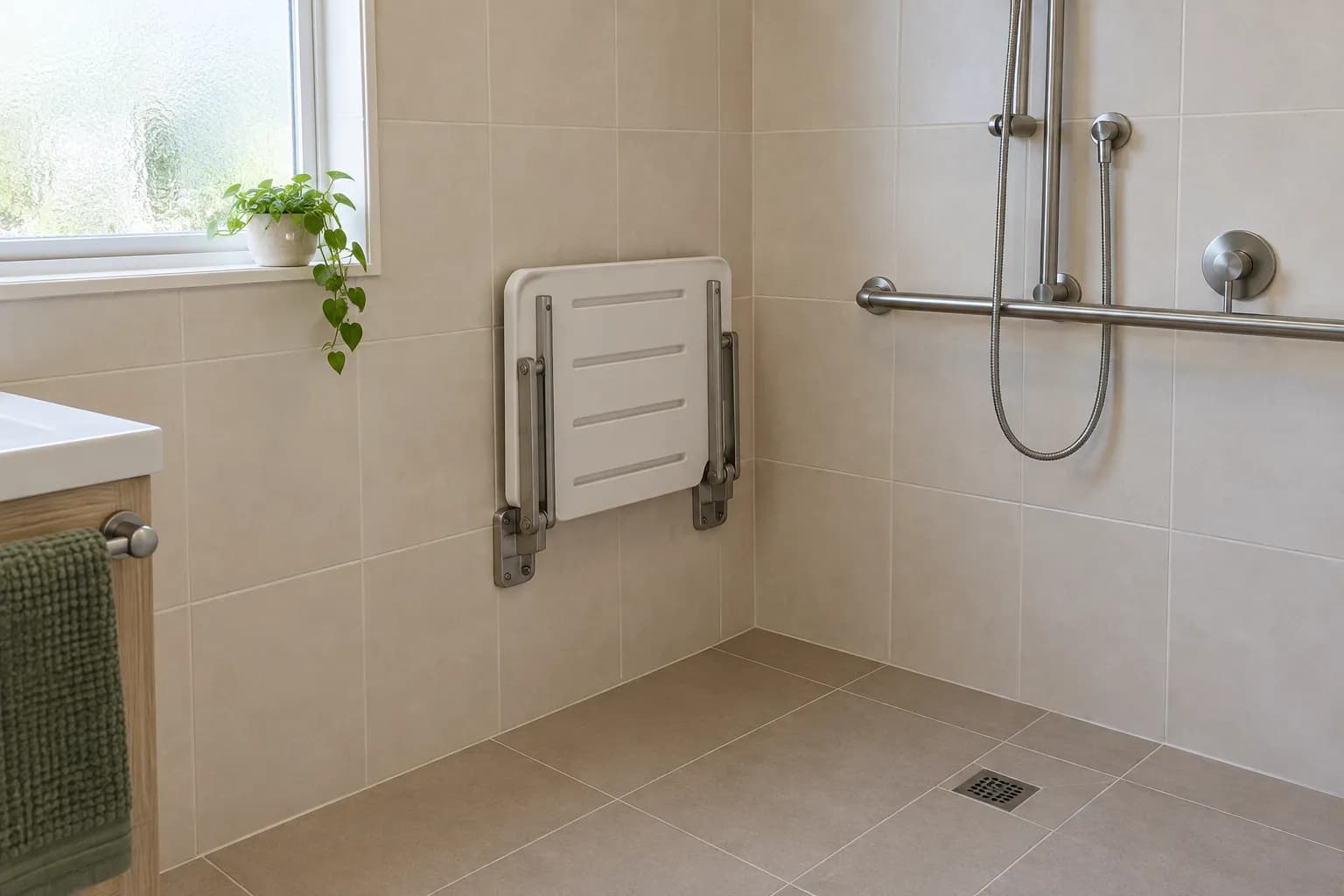
A wall-mounted seat folds flat when it is not wanted, which is what makes it work in a bathroom that other people also use. A free-standing shower chair does the same job but lives in the shower permanently, takes up floor space, and can slide on a wet floor. Where the wall will take a fixed seat, a fixed seat is the better answer.

Book a free measure and quote

Key features ofour shower seats.

Safe, practical, and built to be used every day rather than occasionally.

  • Fold-down design

    Folds flat against the wall when nobody is using it, so a small or shared bathroom is not permanently half full of chair. It is what makes a fixed seat acceptable to the rest of the household.

  • Wall-mounted and fixed into structure

    Bolted into the studs, not into the tile. That is the whole difference between a seat that takes a person’s weight for years and one that comes off the wall the first time somebody drops onto it.

  • Two shapes, for two kinds of bathroom

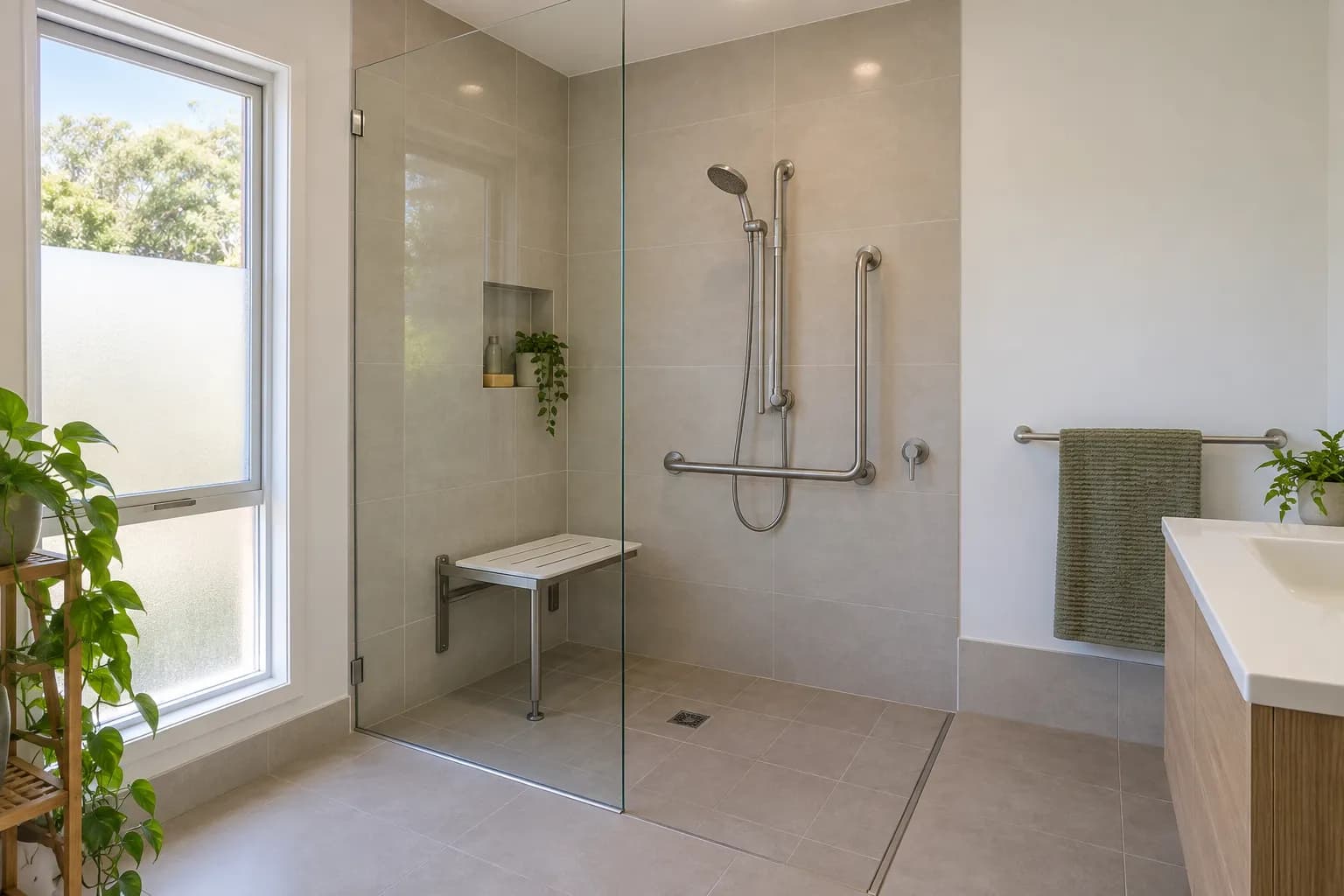
    A compact seat around 450mm across suits a corner or a narrow recess. A bench closer to 960mm spans a wall and gives room to slide across from a wheelchair rather than standing up to transfer.

  • Custom back support brackets where the studs will not oblige

    Studs rarely fall exactly where a seat needs them. Rather than fixing into plasterboard and hoping, we make up brackets to span to the studs that are actually there.

Vital Ease at a glance

Projects completed
300+

Projects completed

Agreements with Home Care Package and NDIS providers
100+

Agreements with Home Care Package and NDIS providers

Valued customers
200+

Valued customers

  • NDIS — National Disability Insurance Scheme registered provider
  • State-wide Equipment Program approved supplier
  • Victorian Building Authority registered builder
  • Home Care Packages approved provider

Who we fitthese for.

  • Older people whose balance has changed

    Usually the first thing that goes, and usually years before strength does.

  • People transferring from a wheelchair

    A bench seat lets someone slide across at the same height rather than standing up to move, which is when transfers go wrong.

  • Carers and family assisting

    A seated person can be helped safely by one person. A standing one often cannot.

  • Anyone who tires partway through

    Fatigue, breathlessness, or a condition that fluctuates. Being able to sit down means finishing the shower rather than cutting it short.

Before you book,two things to know.

  • It is fixed work, and it means drilling

    A shower seat carries a person’s entire weight, dropped onto it, on a wet wall. It is bolted into the structure. There is no suction or adhesive version of this that is safe, whatever else you may have been shown.

  • What is behind the tile decides everything

    We find the studs first. Where they do not fall where the seat needs to be, we make up brackets to span to them rather than fixing into plasterboard — and where a wall genuinely will not carry a seat, we say so at the measure rather than after.

  • If you rent, ask first

    You will need the owner’s or the agent’s permission before we can start. Ring us and we will tell you what they usually want to see — most say yes once they know what is involved.

  • Height is set to the person, not to a standard

    A seat set too low is as hard to get up from as a bath. We set it to the person who will use it, which is one of the things the measure is for.

Specificationsand brochures.

The line drawings and documents an occupational therapist usually needs for a report. We are preparing these now — ring or email in the meantime and we will send what you need.

Product line drawings

  • Shower seat — 450mmComing soon
  • Shower seat — 960mmComing soon

Product brochures

  • Shower seatsComing soon

Quote request requirements

  • Shower seats — what we need to quoteComing soon

How the jobactually runs.

  1. Quoting

    Quoted to the occupational therapist’s specification where there is one, with our recommendations alongside it. Funding is approved before we start.

  2. On-site consultation and installation

    The same tradesperson checks the wall, finds the studs, agrees the height and position with you, and fits it on the spot.

  3. Warranty

    The work is carried out by licensed tradespeople and backed by the relevant warranties. If something is not right, ring the same number you rang the first time.

If the studs will notoblige.

  1. Quoting

    As above. Nothing changes at this stage — we do not know yet.

  2. Measurement

    The fitter finds the studs and works out that the seat cannot land on them where it needs to be. Rather than fixing into plasterboard, we measure for brackets.

  3. Manufacture

    Back support brackets are made up to span to the studs that are actually there.

  4. Installation

    A second visit to fit the brackets and the seat, by the same tradesperson who measured.

  5. Warranty

    The work is carried out by licensed tradespeople and backed by the relevant warranties. If something is not right, ring the same number you rang the first time.

A seat needs a railand a handheld head.

On its own a seat solves standing. It does not solve reaching the tap, or a shower head pointed at where a standing person used to be — so we almost always quote a grab rail and a handheld shower alongside it, and fit all three on the same visit.

The hub page sets out everything that goes into an accessible shower.

See all shower solutions

Questions

What people ask aboutshower seats.

Frequently Asked Questions

How much weight will a shower seat hold?
Every seat we fit carries a manufacturer’s rated capacity, and we will give you that figure and the documentation for the specific seat before you commit — an occupational therapist will usually want it in writing for a report. We do not quote a number from memory on a page, because the seat that suits a bathroom is chosen at the measure and the rating belongs to that seat, not to a category.
Can a shower seat be fitted to a tiled wall?
Yes — it fixes to what is behind the tile, not to the tile. We find the studs and bolt into them, and where the studs do not fall where the seat needs to be, we make up brackets to span to them. A seat fixed into plasterboard alone will come away under the only load that matters.
Will it get in the way for everyone else?
That is exactly what the fold-down design is for. It sits flat against the wall when it is not in use, so a shared bathroom is not permanently half full of chair. It is usually why a household agrees to a fixed seat rather than a free-standing shower chair.
Do I need a corner seat or a bench?
A compact seat around 450mm across suits a corner or a narrow recess and is the usual answer where someone can walk into the shower and sit down. A bench closer to 960mm spans a wall and gives room to slide across from a wheelchair at the same height, which is safer than standing up to transfer. We work out which yours needs at the measure.
Can a shower seat be fitted in a rental?
It is fixed work and it means drilling into the wall, so you will need the owner’s or the agent’s permission first. Ring us and we will tell you what they usually want to see — most say yes once they understand it is a bracket into a stud rather than damage to the room.

Can’t see your question? Call us on +61 3 8658 1358 — we’re happy to talk it through.

Let us make your homework for you.

Ready to start your modification journey? Contact our team.

Ready to make your home safer and more accessible? Our team is here to help from your first consultation through to the final handover. Let’s talk about what’s possible for your home.

+61 3 8658 1358Contact us
Open
Mon–Fri: 9:00 AM – 5:00 PM
Serving
Melbourne & Sydney

Before you go

Still working outwhat your home needs?

A five-minute call is usually enough to tell you what is possible and roughly what it costs — no obligation, no pressure.