Skip to content

Mon–Fri: 9:00 AM – 5:00 PM

Vital Ease — home modification and maintenance solutions

Timber handrails, made toyour staircase.

Internal timber handrails for stairs, steps, and ramps — measured to the run, wall mounted, and finished to sit with the room.

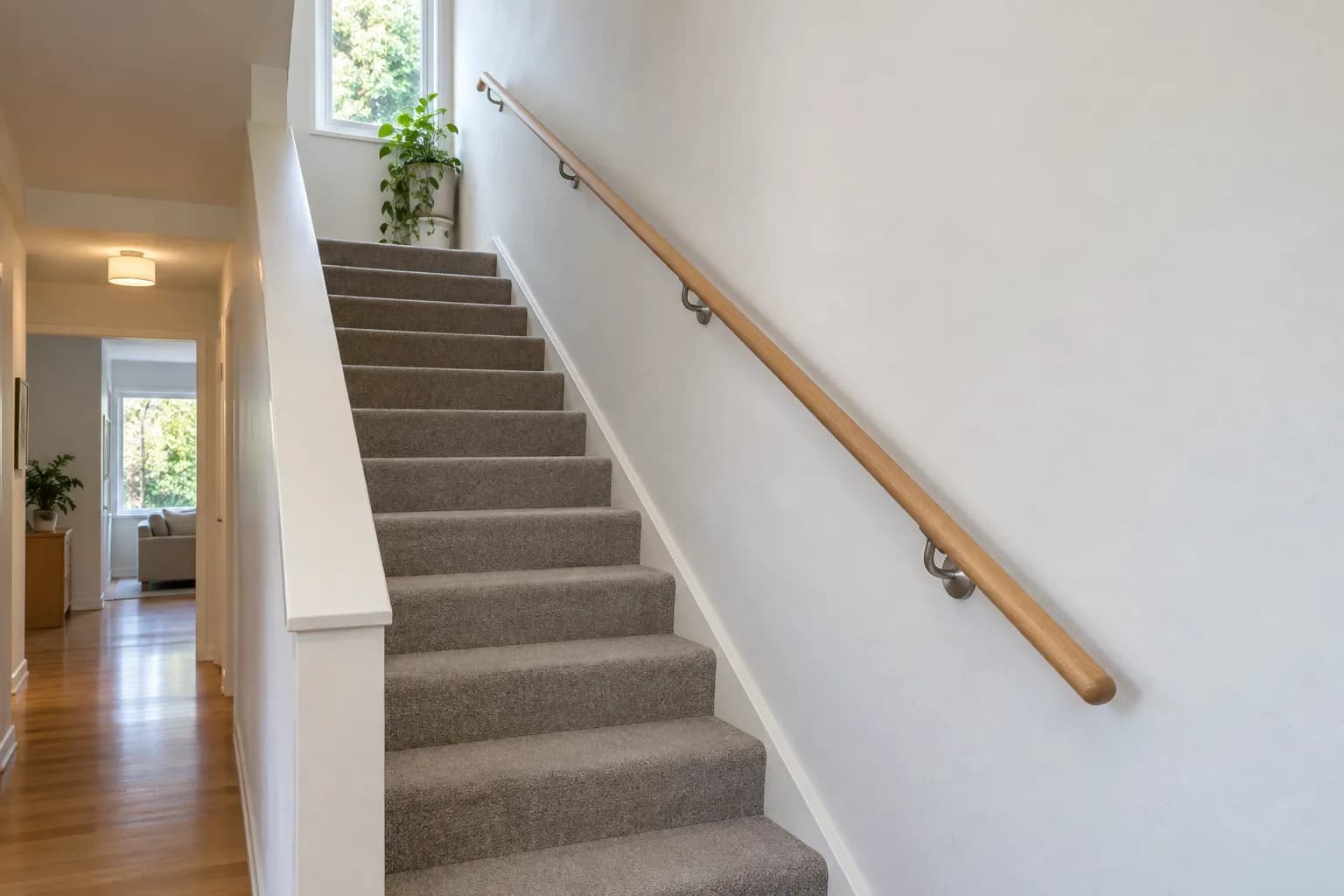
A stainless steel handrail mounted along the wall above a timber internal staircase

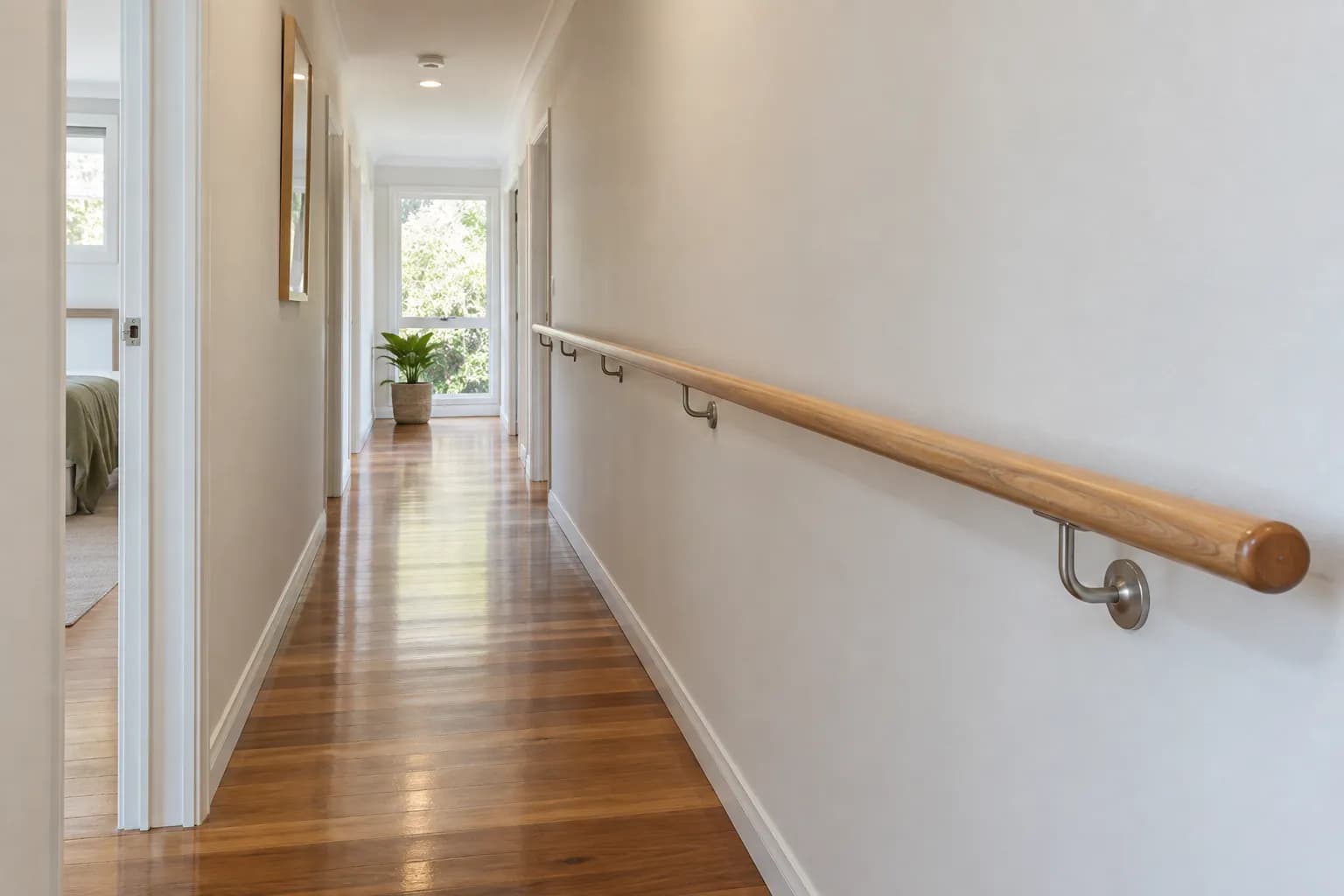
A rail that belongsin the hallway.

Timber is what most people want on an internal staircase. It is warmer to hold than steel on a cold morning, it takes a finish that can be matched to the joinery already in the house, and it does not announce itself as a piece of medical equipment in the middle of someone’s home.

That last point matters more than it sounds. The commonest reason a rail does not get installed is that somebody does not want their house to start looking like a hospital, and a timber rail is often the version they will agree to.

Rails are made to the run rather than cut from stock, so a staircase that turns, changes pitch, or has a landing partway up gets one continuous rail instead of three short ones with gaps between them.

Book a free measure and quote

Where a timber handrailworks best.

Timber is an internal rail. Outside, weather decides it, and steel wins.

  • Internal staircases

    The main run, with the rail returned into the wall at both ends so a sleeve or a bag cannot catch on it.

  • Half-landings and turns

    Carried around the turn rather than stopped and restarted, so the hand never has to leave the rail at the point it is most needed.

  • Internal ramps and single steps

    A short run between levels inside the house — into a sunken lounge, or down to a laundry.

  • Long hallways

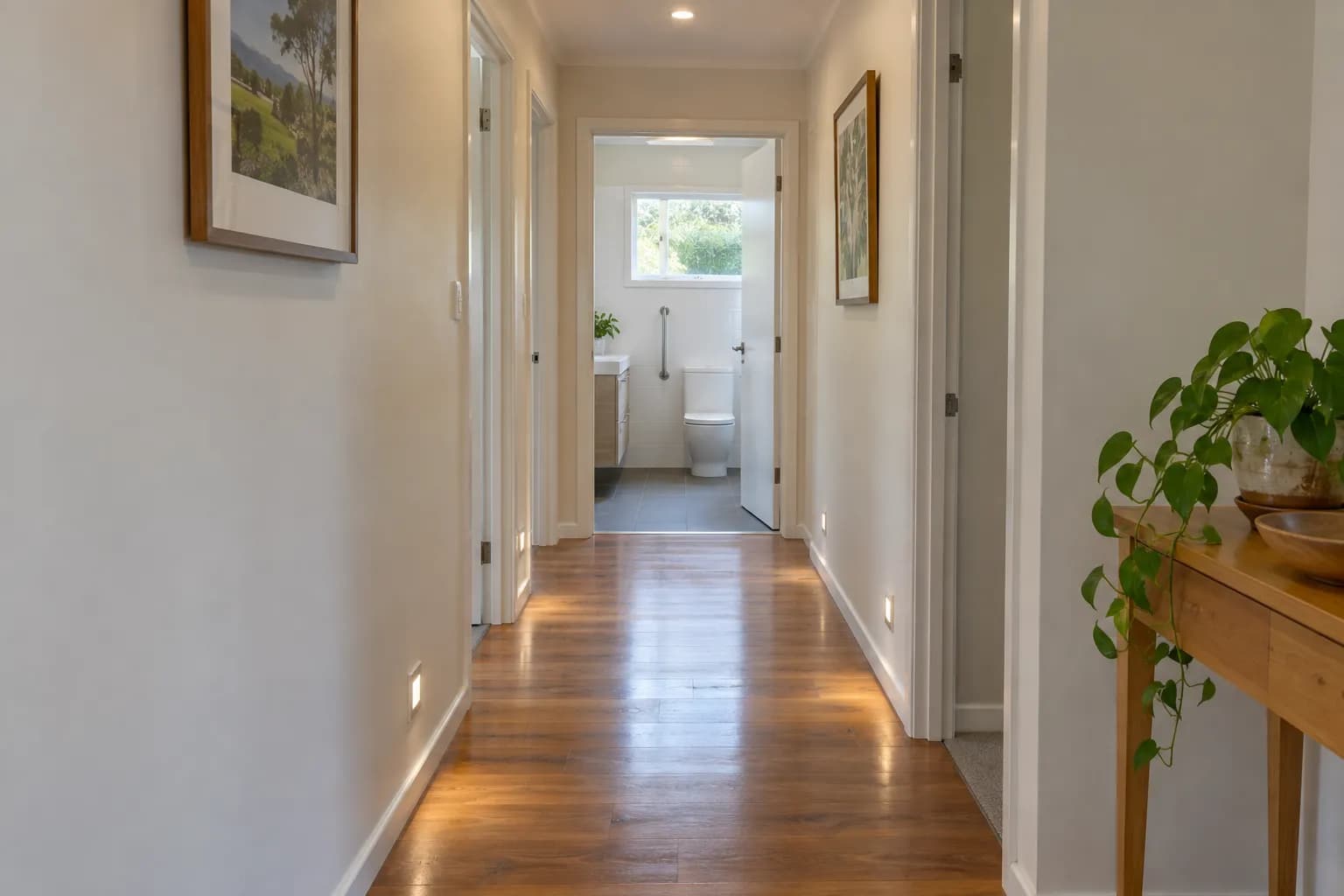
    Where someone needs something to travel along between rooms rather than at a step.

Vital Ease at a glance

Projects completed
300+

Projects completed

Agreements with Home Care Package and NDIS providers
100+

Agreements with Home Care Package and NDIS providers

Valued customers
200+

Valued customers

  • NDIS — National Disability Insurance Scheme registered provider
  • State-wide Equipment Program approved supplier
  • Victorian Building Authority registered builder
  • Home Care Packages approved provider

The wall decidesmore than the rail does.

A handrail on a staircase has to hold a person’s full weight in a fall, at an angle, without warning. That load goes into the wall, not into the rail, so what is behind the plaster is the first thing we look at.

Brackets are fixed into studs. Where the studs do not fall where the rail needs them, we add noggings before the rail goes up rather than relying on a plasterboard anchor. It is the least visible part of the job and the only part that decides whether the rail does what it is for.

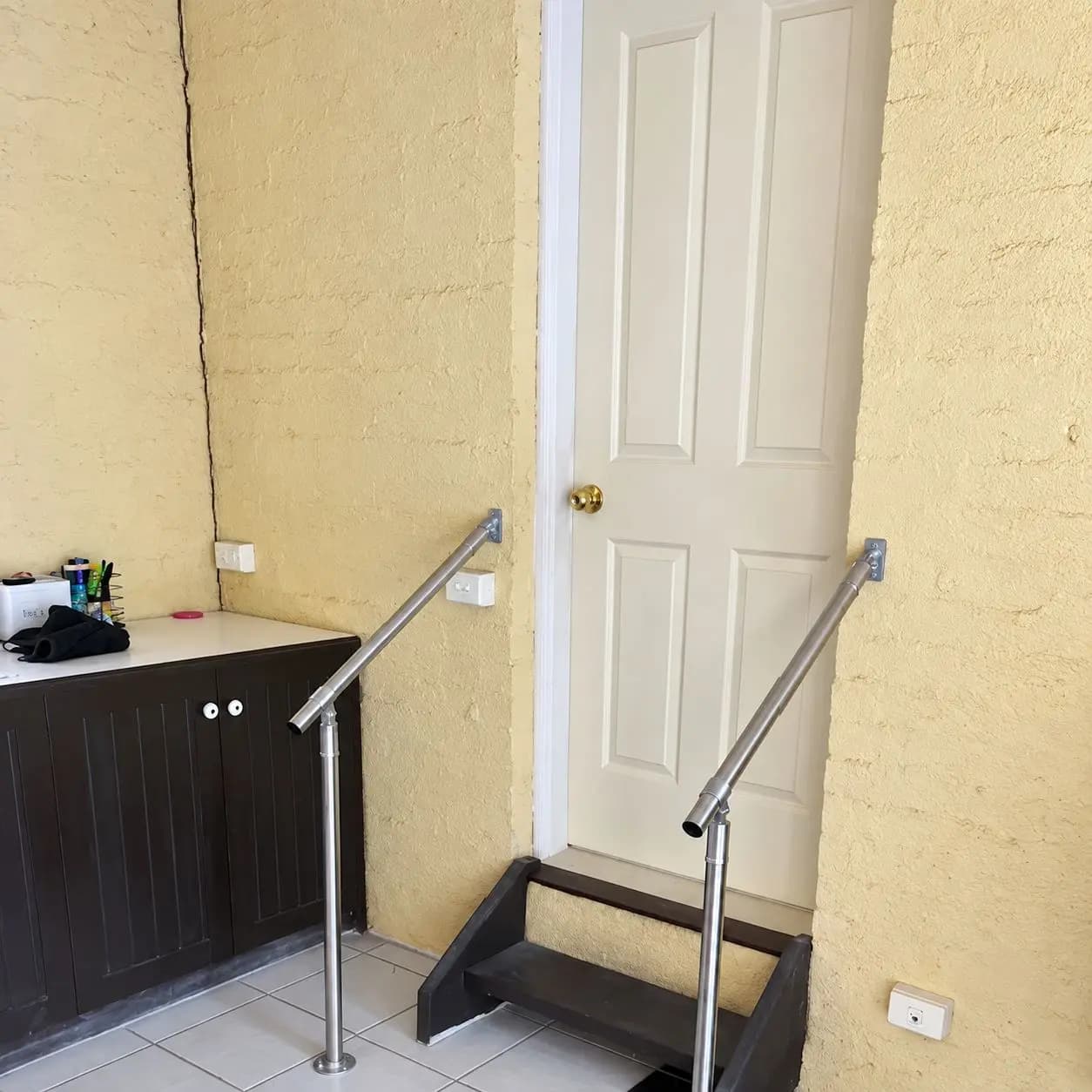
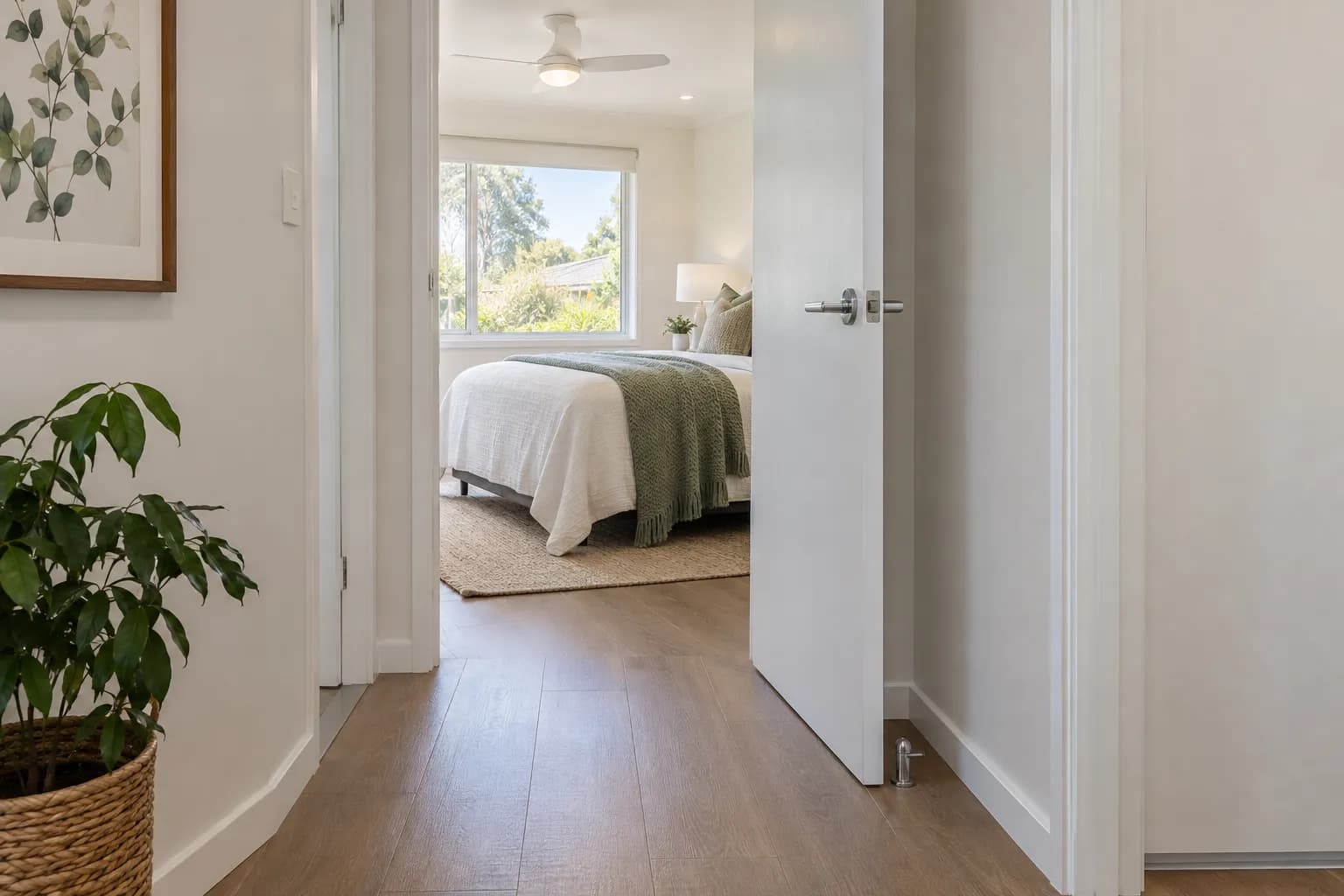
After: a stainless steel handrail installed beside an internal doorway
Fixed into structure, not into the plaster — the part nobody sees

Who we fitthese for.

  • Older people staying at home

    Usually the first modification anyone makes, and often the one that delays a move into care.

  • NDIS participants

    Almost always a minor home modification, which is the simplest category to get approved.

  • Coming home from hospital

    Where the steps were manageable a month ago and are not now. We can usually work to a discharge date.

  • Families and carers

    Arranging on someone else’s behalf. Tell us that when you ring and we will deal with you directly.

Before you book,two things to know.

  • It is fixed work, and it means drilling

    Rails are bolted into the structure of the building — a wall, a floor, or a footing. There is no adhesive or suction version that will hold a person’s weight in a fall.

  • If you rent, ask first

    You will need the owner’s or the agent’s permission before we can start. Ring us and we will tell you what they usually want to see — most say yes once they know what is involved.

  • Manufacture and preparation

    Studs, noggings, brick, or a set footing. Where a wall genuinely cannot carry a rail we say so on the visit rather than after it is installed.

  • The work is backed by the relevant warranties

    Carried out by licensed tradespeople, as with everything else we do.

Brochuresand guides.

The documents an occupational therapist, a plan manager, or a builder usually asks us for. We are preparing these now — ring or email in the meantime and we will send what you need.

Product brochures

  • Timber handrailsComing soon

Quote request requirements

  • Timber handrails — what we need to quoteComing soon

How the jobactually runs.

  1. Quoting and measurement

    A licensed member of the team measures the staircase, checks what the wall will take, and talks through finishes. There is no charge for the visit.

  2. A fixed price in writing

    Set out so a plan manager, case manager, or occupational therapist can approve it without coming back to us for more detail.

  3. Manufacture

    Lengths, joins, and returns are fabricated for your staircase rather than trimmed from stock on the day.

  4. Installation

    Most internal handrail jobs are done in a day, and the stairs are usable the same evening.

  5. Warranty

    The work is carried out by licensed tradespeople and backed by the relevant warranties. If something is not right, ring the same number you rang the first time.

Worth knowingbefore you decide.

  • Timber is for inside

    Outdoors it moves, greys, and needs recoating. For external steps, ramps, and paths a steel banister rail is the longer-lasting answer.

  • A stain will not match exactly

    Timber has its own grain and takes colour unevenly, so a new rail sits alongside existing joinery rather than disappearing into it. We show you a sample before it is finished.

  • It is fixed work, and it means drilling

    Brackets go into the wall. If you rent, check with the owner or the agent before booking — we can talk you through what to ask.

  • Usually a minor home modification

    Which is the simplest category to get funded under the NDIS or a Home Care Package.

Outside the front door,use steel.

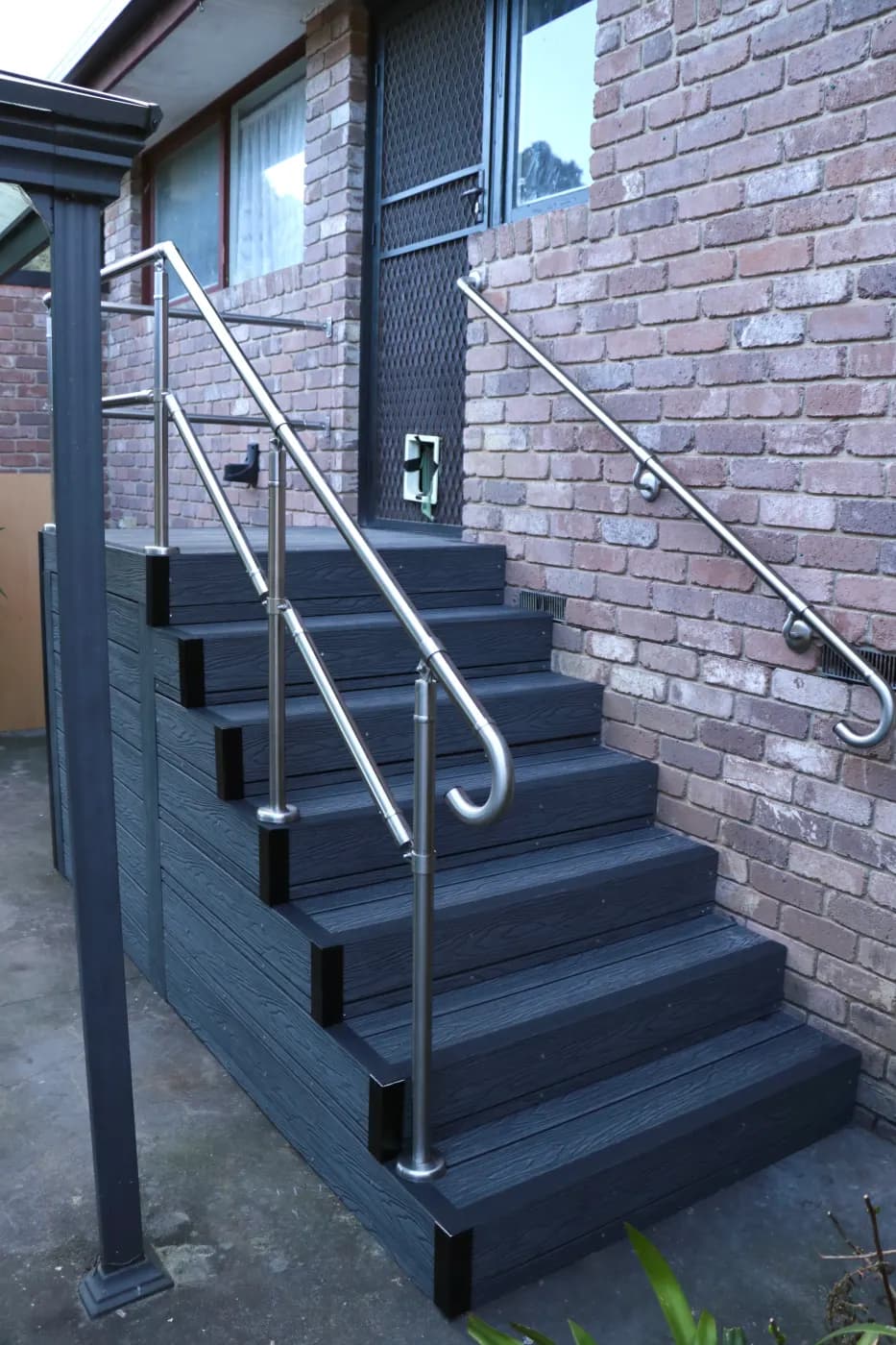
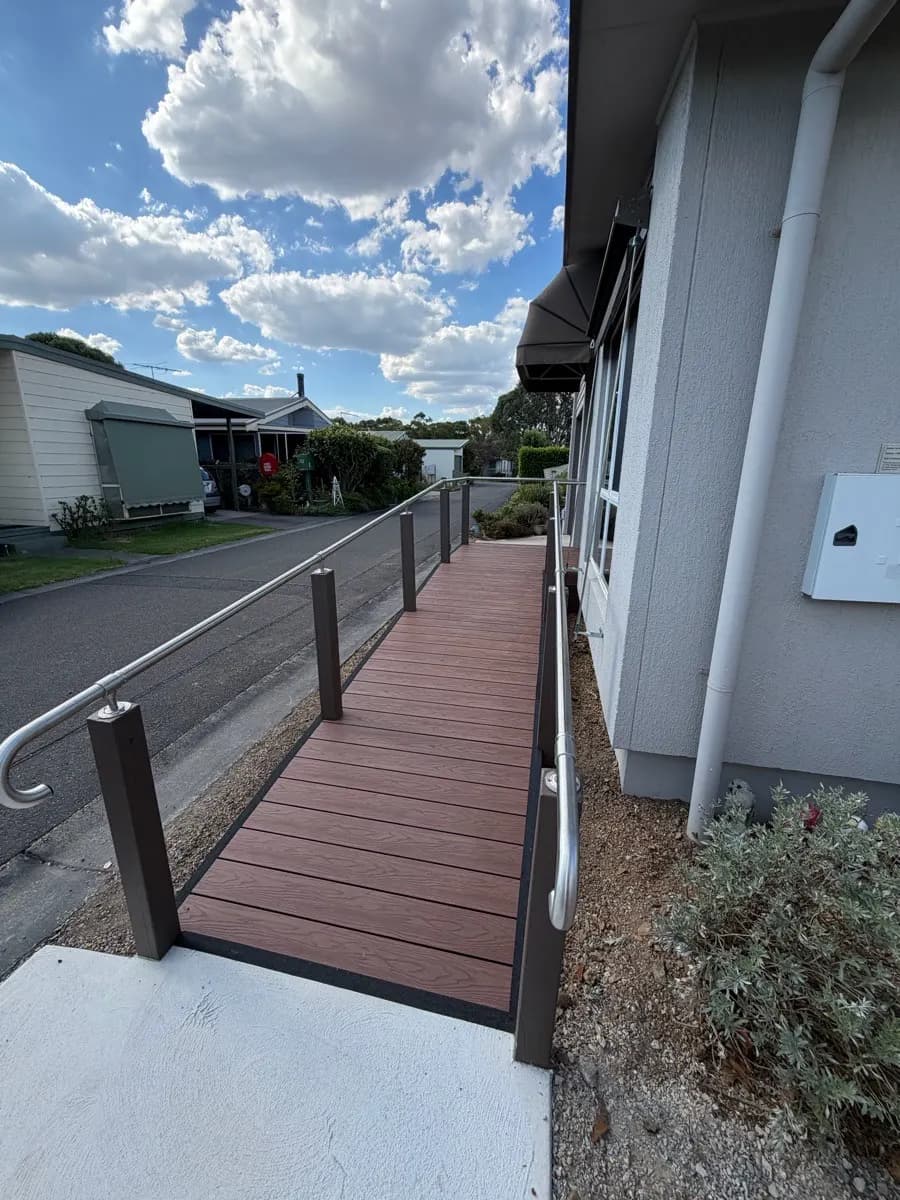
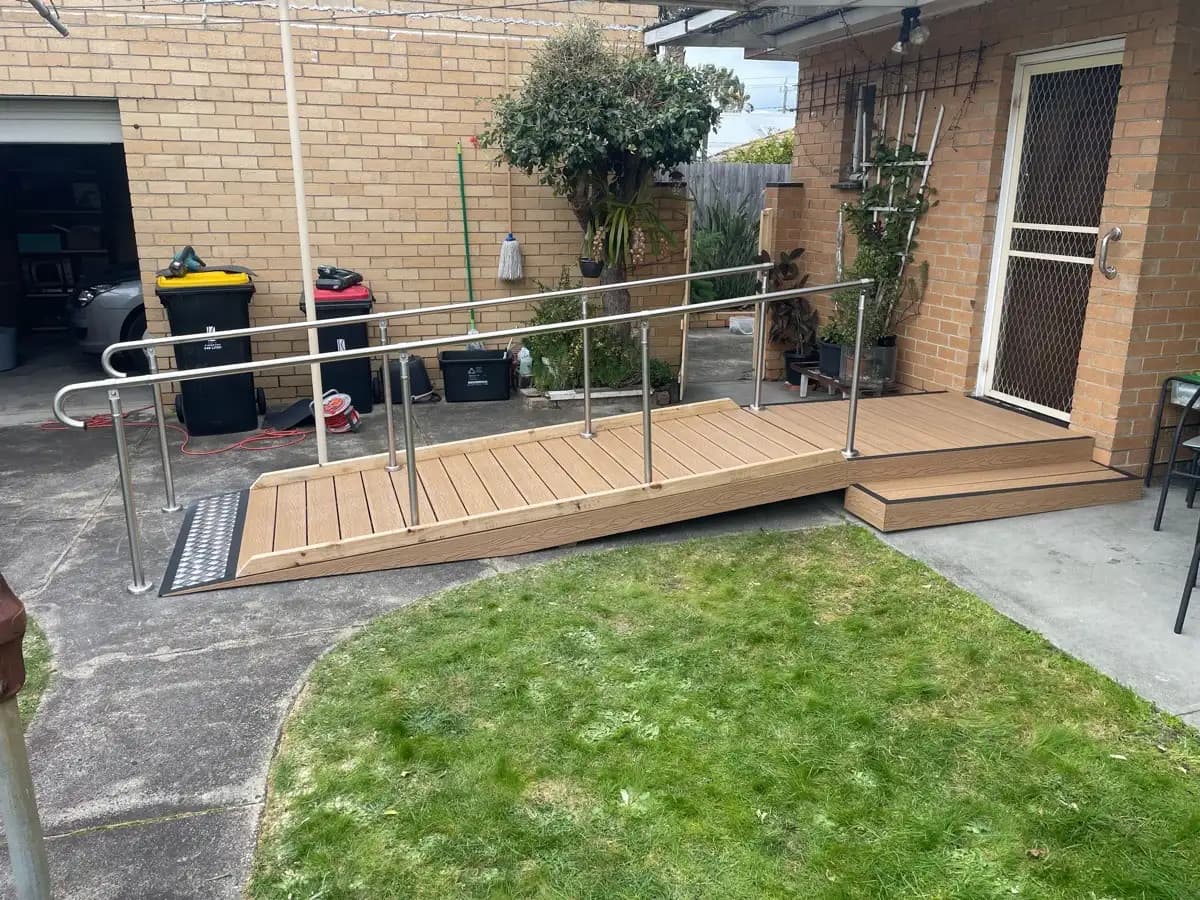
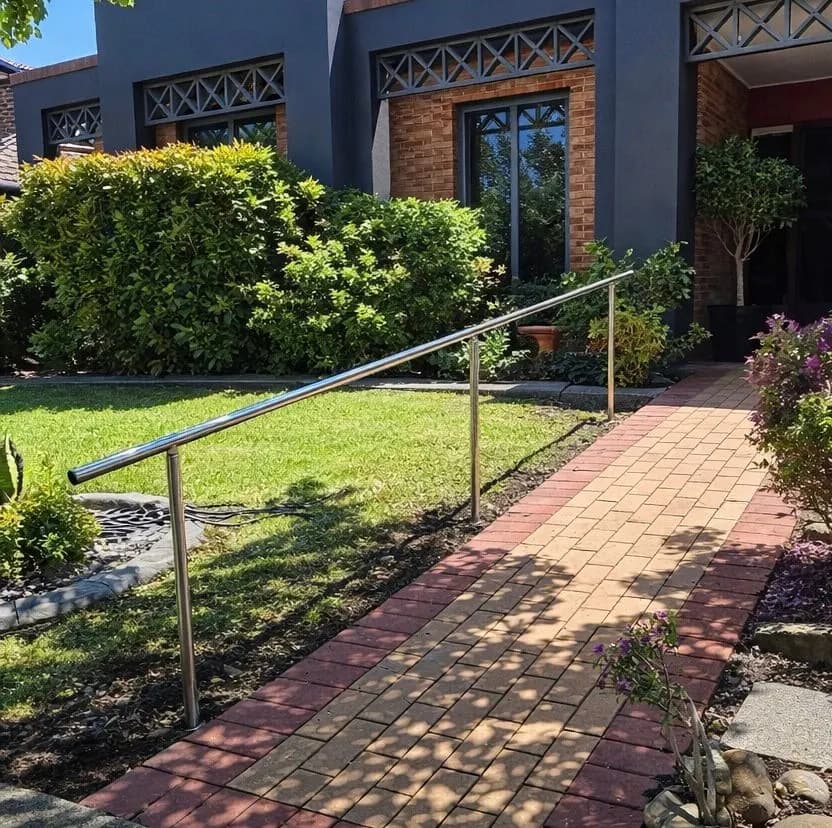
For entry steps, external ramps, and paths, a galvanised or stainless banister rail will outlast a timber one and needs nothing done to it.

If you are not sure which of the two your job needs, the handrails page sets out what each kind is for.

See all handrails

Questions

What people ask abouttimber handrails.

Frequently Asked Questions

Can a timber handrail go outside?
We do not recommend it. Outdoors, timber moves with the weather, greys off, and needs recoating every few years — and a rail that has been neglected is a rail nobody checks. For external steps, ramps, and paths we fit steel banister rails instead.
Will the new rail match my existing timber?
It will sit alongside it, not disappear into it. Timber has its own grain and takes stain unevenly, so an exact match to a floor or a balustrade finished years ago is not something anyone can promise honestly. We show you a sample before the rail is finished.
Can you follow a staircase that turns?
Yes. The rail is made to the run, so a staircase with a half-landing or a change of pitch gets one continuous rail carried around the turn rather than several short ones with gaps at the point you most need to be holding on.
Will the NDIS or my Home Care Package pay for it?
Usually. An internal handrail is normally classed as a minor home modification, which is the simplest category to get approved. We work with occupational therapists, plan managers, and case managers every week and set the quote out so it can be approved without further questions.
I rent. Can I still have one installed?
It is fixed work and it means drilling into the wall, so you will need the owner’s or the agent’s permission first. Ring us and we will tell you what they usually want to see — most say yes to a handrail once they know what is involved.

Can’t see your question? Call us on +61 3 8658 1358 — we’re happy to talk it through.

Let us make your homework for you.

Ready to start your modification journey? Contact our team.

Ready to make your home safer and more accessible? Our team is here to help from your first consultation through to the final handover. Let’s talk about what’s possible for your home.

+61 3 8658 1358Contact us
Open
Mon–Fri: 9:00 AM – 5:00 PM
Serving
Melbourne & Sydney

Before you go

Still working outwhat your home needs?

A five-minute call is usually enough to tell you what is possible and roughly what it costs — no obligation, no pressure.