Rails welded in place,to ground that moves.
Galvanised steel banister rails fabricated on site, for steps, paths, driveways, and ramps whose shape no pre-made rail will follow.

Some runs cannot bemade in a workshop.
Most rails are measured on site, made up in the workshop, and brought back to fit. That is quicker, it gives a better finish, and for a straight set of front steps it is the right way to do it — our minor banister rails page covers exactly that.
It stops working when the ground refuses to be a straight line. A driveway on a grade, a path that curves as it falls, a garden that steps unevenly, a run that has to follow three different surfaces to get from the gate to the door — measure those into a workshop drawing and the rail that comes back does not quite land anywhere.
Making it in place solves it. The pipe is cut, bent, and welded against the ground as it actually is, with each mounting plate set where there is something solid to fix to. It takes longer and it is the only way some runs get done at all.
Custom rails forsafe home access.
Designed, measured, and built in place, so the rail follows the ground rather than the ground having to suit the rail.
Made to the site you have
External steps, driveways, garden paths, ramps, and footpaths — including the runs that change direction and gradient partway. Nothing is trimmed to fit on the day, because it is cut to fit as it goes up.
Fabricated and installed on site
Cut, bent, welded, and fixed in place by the same team, which is what makes complex and uneven runs possible.
Built to hold a person
A rail is only as good as what it is bolted to. Mounting plates are set into brick, concrete, or a footing that will take a fall, not into whatever is nearest.
Vital Ease at a glance
- Projects completed
- 300+
Projects completed
- Agreements with Home Care Package and NDIS providers
- 100+
Agreements with Home Care Package and NDIS providers
- Valued customers
- 200+
Valued customers
Galvanised steelhand rails.
What the rail is made of, and the parts of it that are worth understanding before it goes up.
Galvanised steel, for outdoors
The standard for external rails, because the zinc coating takes the weather rather than being a paint film that eventually fails at the base. It is what makes a rail last outside without maintenance.
Weld joints, primed and cold-galvanised
Welding burns the galvanising off at every joint, which is exactly where a rail would otherwise start rusting. Each joint is cleaned, etch-primed, and coated with cold-galvanised paint. ⚠️ Those joints stay slightly different in colour until the whole rail weathers and evens out, and they are worth re-coating over the life of the rail.
Mounting plates to suit the surface
A range of plate configurations for brick, concrete, timber decking, a set footing, or an exposed fixing where nothing can be concealed. Which one is used is decided by what is actually there, not by preference.
Rails on posts where there is nothing to fix to
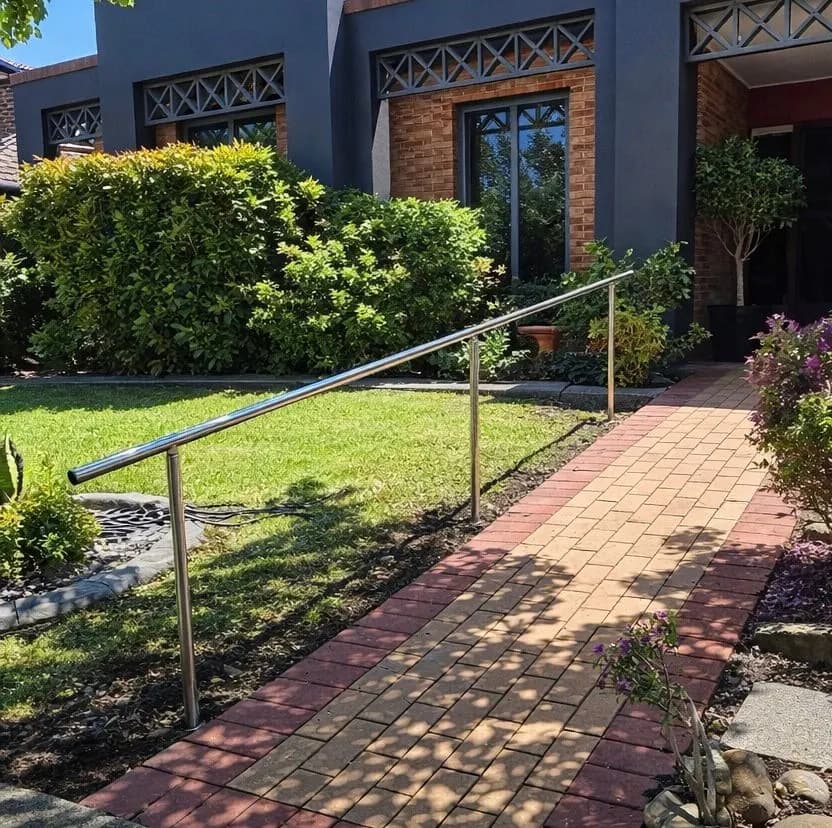
Along an open path or a driveway edge the rail stands on its own posts, set into footings. That is the commonest reason a rail has to be made in place.
Who we buildthese for.
Long or uneven external runs
A path from the street to the door that falls, turns, and changes surface. The single commonest reason we make a rail on site.
Driveways on a grade
Where somebody has to walk up or down the drive to get to the car, and there is nothing to hold the whole way.
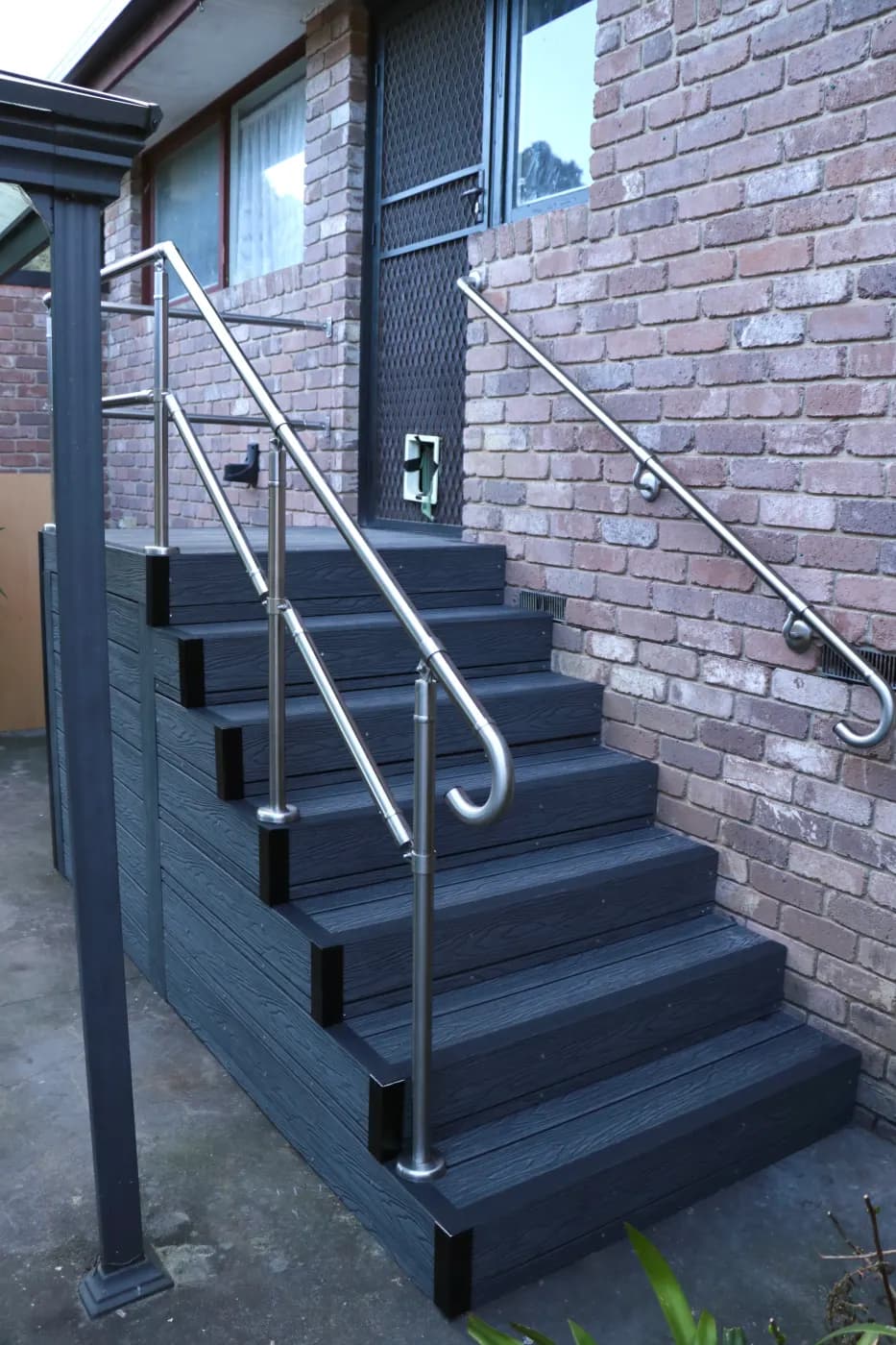
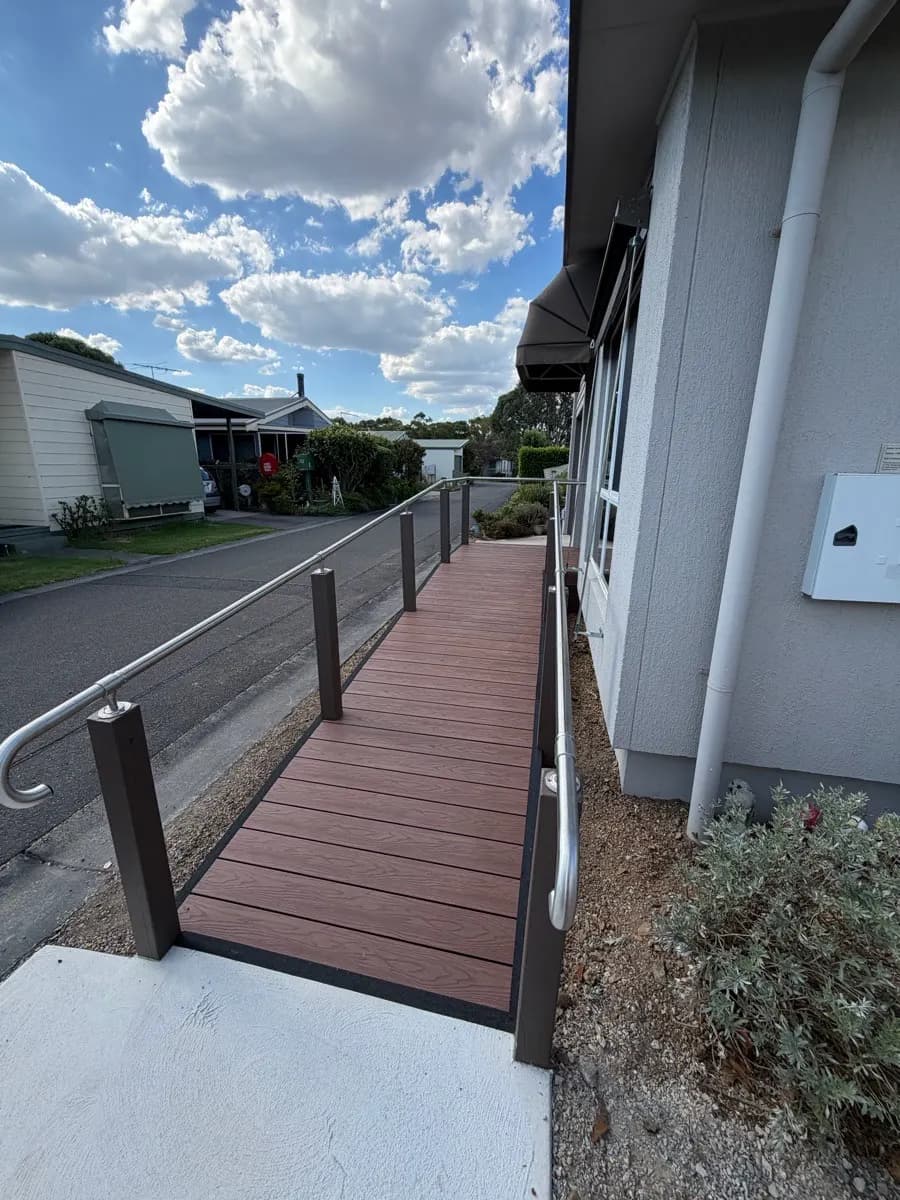
Alongside constructed ramps and steps
Rails are part of those structures rather than an addition, and they are fabricated at the same time by the same team.
Occupational therapists specifying a continuous rail
Where the report calls for support the whole way rather than at the steps only, which a workshop-made rail in sections rarely achieves.
Before you book,two things to know.
A rail made on site is galvanised only
This is the one thing to understand before you commit. Hot-dip galvanising and powder-coating are both tank and oven processes, so a rail welded up in place cannot be given either. There is no black, no stainless, and no colour match on a site-made rail.
If the finish matters, we make it in the workshop
Which means the run has to be simple enough to measure into a drawing. Where you want a particular finish, say so at the design stage — it changes which of the two pages your job belongs on, and it is far cheaper to decide then.
Weld joints need re-coating over the years
The cold-galvanised paint on the joints is maintenance, not a permanent finish. Touching it up occasionally is what keeps the rail from rusting at exactly the points that carry the load.
It is fixed work, and it means drilling
Plates are bolted into brick, concrete, or a footing. If you rent, you will need the owner’s or the agent’s permission before we can start.
Brochuresand guides.
The documents an occupational therapist, a plan manager, or a funding body usually asks us for. We are preparing these now — ring or email in the meantime and we will send what you need.
Product brochures
- Banister rails made on siteComing soon
- Mounting plates and fixingsComing soon
Product guides
- Galvanised rails — weld joint careComing soon
Quote request requirements
- On-site banister rails — what we need to quoteComing soon
How the jobactually runs.
Draftsperson visit and design
The run is walked and measured with the person who will use it, and the rail set out — where it starts, where it stops, where it can be fixed, and where it needs posts and footings.
Documentation and a fixed price
Set out so a plan manager, case manager, or occupational therapist can approve it without coming back to us. Funding is approved before we start.
Footings and setting out
Posts set and plate positions marked against the ground as it actually is. On an uneven run this is most of the skill in the job.
Fabrication and finishing on site
Pipe cut, bent, and welded in place, then every joint cleaned, primed, and cold-galvanised. The rail is usable once the coatings have cured.
Warranty
The work is carried out by licensed tradespeople and backed by the relevant warranties. If something is not right, ring the same number you rang the first time.
Rails we haveinstalled.
All photographs are of our own completed work in Melbourne homes.
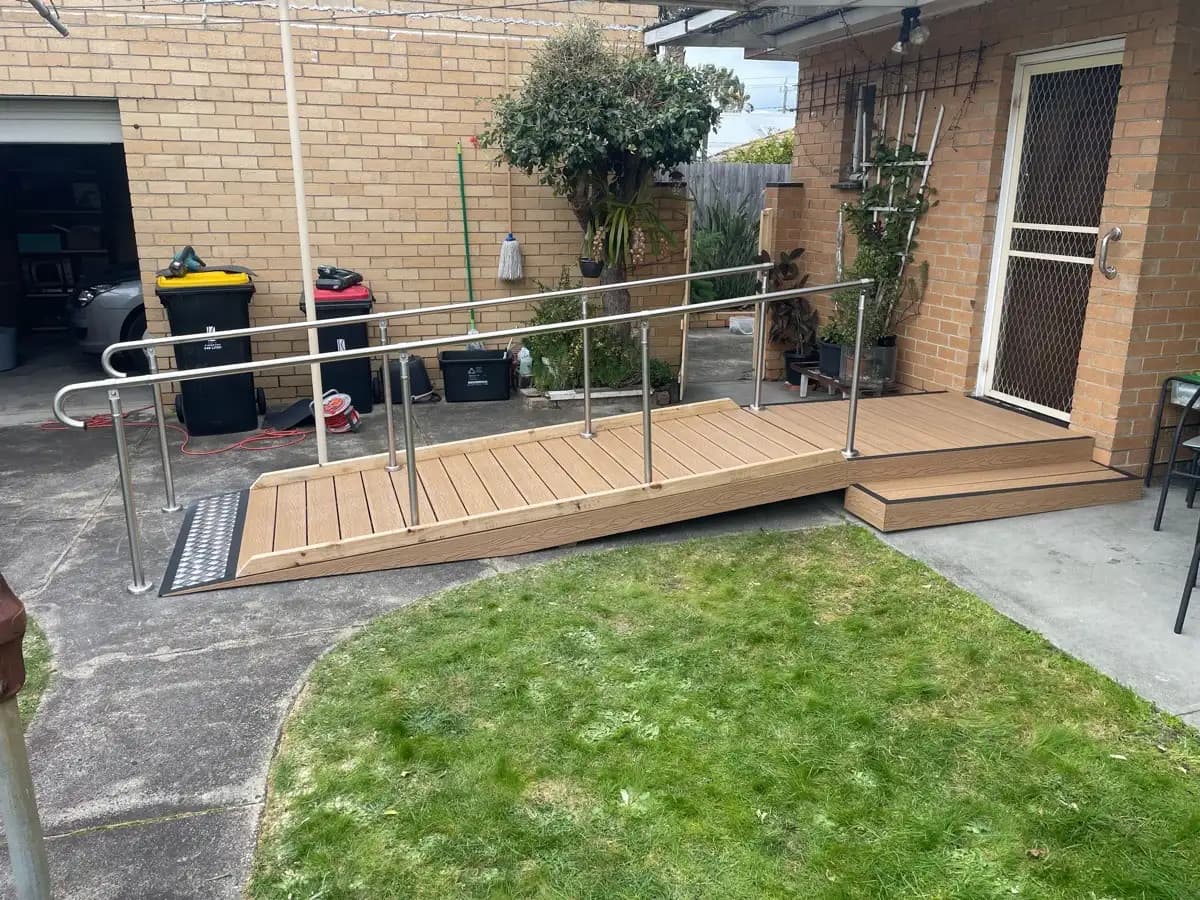
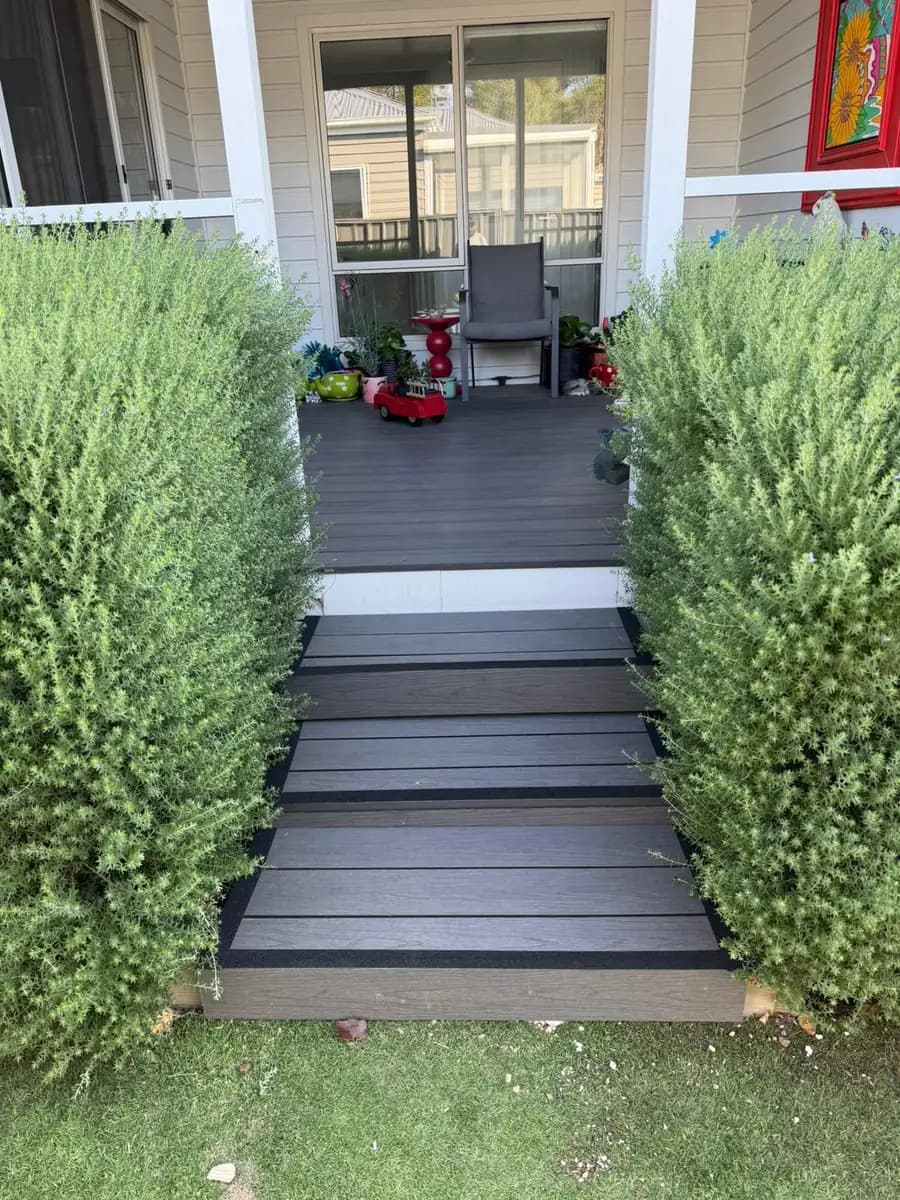
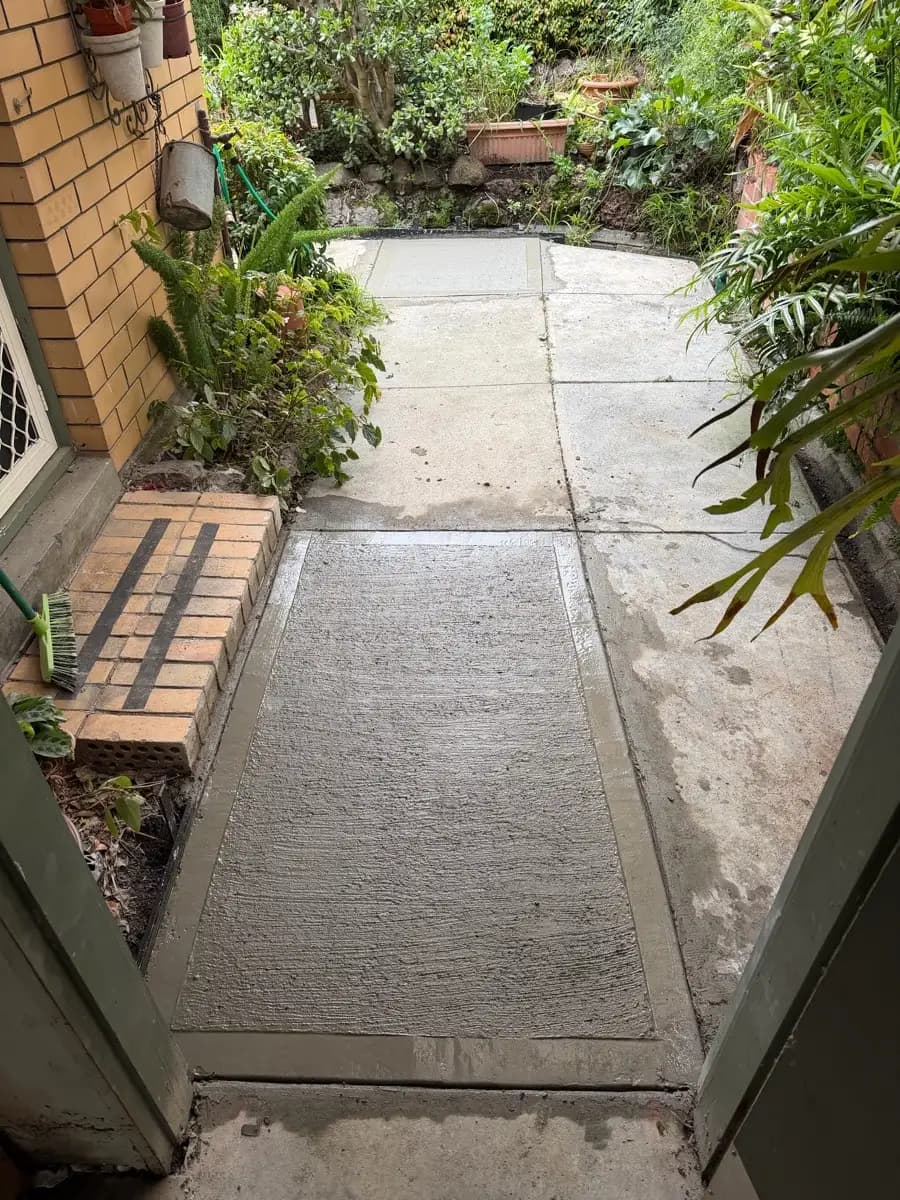
A path rail on posts, where there is no wall to fix to Following the ground from the wall to the path Rails both sides, so nobody has to turn sideways Set out against the ground as it actually is The last ten minutes of every rail job Rails run the full length of a ramp, landings included
If the run is simple,we make it off site.
A straight set of front steps or a short path does not need site fabrication. Measured, made in the workshop, and fitted gives a better finish and more choice of it.
That is the minor banister rails page, and it is the cheaper of the two.
Questions
What people ask aboutbanister rails made on site.
Frequently Asked Questions
Can I have a black or stainless rail made on site?
Why are the weld joints a different colour?
When do I need a rail made on site rather than in the workshop?
What can the rail be fixed to?
Will the NDIS pay for a rail like this?
Can’t see your question? Call us on +61 3 8658 1358 — we’re happy to talk it through.
More from Vital Ease
The rest of whatwe do.
Let us make your homework for you.
Ready to start your modification journey? Contact our team.
Ready to make your home safer and more accessible? Our team is here to help from your first consultation through to the final handover. Let’s talk about what’s possible for your home.