Skip to content

Mon–Fri: 9:00 AM – 5:00 PM

Vital Ease — home modification and maintenance solutions

Take the screen out, andthe shower opens up.

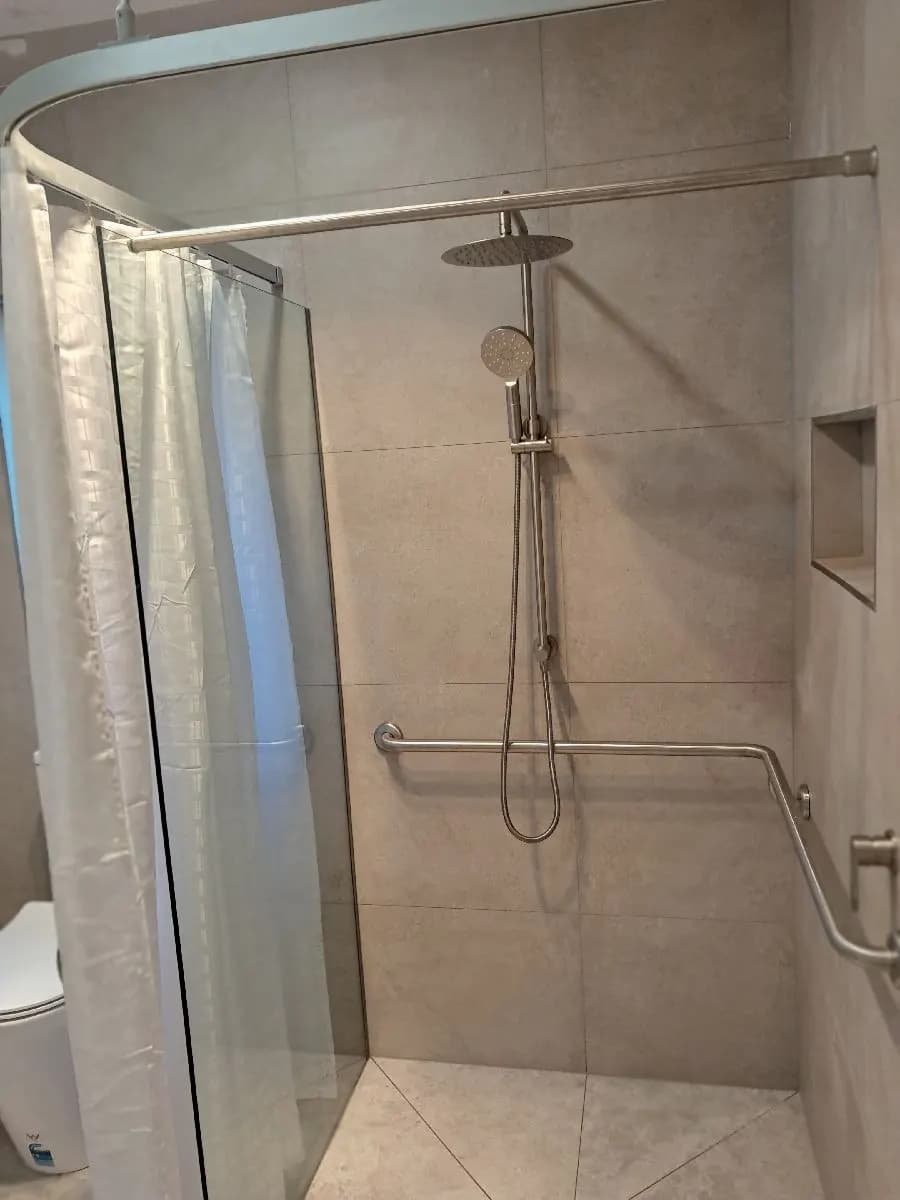
Weighted curtains on straight, bent, or ceiling-supported tracks — made to the shape of your shower, so a carer or a shower chair can actually get in.

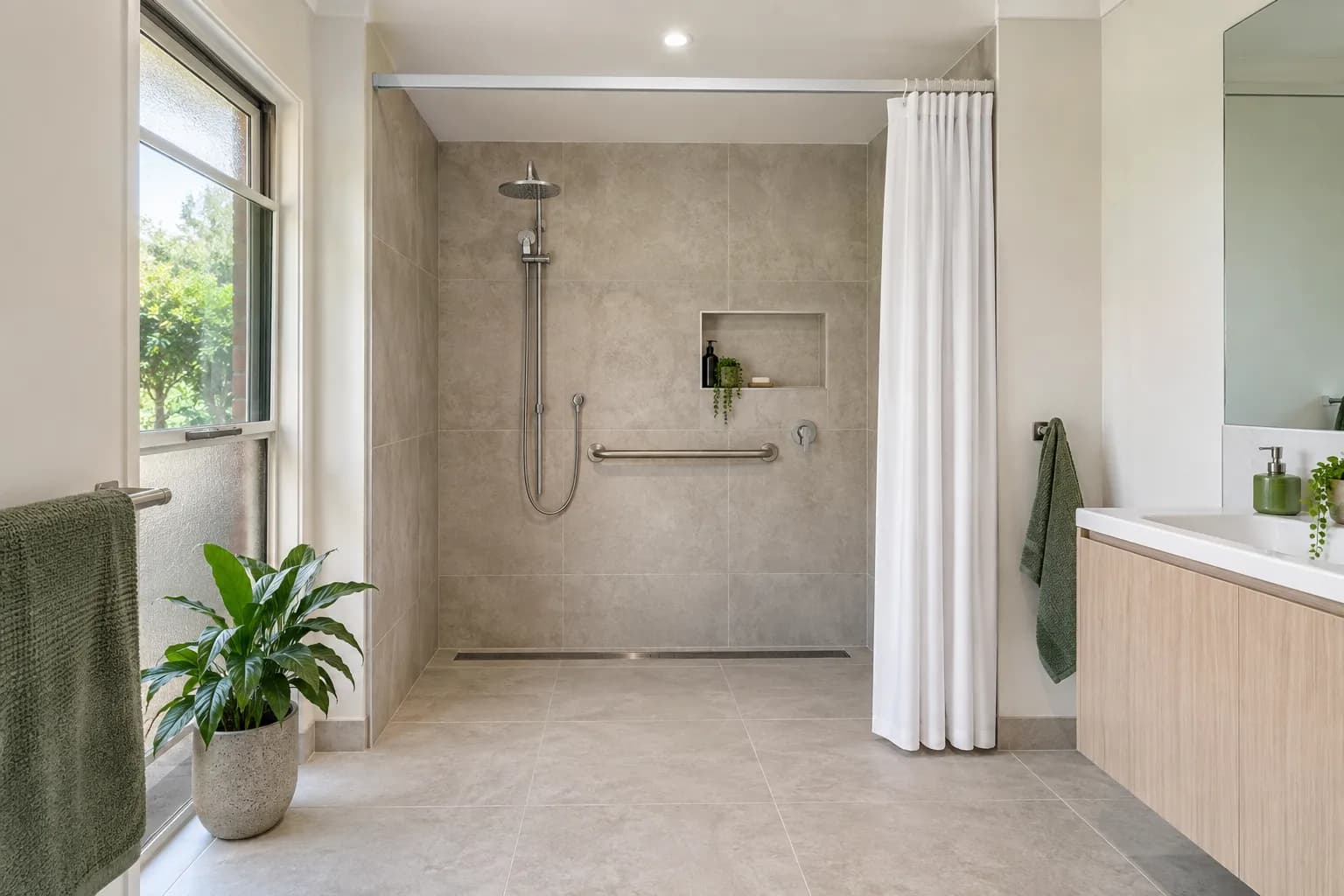
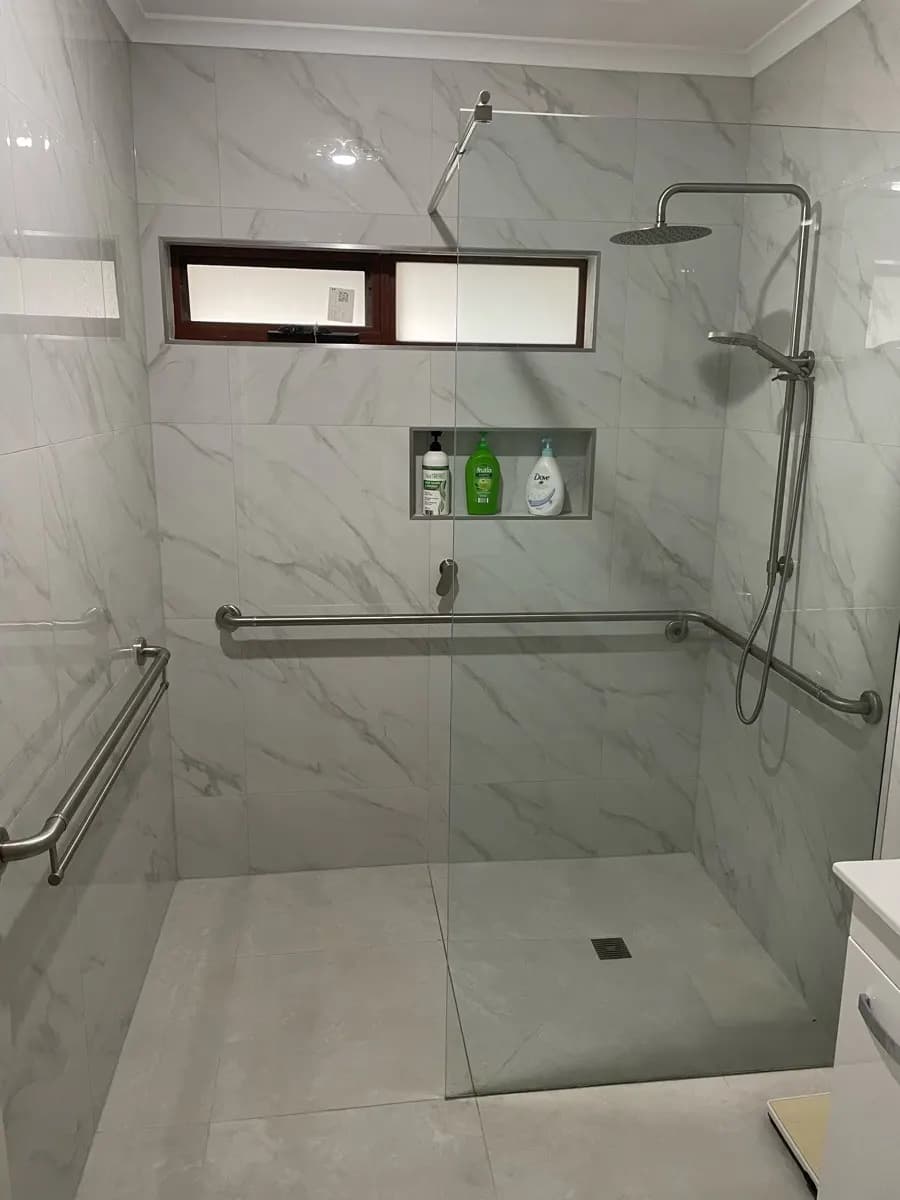
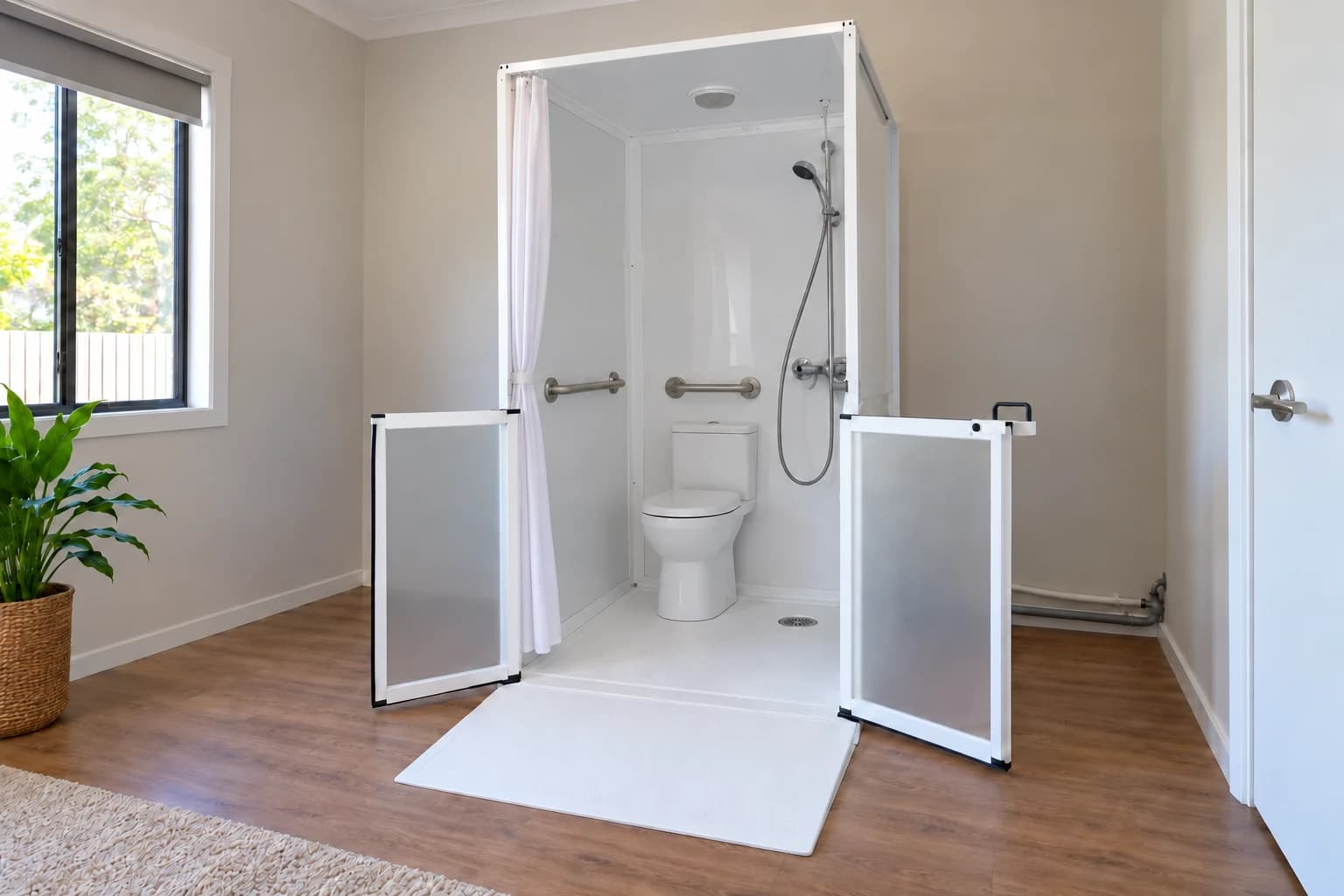
An open accessible shower with no screen door, a grab rail on the tiled wall, and a level entry

The screen door is thenarrowest part.

A hinged shower screen gives an opening of maybe five hundred millimetres, and it swings into the room. That is fine until somebody needs a walking frame, a shower chair, or a second person alongside them — at which point the door is the reason none of those will fit.

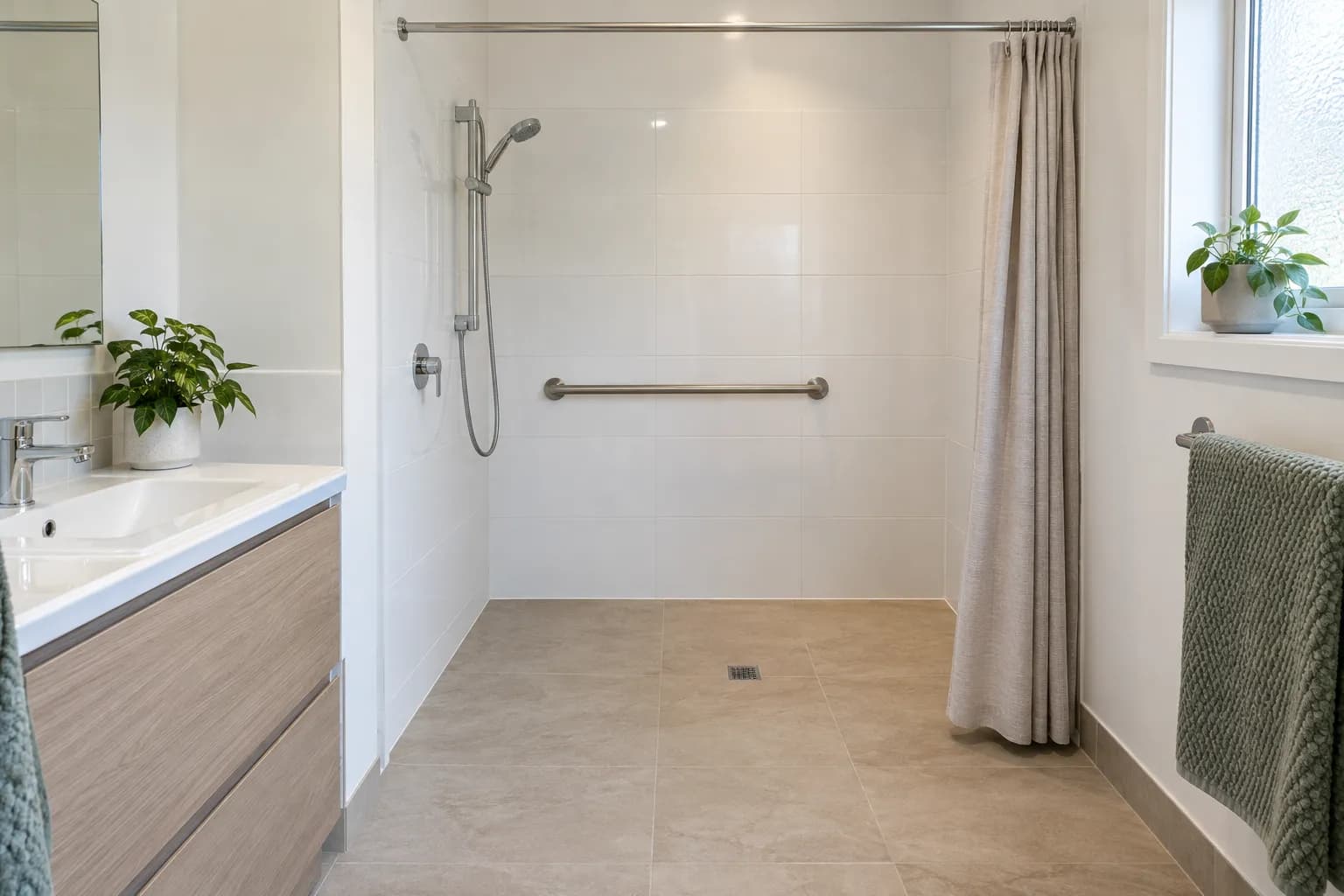
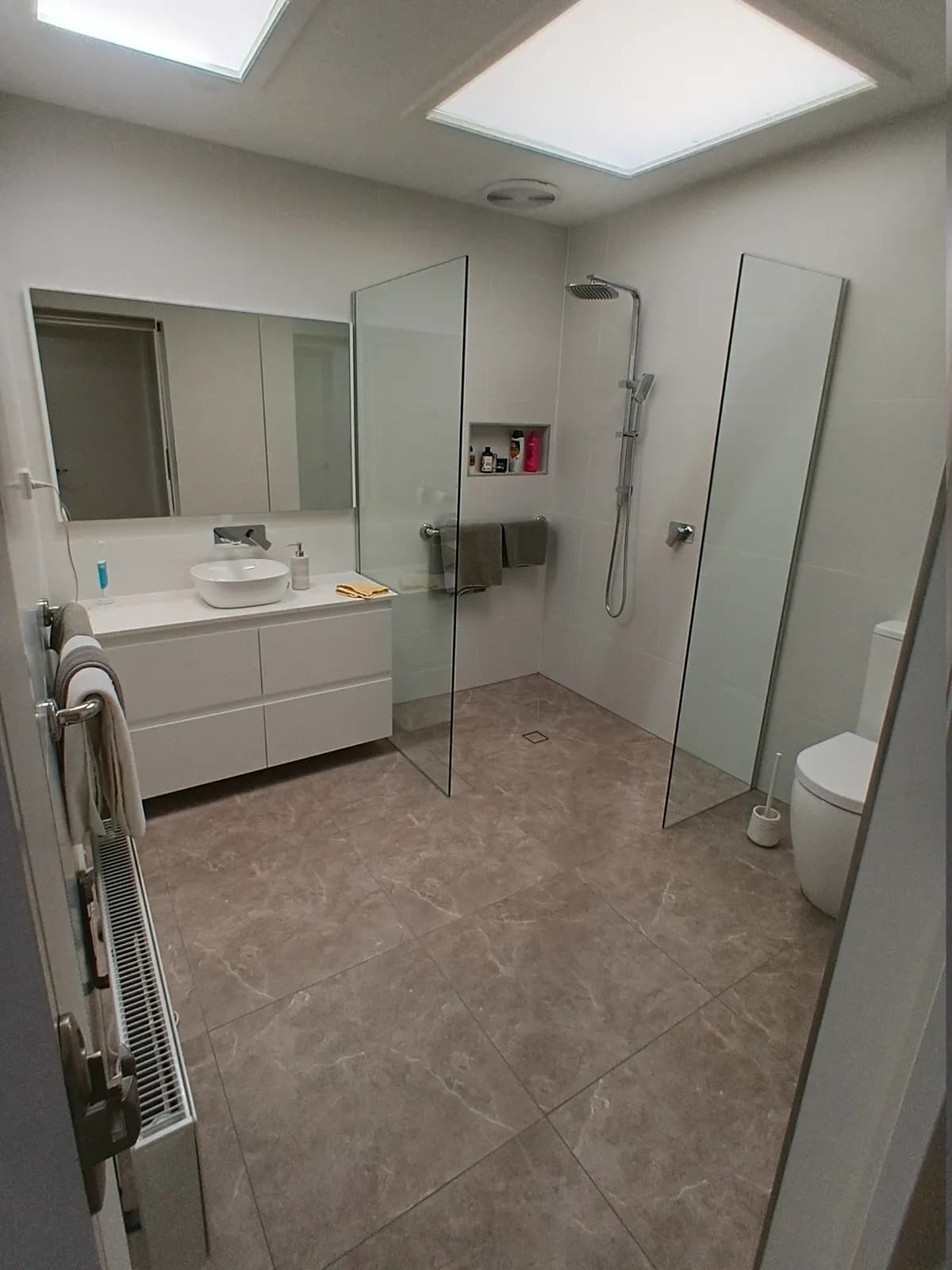
Taking the screen out and hanging a curtain instead is one of the cheapest changes on this site and one of the largest in effect. The entry goes from a doorway to the full width of the shower, and the curtain gets pushed aside rather than opened.

A weighted hem is what makes it work rather than annoy. Without weight, a curtain lifts in the draught, sticks to a wet arm, and lets water out at the bottom. With it, it hangs still, stays where it is put, and keeps the water in — which is the objection most people raise before they agree to lose the screen.

Book a free measure and quote

Types of curtain,rod, and track.

Five arrangements. Which you need is decided by the shape of the shower, not by preference.

  • Curtain with a rod

    The simplest and quickest: a straight rod between two walls, with the curtain hung from it. Suits a shower in a recess with a wall at each end.

  • Curtain on a straight track

    The curtain runs on gliders inside a track rather than on rings over a rod, so it moves with one finger and does not catch. The right answer for a standard rectangular shower, and far easier to work with a weak grip.

  • Curtain on a bent track

    For a corner or angled shower, where a straight run would leave one side open. The track is bent to the shape of the recess so the curtain follows the walls all the way round.

  • Bent track with ceiling support

    The same, with a drop rod to the ceiling where the track spans too far to hold its shape on wall fixings alone. Needed on wide or open showers, and on anything used daily by a carer and a client together.

  • Made to your shower

    Where none of the above fits — an unusual recess, a sloping ceiling, a shower with no wall on one side — the track and curtain are made to the room. That is the two-visit version of this job.

Vital Ease at a glance

Projects completed
300+

Projects completed

Agreements with Home Care Package and NDIS providers
100+

Agreements with Home Care Package and NDIS providers

Valued customers
200+

Valued customers

  • NDIS — National Disability Insurance Scheme registered provider
  • State-wide Equipment Program approved supplier
  • Victorian Building Authority registered builder
  • Home Care Packages approved provider

Who we fitthese for.

  • Anyone using a shower chair or commode

    A chair will not go through a hinged screen door. This is usually the change that lets one in.

  • Carers assisting with a shower

    Two people cannot share a screened shower. A curtain lets a carer stand at the opening and reach in without being in the water.

  • People with a weak grip

    A curtain on gliders in a track moves with one finger. A screen door has to be gripped, pulled, and swung.

  • Small bathrooms

    A screen door swings into the room and takes floor space that a walking frame needed. A curtain takes none.

Before you book,two things to know.

  • A curtain and rod can be nearly damage-free

    A tension rod between two walls fixes nothing permanently and comes out cleanly, which makes it the rental-friendly end of this range. It also cannot be leaned on.

  • A track is fixed work, and it means drilling

    Tracks are screwed to the wall or the ceiling so they hold their shape and the curtain runs true. If you rent, you will need the owner’s or the agent’s permission first.

  • Removing the screen is part of the job

    We take the old screen out, make good where it was fixed, and leave the wall tidy. Tell us when you book if the screen is to be kept rather than disposed of.

  • Neither one is something to hold

    A curtain track holds a curtain. If someone reaches for it when they lose their balance it will come off the wall, so a shower with a curtain wants a grab rail more than one with a screen, not less.

Brochuresand guides.

The documents an occupational therapist, a plan manager, or a builder usually asks us for. We are preparing these now — ring or email in the meantime and we will send what you need.

Product brochures

  • Curtain tracks and fittingsComing soon
  • Weighted shower curtainsComing soon
  • Shower rods and fittingsComing soon

Product guides

  • Bent curtain track — assemblyComing soon
  • Straight curtain track — assemblyComing soon

Quote request requirements

  • Shower curtains and tracks — what we need to quoteComing soon

Standard items:one visit.

  1. Quoting

    Quoted to the occupational therapist’s specification where there is one, with our recommendations alongside it. Funding is approved before we start.

  2. On-site consultation and installation

    The same tradesperson checks the walls and the ceiling, agrees the run with you, takes out the old screen where there is one, and fits the track and curtain on the spot.

  3. Warranty

    The work is carried out by licensed tradespeople and backed by the relevant warranties. If something is not right, ring the same number you rang the first time.

Made to your shower:two visits.

  1. Quoting

    As above. Funding is approved before anything is made.

  2. Measurement

    A first visit to measure the recess, the wall angles, and the ceiling height, and to work out where the track has to bend and whether it needs a drop support.

  3. Manufacture

    Track and curtain made to those measurements rather than cut down from a stock length on the day.

  4. Installation

    A second visit to fit it, by the same tradesperson who measured.

  5. Warranty

    The work is carried out by licensed tradespeople and backed by the relevant warranties. If something is not right, ring the same number you rang the first time.

The screen out, anda rail in.

Losing the screen widens the entry, and it also removes the thing people used to steady themselves on — badly, but they did. A shower with a curtain wants a grab rail more than one with a screen, not less.

The hub page sets out everything that goes into an accessible shower and what each part actually fixes.

See all shower solutions

Questions

What people ask aboutshower curtains & tracks.

Frequently Asked Questions

Will a curtain keep the water in as well as a screen?
With a weighted hem, yes, for a domestic shower. The weight is what stops it lifting in the draught, sticking to a wet arm, or letting water run out along the floor — the three things people are actually worried about when they say they would rather keep the screen. An unweighted curtain does all three, which is why we do not fit them.
Can you fit a track to a corner or angled shower?
Yes. A bent track is made to follow the walls of the recess so the curtain closes all the way round rather than leaving one side open. Where the track spans far enough that it will not hold its shape on wall fixings alone, we add a drop support to the ceiling.
Do you take the old shower screen away?
Yes, removing the screen is part of the job. We take it out, make good where it was fixed, and leave the wall tidy. Tell us when you book if you would rather keep it — some people want it stored in case they move.
Why a track instead of a rod?
A curtain on gliders inside a track moves with one finger; a curtain on rings over a rod has to be dragged and catches. For anyone with a weak grip or painful hands that difference is the whole point. A rod is quicker and cheaper and is a reasonable answer for a straight recess where grip is not the issue.
Can I fit a curtain and track in a rental?
A tension rod between two walls fixes nothing permanently and is usually fine. A track is screwed to the wall or ceiling, so that one needs the owner’s or the agent’s permission first. Ring us and we will tell you which suits your situation.

Can’t see your question? Call us on +61 3 8658 1358 — we’re happy to talk it through.

Let us make your homework for you.

Ready to start your modification journey? Contact our team.

Ready to make your home safer and more accessible? Our team is here to help from your first consultation through to the final handover. Let’s talk about what’s possible for your home.

+61 3 8658 1358Contact us
Open
Mon–Fri: 9:00 AM – 5:00 PM
Serving
Melbourne & Sydney

Before you go

Still working outwhat your home needs?

A five-minute call is usually enough to tell you what is possible and roughly what it costs — no obligation, no pressure.