Skip to content

Mon–Fri: 9:00 AM – 5:00 PM

Vital Ease — home modification and maintenance solutions

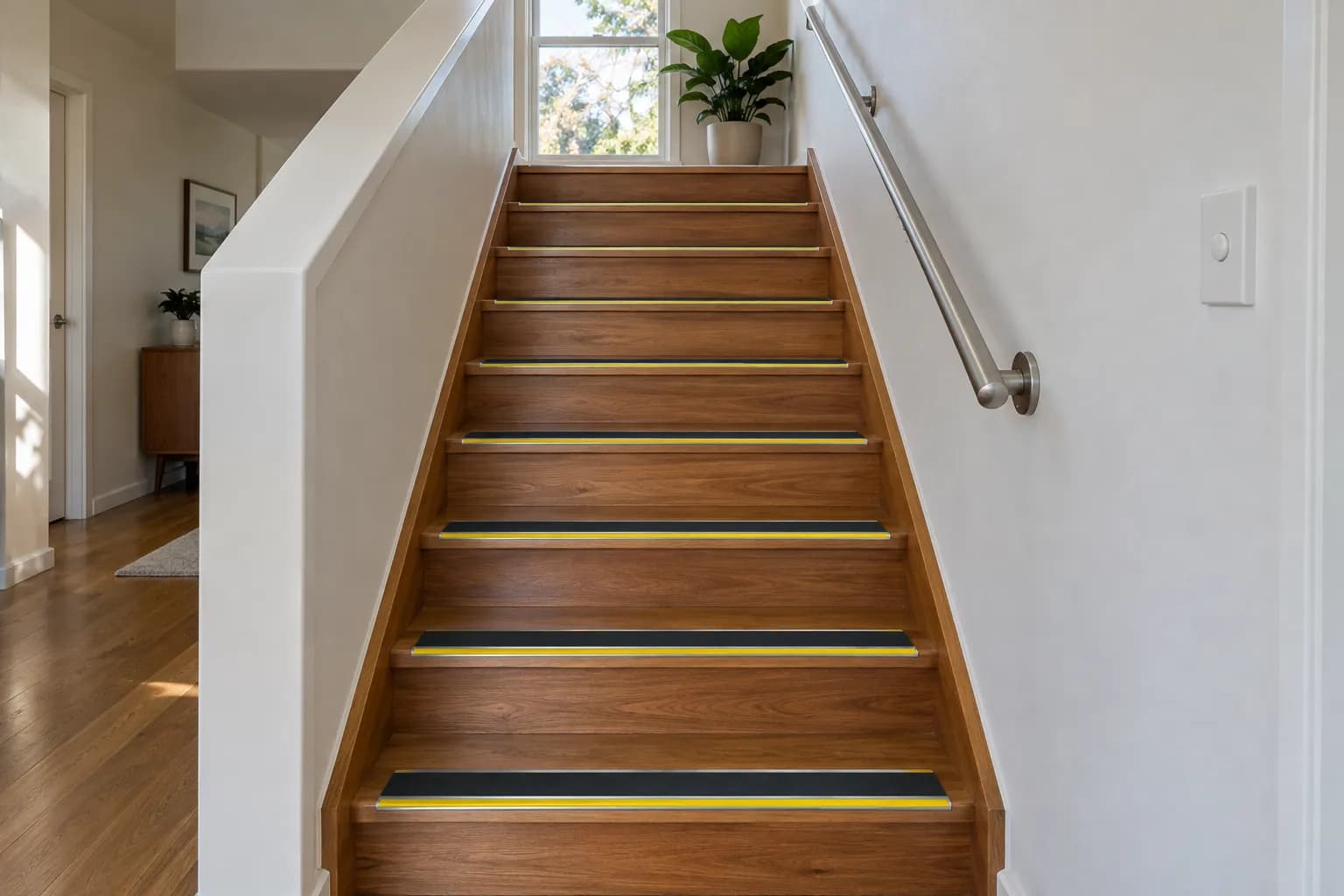
The edge of the step,gripped and visible.

Non-slip nosings for stair treads and flat strips for ramps and walkways — cut to your staircase, with a high-visibility edge marking.

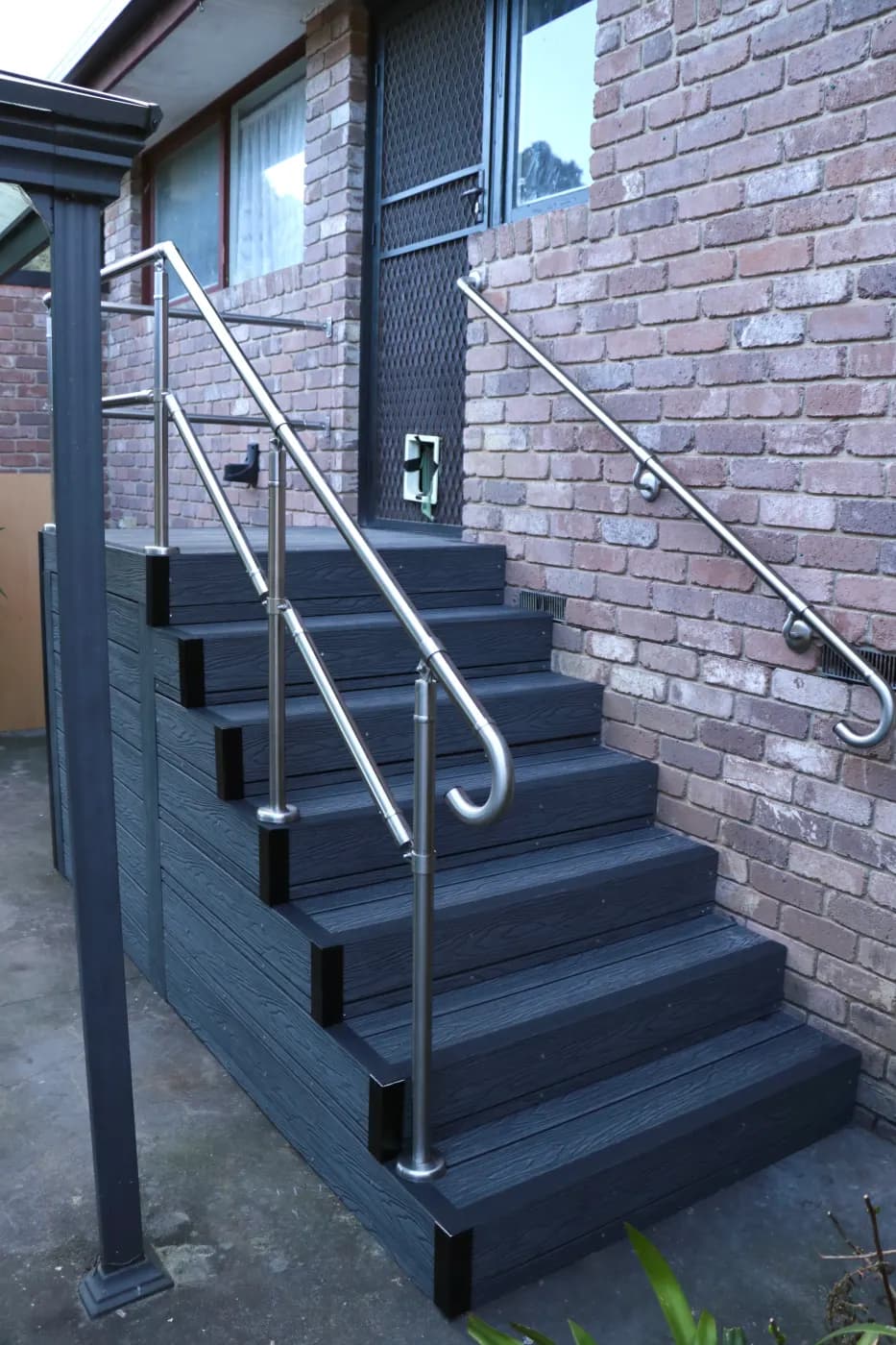
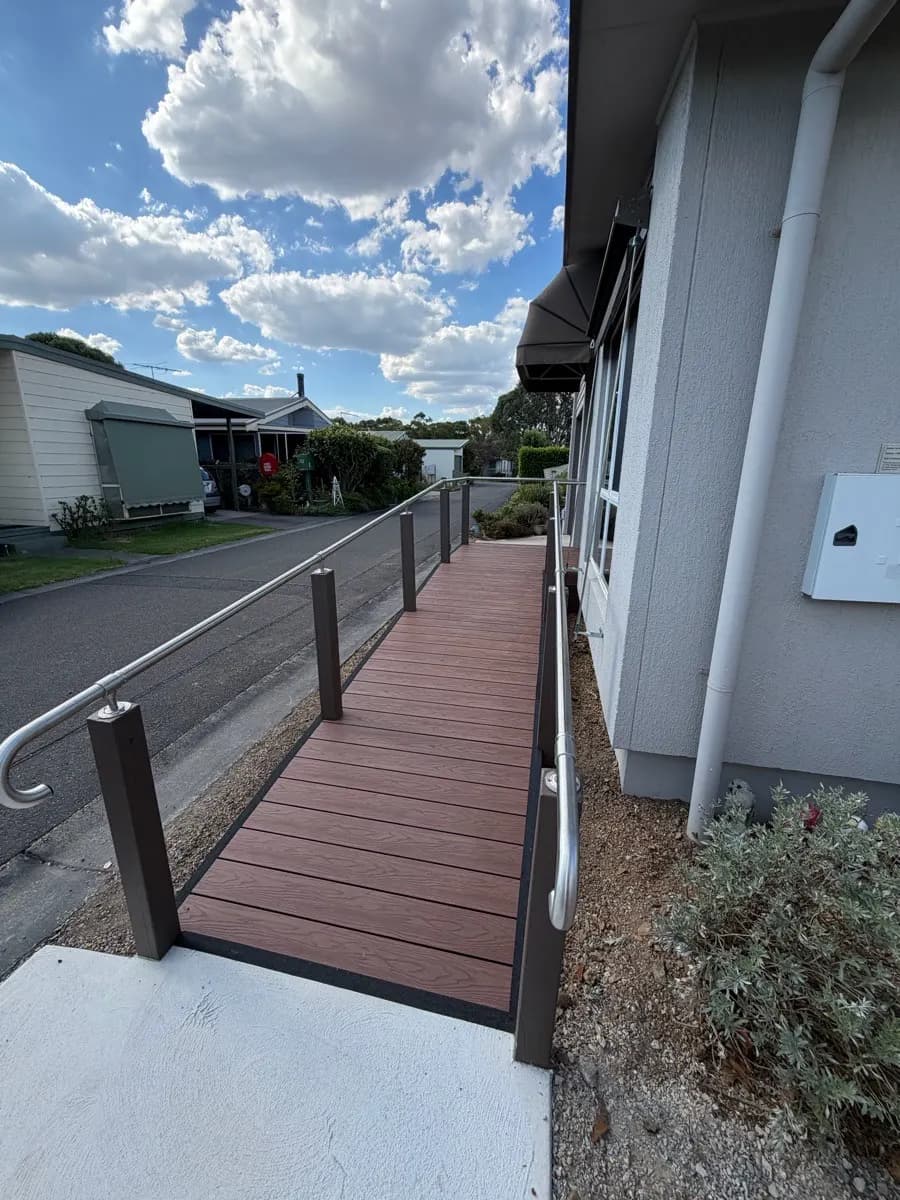
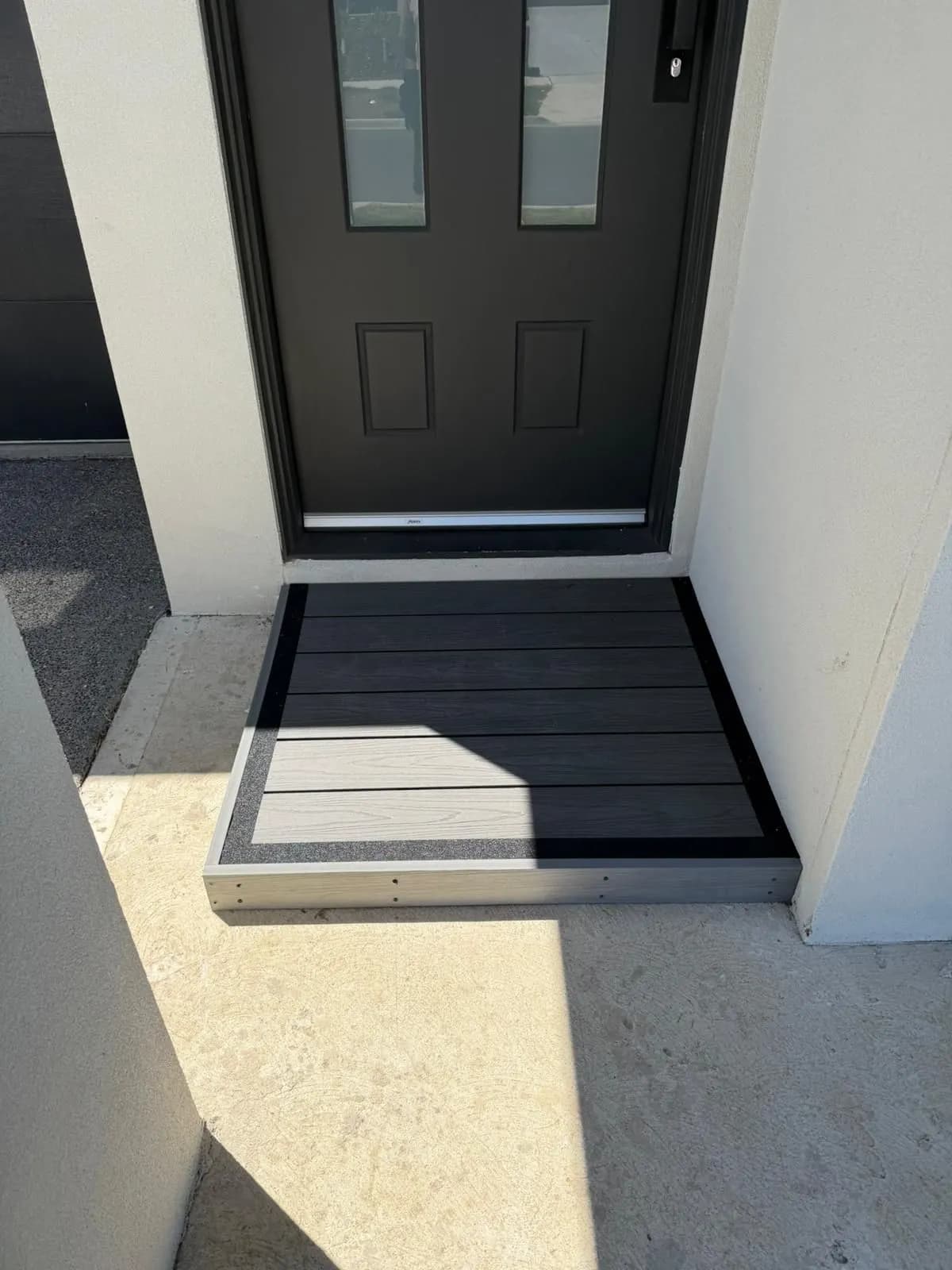
Timber entry steps with a stainless steel handrail alongside, leading up to a house door

People fall on the stepthey could not see.

On a flight of stairs the dangerous moment is coming down, and the dangerous step is the one whose edge was not where the foot expected it. That is rarely about grip alone — it is about not being able to tell where one tread ends and the next begins.

It gets harder with age for reasons that have nothing to do with mobility. Contrast sensitivity declines, so a flight of similarly-coloured treads flattens into what looks like a ramp. It happens sharply after cataract surgery, and in the half-light of a hallway at dusk it happens to everybody.

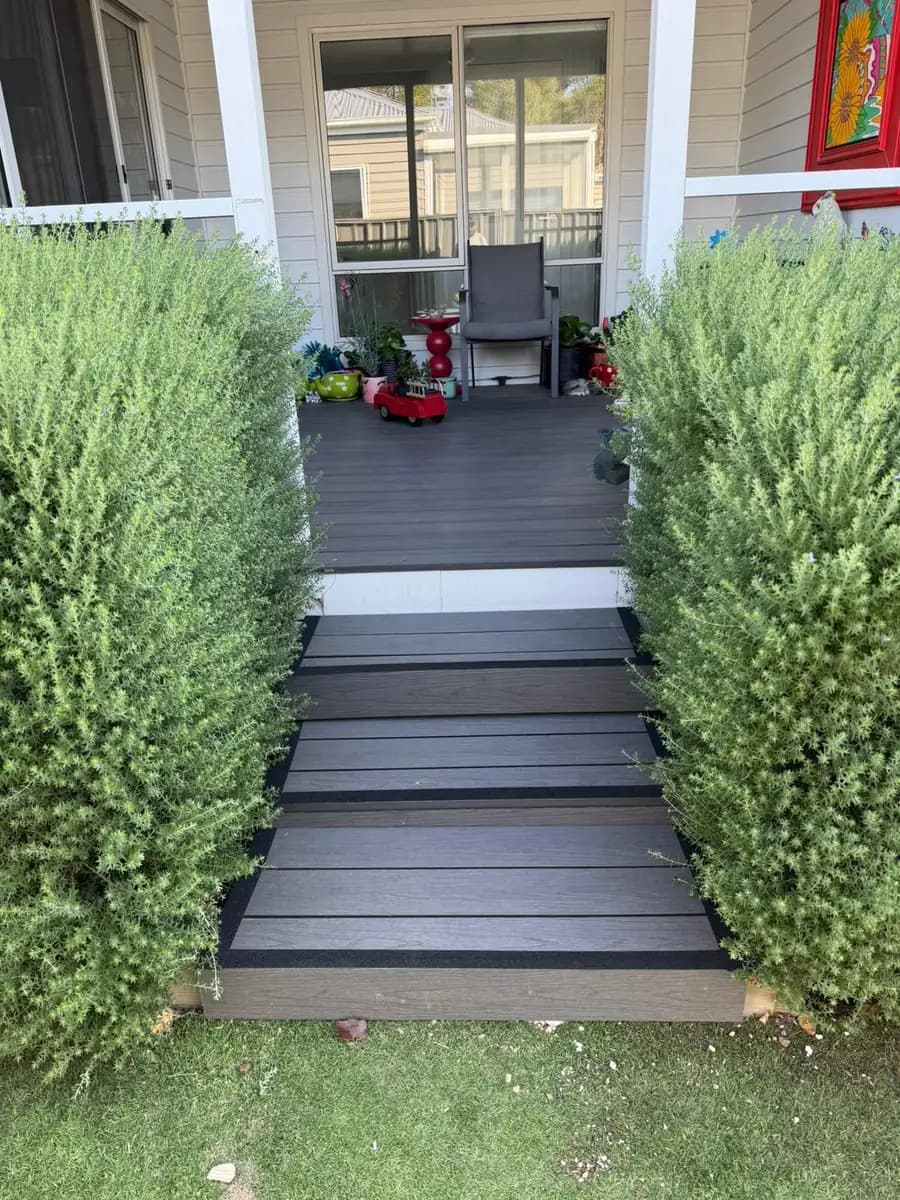
A nosing fixes both halves at once. It puts a gritted surface exactly where the ball of the foot lands, and it draws a visible line along every edge so the flight reads as a flight. The Australian access standard asks for that contrast on stair edges for precisely this reason, and we set them out to it.

Book a free measure and quote

Nosing and stripoptions.

Two profiles. One wraps the edge of a step; the other lies flat on a surface.

  • Stair nosings

    An angled profile that wraps over the front edge of the tread, so it grips both the top of the step and the face of it. This is what a staircase wants: it protects the edge from wear as well as marking it.

  • Flat strips

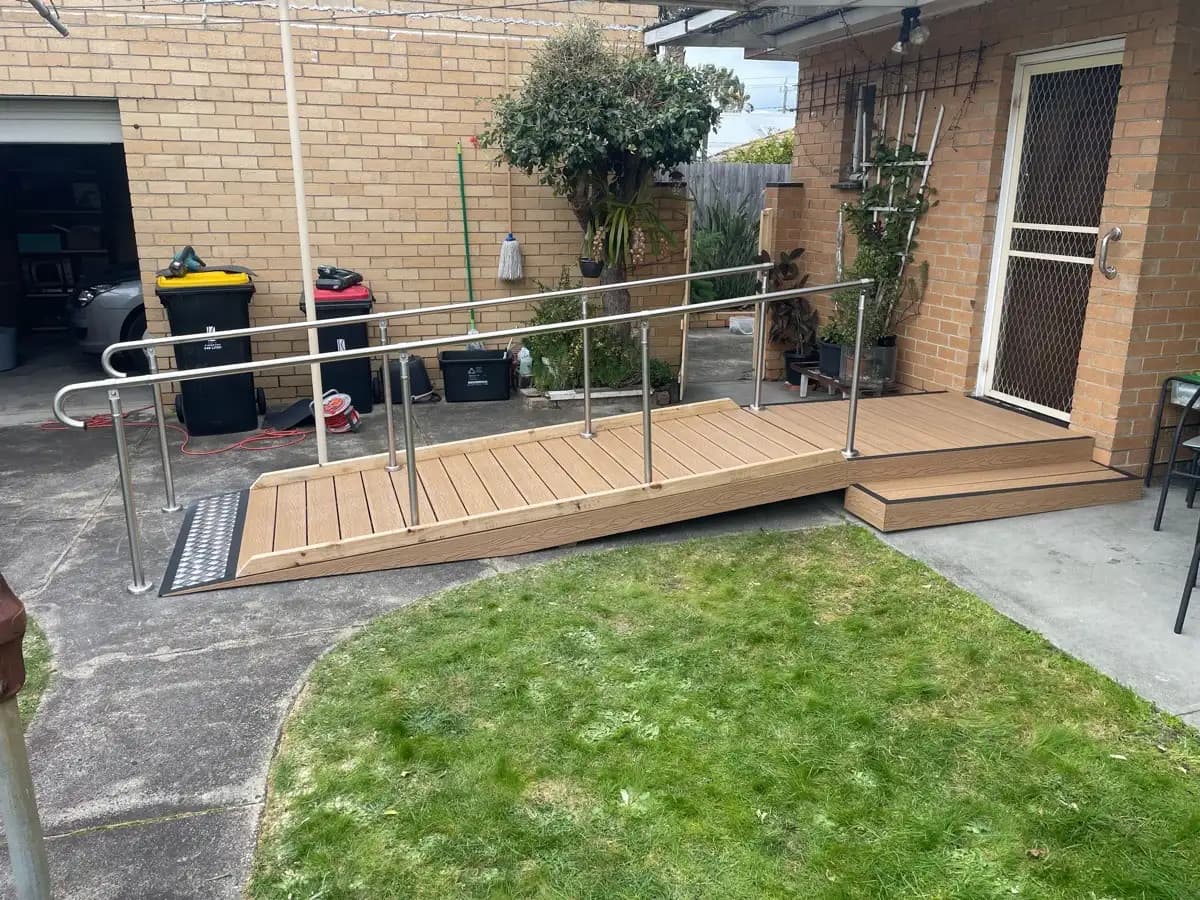
    A flat profile for surfaces with no edge to wrap — ramp decks, landings, walkways, and inclines. The same gritted surface and high-visibility marking, laid on rather than wrapped over.

  • A gritted, hard-wearing surface

    Both are made from a composite that resists corrosion, holds up outdoors, and does not wear smooth the way a painted or taped edge does. For a staircase somebody uses a dozen times a day, that durability is the whole reason to choose a nosing over tape.

  • Cut to your staircase

    Lengths are cut to the actual width of your treads rather than sold in fixed sizes, so there is no strip stopping short of the edge — which is exactly where a foot would land.

Vital Ease at a glance

Projects completed
300+

Projects completed

Agreements with Home Care Package and NDIS providers
100+

Agreements with Home Care Package and NDIS providers

Valued customers
200+

Valued customers

  • NDIS — National Disability Insurance Scheme registered provider
  • State-wide Equipment Program approved supplier
  • Victorian Building Authority registered builder
  • Home Care Packages approved provider

What the standardasks for.

AS 1428.1 sets requirements for stairs in accessible buildings, and it guides domestic work. These are the parts that decide how a nosing is specified.

  • A visible contrast on the tread edge

    The standard asks for a strip along the nosing that contrasts in luminance with the tread — not merely in colour. Two shades that differ in hue but match in lightness will still read as one surface to someone with reduced contrast sensitivity.

  • A consistent marking, every step

    A flight marked on some treads and not others is worse than one marked on none, because the eye starts trusting the pattern. Every step in the flight gets the same treatment.

  • A profile that does not itself catch a foot

    The nosing has to grip without standing proud enough to trip on. That is why the profile matters and why these are fitted rather than glued on top of an existing edge.

Who we fitthese for.

  • Anyone whose eyesight has changed

    The clearest case. Reduced contrast sensitivity is why a familiar staircase suddenly becomes difficult, and it is the thing a marked edge directly addresses.

  • Households with a staircase in daily use

    Where tape would be worn through or lifting within a year and somebody would have to keep replacing it.

  • External steps and ramps in the weather

    Sun, rain, and foot traffic all shorten a tape. A fixed nosing is the version that survives outdoors.

  • Occupational therapists specifying to the standard

    Where the report calls for contrast on stair nosings, this is the item that satisfies it — and we will send the product documentation for the file.

Before you book,two things to know.

  • It is applied to the step, not built into it

    Nosings fix to the tread that is already there with standard hardware. Nothing structural is altered and the staircase itself is unchanged, which is why this is a minor modification rather than a stair rebuild.

  • It suits a rental better than most things we fit

    They can be taken up again and they protect the tread edge from wear while they are on. Check with the owner or the agent, but this is one they rarely object to.

  • It will not fix a staircase that is the wrong shape

    If the treads are too shallow to get a foot onto, or the rises are uneven because the flight has settled, a nosing marks the problem rather than solving it. We will say so at the visit — that is a steps job.

  • A rail matters more than a nosing

    If the staircase has nothing to hold, fit that first. A marked edge helps somebody see the step; a handrail is what catches them if they still miss it.

Brochuresand guides.

The documents an occupational therapist, a plan manager, or a building surveyor usually asks us for. We are preparing these now — ring or email in the meantime and we will send what you need.

Product brochures

  • Stair nosings and stripsComing soon

Specifications

  • Stair nosing — profile drawingComing soon
  • Slip resistance and compliance documentationComing soon

Quote request requirements

  • Stair nosings — what we need to quoteComing soon

How the jobactually runs.

  1. Quoting

    Quoted to the occupational therapist’s specification where there is one, per flight rather than per step. Funding is approved before we start.

  2. On-site consultation and installation

    The same tradesperson measures the treads, cuts the nosings to width, and fixes them down. One visit, and the stairs are usable the same day.

  3. Warranty

    The work is carried out by licensed tradespeople and backed by the relevant warranties. If something is not right, ring the same number you rang the first time.

If the steps themselvesare wrong.

A nosing marks and grips the edge of a step that is otherwise the right shape. Where the treads are too shallow to take a whole foot, or the rises changed as the ground settled, marking the edges does not make the flight safe.

That is a rebuild, and the steps page sets out the tread depths we work to.

See access steps

Questions

What people ask aboutstair nosings & strips.

Frequently Asked Questions

Why not just use non-slip tape on the stairs?
You can, and on a rarely-used flight it is a reasonable answer. On a staircase somebody climbs a dozen times a day, tape wears through or starts lifting within a year, and a lifted edge on a stair nosing is worse than no tape at all. A fixed nosing lasts far longer and protects the tread edge from wear while it is there.
What colour should the nosing be?
Whatever contrasts in LIGHTNESS with the tread, not just in colour. That is the part people get wrong — two shades that differ in hue but match in lightness will still read as one flat surface to someone with reduced contrast sensitivity, which is exactly who the marking is for. We choose it against your actual treads on the visit.
Do you have the slip rating and compliance paperwork?
We will send you the manufacturer’s documentation for the specific product before you commit — it is what an occupational therapist or a building surveyor puts on file, and it is not something to quote from memory. Ring or email and ask for it by name.
Can these go on outdoor steps?
Yes, and outdoors is where they earn their keep. The composite resists corrosion and does not wear smooth in the weather the way a painted or taped edge does. External timber steps and ramp landings are two of the commonest places we fit them.
Can they be fitted in a rental?
Usually without difficulty. They fix to the tread with standard hardware, nothing structural changes, and they can be taken up again — and while they are on, they protect the stair edge from wear, which owners tend to be pleased about. Check with the agent, but this is one they rarely refuse.

Can’t see your question? Call us on +61 3 8658 1358 — we’re happy to talk it through.

Let us make your homework for you.

Ready to start your modification journey? Contact our team.

Ready to make your home safer and more accessible? Our team is here to help from your first consultation through to the final handover. Let’s talk about what’s possible for your home.

+61 3 8658 1358Contact us
Open
Mon–Fri: 9:00 AM – 5:00 PM
Serving
Melbourne & Sydney

Before you go

Still working outwhat your home needs?

A five-minute call is usually enough to tell you what is possible and roughly what it costs — no obligation, no pressure.