Skip to content

Mon–Fri: 9:00 AM – 5:00 PM

Vital Ease — home modification and maintenance solutions

Grip you feel underfoot,and cannot see.

A clear treatment that gives a tiled or vinyl floor a fine grit texture when it is wet, and leaves it looking exactly as it did when it is dry.

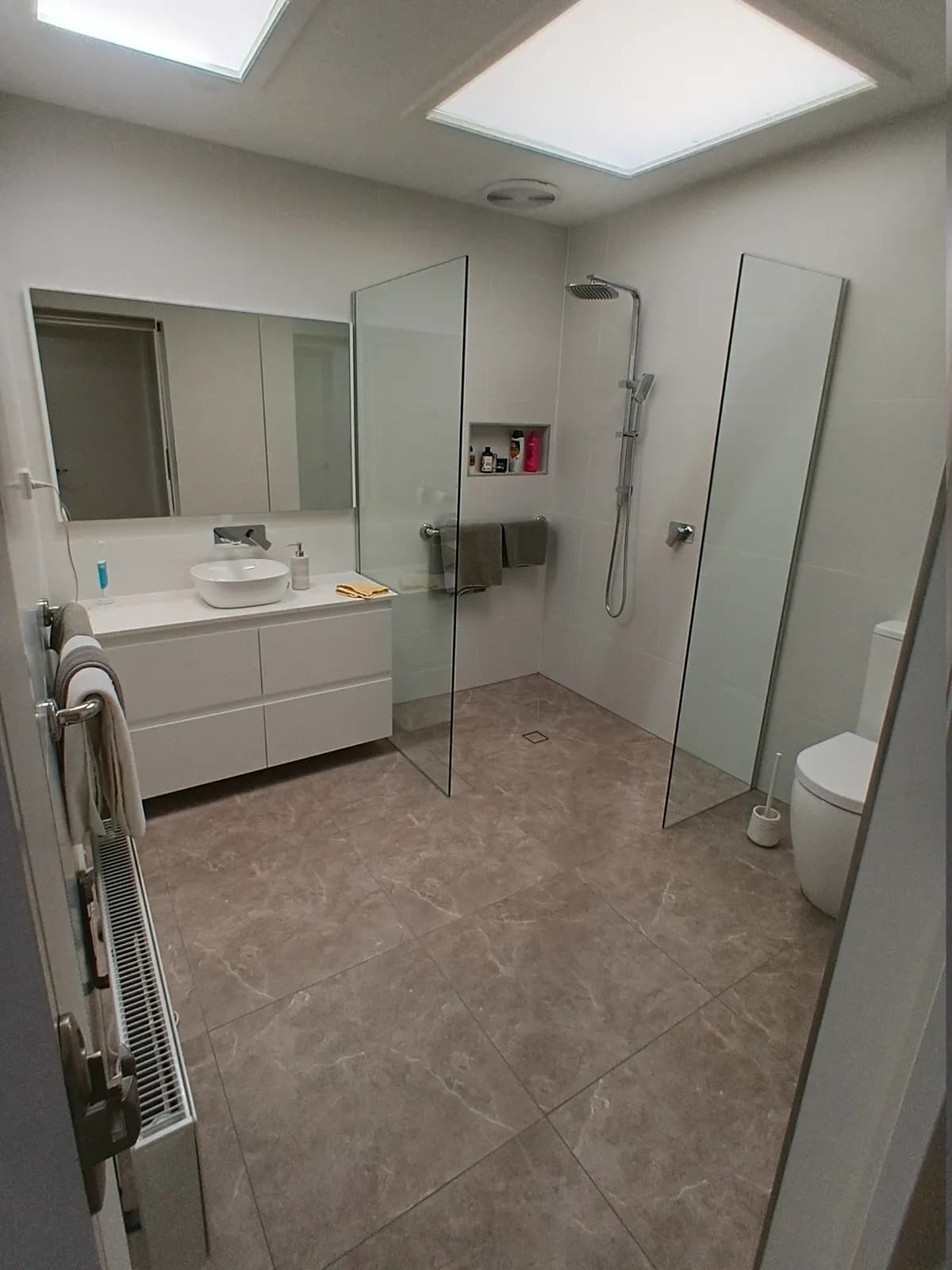
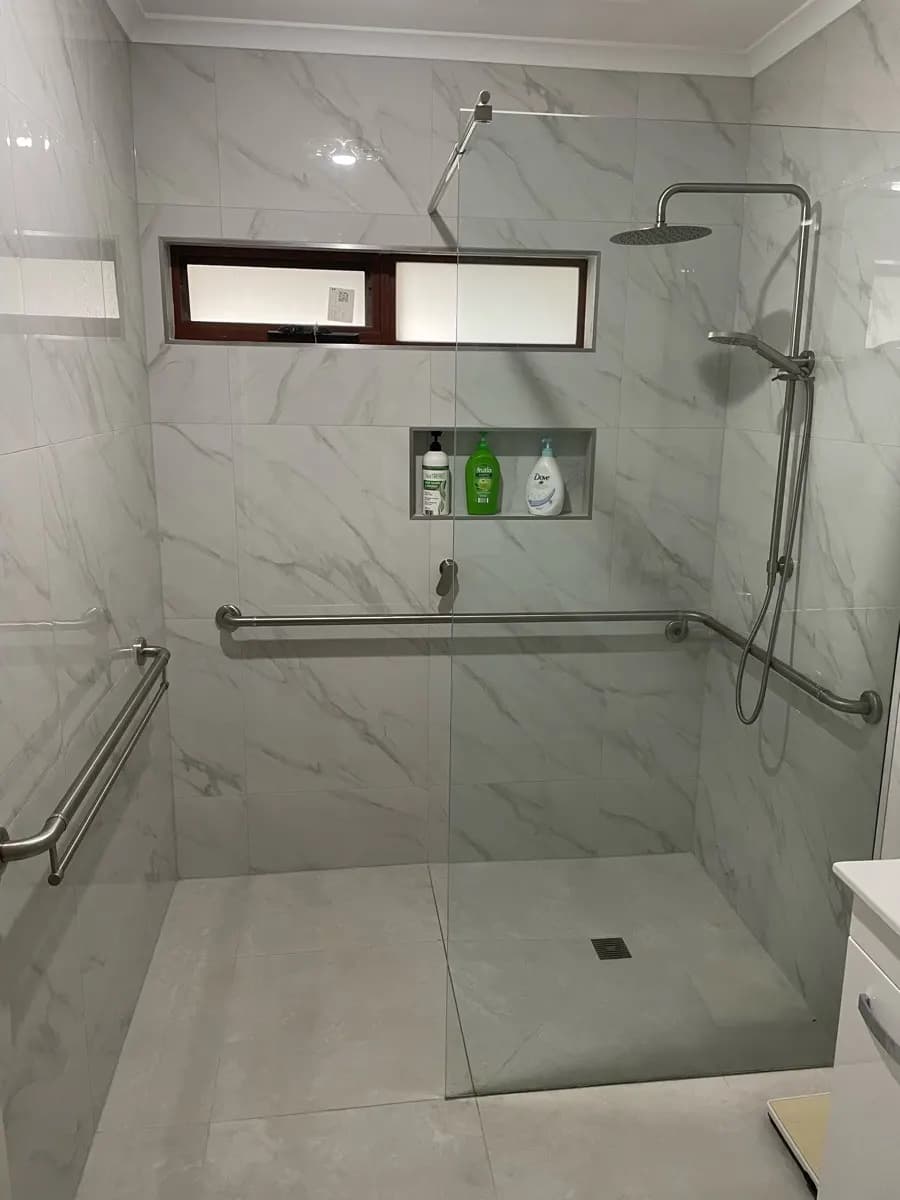
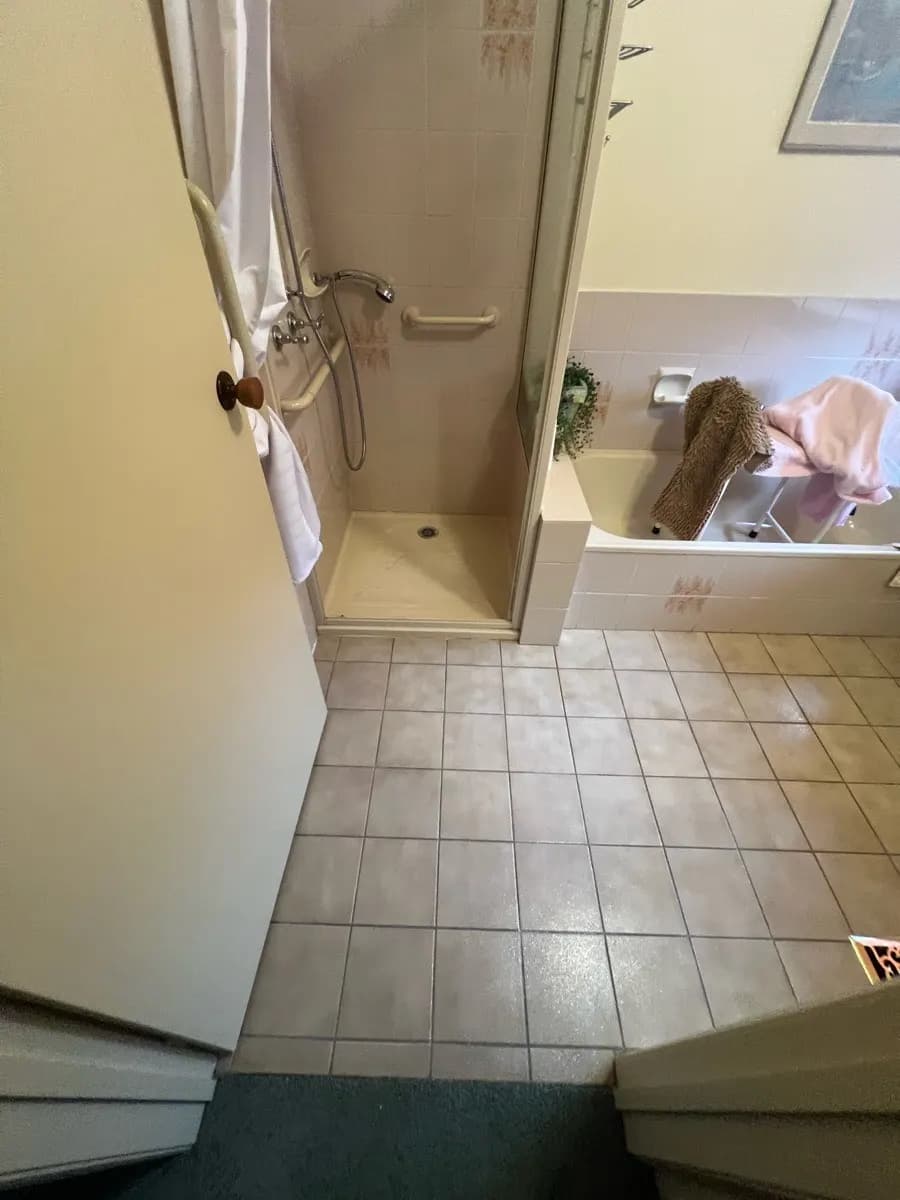
A grey tiled bathroom floor and glass-screened shower in a Melbourne home

Invisible dry,grippy wet.

A non-slip floor treatment is a clear liquid applied over the floor that is already there. Dry, you cannot see it and barely feel it. Wet, it produces a fine grit texture underfoot that gives a bare foot something to hold on to — which is exactly when a tiled bathroom floor stops being safe.

It is worth knowing how this differs from what used to be done. Traditional anti-slip treatments were acid-based and worked by etching microscopic pits into the tile itself. They were effective, permanent, and irreversible: the tile was changed forever, and on a polished or glazed surface it dulled the finish.

The treatments we apply sit on top of the surface instead. The tile underneath is untouched, the finish is unchanged, and if it ever needs to come off it can. That is the difference that makes this usable in a rental and on a floor somebody actually likes.

Book a free measure and quote

Invisible safety,lasting performance.

Grip added to a floor without altering how it looks or what it is made of.

  • A clear grit application

    The treatment creates a subtle texture that engages when the surface is wet, improving traction at the moment it matters, while staying visually clear the rest of the time.

  • Applied to the surface, not absorbed into the tile

    Unlike the older etch treatments, this does not alter the tile itself. It is why the finish is unchanged and why it can be removed later if it is ever wanted gone.

  • Fully removable

    Which makes it one of the very few things in our range that can be undone completely. That matters in a rental, in a unit, and on a floor that somebody chose and likes.

  • A wide range of surfaces

    Tiles, vinyl, timber, concrete, plastic, and polymarble shower bases, indoors and out. Some surfaces suit it better than others, which is what the visit establishes.

Vital Ease at a glance

Projects completed
300+

Projects completed

Agreements with Home Care Package and NDIS providers
100+

Agreements with Home Care Package and NDIS providers

Valued customers
200+

Valued customers

  • NDIS — National Disability Insurance Scheme registered provider
  • State-wide Equipment Program approved supplier
  • Victorian Building Authority registered builder
  • Home Care Packages approved provider

Who we dothis for.

  • Tiled bathrooms and shower bases

    The commonest request by a distance, and the room where the most falls happen. A polished tile with soapy water on it has almost no grip at all.

  • Anyone at higher risk of a fall

    Where balance, strength, or eyesight has changed, and the household would rather treat the floor than rebuild the room.

  • People who do not want the floor changed

    Because it looks the same afterwards. That is often the objection to every other option, and this is the answer to it.

  • Renters and unit residents

    It is removable and it alters nothing, so it is one of the few modifications that genuinely does not need anything undone at the end of a lease.

Before you book,two things to know.

  • Nothing is drilled and nothing is damaged

    The treatment is applied to the surface, needs no structural work, and can be removed. It is entirely non-invasive, which makes it suitable for an owned or a rented property equally.

  • The floor is out of use while it cures

    It needs a curing period before it is walked on or wet. That is hours rather than days, and the tradesperson gives you the time for your floor and the weather on the day. Plan the bathroom around it.

  • It will not fix a floor that is failing

    Cracked or drummy tiles, a lifted vinyl seam, or waterproofing that has gone are not grip problems. We will say so on the visit rather than coat over them, because a treatment on top of a failing floor hides the failure.

  • It is a first step, not usually the whole answer

    Most bathroom falls we are called out after involved reaching or standing up rather than sliding. If the visit suggests a rail or a seat would do more, we will say so.

Brochuresand guides.

The documents an occupational therapist, a plan manager, or a builder usually asks us for. We are preparing these now — ring or email in the meantime and we will send what you need.

Product brochures

  • Non-slip floor treatmentsComing soon

Product guides

  • Non-slip treatment — care and cleaningComing soon

Quote request requirements

  • Floor treatments — what we need to quoteComing soon

How the jobactually runs.

  1. Quoting

    Quoted to the occupational therapist’s specification where there is one. We will want to know what the floor is made of — a photograph is usually enough. Funding is approved before we start.

  2. On-site consultation and installation

    The same tradesperson confirms the surface suits the treatment, then cleans and prepares the floor properly — which is most of the job and most of what decides whether it lasts — before applying it.

  3. Warranty

    The work is carried out by licensed tradespeople and backed by the relevant warranties. If something is not right, ring the same number you rang the first time.

For edges ratherthan whole floors.

A treatment covers an area. Where the risk is a specific edge — the lip of a shower base, the front of each step, the nosing on a staircase — a strip of tape, vision paint, or a fixed nosing marks it and grips it at the same time.

They are often done together, and on the same visit.

See non-slip tape and paint

Questions

What people ask aboutnon-slip floor treatments.

Frequently Asked Questions

Will it change how my tiles look?
Dry, effectively not at all — that is the main reason people choose it. It is applied on top of the surface rather than etched into it, so a polished or glazed tile keeps its finish. What changes is what you feel underfoot when the floor is wet.
How is this different from an acid etch treatment?
An etch treatment works by cutting microscopic pits into the tile itself. It is effective and it is permanent — the tile is altered forever and the finish is usually dulled. What we apply sits on the surface, leaves the tile unchanged, and can be removed. If a floor has already been etched, that cannot be undone.
How long does it last?
That depends on the product and on the traffic and cleaning the floor gets, and we will give you the manufacturer’s stated life for the specific treatment before you commit rather than quote a range from memory. Harsh cleaning products shorten it more than foot traffic does, so we will also tell you what to clean it with.
What surfaces can it go on?
Tiles, vinyl, timber, concrete, plastic, and polymarble shower bases, indoors and out. Some take it better than others and a very rough or porous surface may not need it at all. Send us a photograph of the floor when you ring and we will tell you before anybody comes out.
Can I have it done in a rental?
Yes, and it is one of the few modifications that genuinely leaves nothing behind. Nothing is drilled, the tile is not altered, and the treatment can be removed at the end of a lease. Most agents have no objection once they understand it is not an etch.

Can’t see your question? Call us on +61 3 8658 1358 — we’re happy to talk it through.

Let us make your homework for you.

Ready to start your modification journey? Contact our team.

Ready to make your home safer and more accessible? Our team is here to help from your first consultation through to the final handover. Let’s talk about what’s possible for your home.

+61 3 8658 1358Contact us
Open
Mon–Fri: 9:00 AM – 5:00 PM
Serving
Melbourne & Sydney

Before you go

Still working outwhat your home needs?

A five-minute call is usually enough to tell you what is possible and roughly what it costs — no obligation, no pressure.