
Grab rails made to fityour bathroom.
Rails built from sections that join together, so they fit around corners, windows, and awkward spaces. Measured and fitted across Victoria and New South Wales.
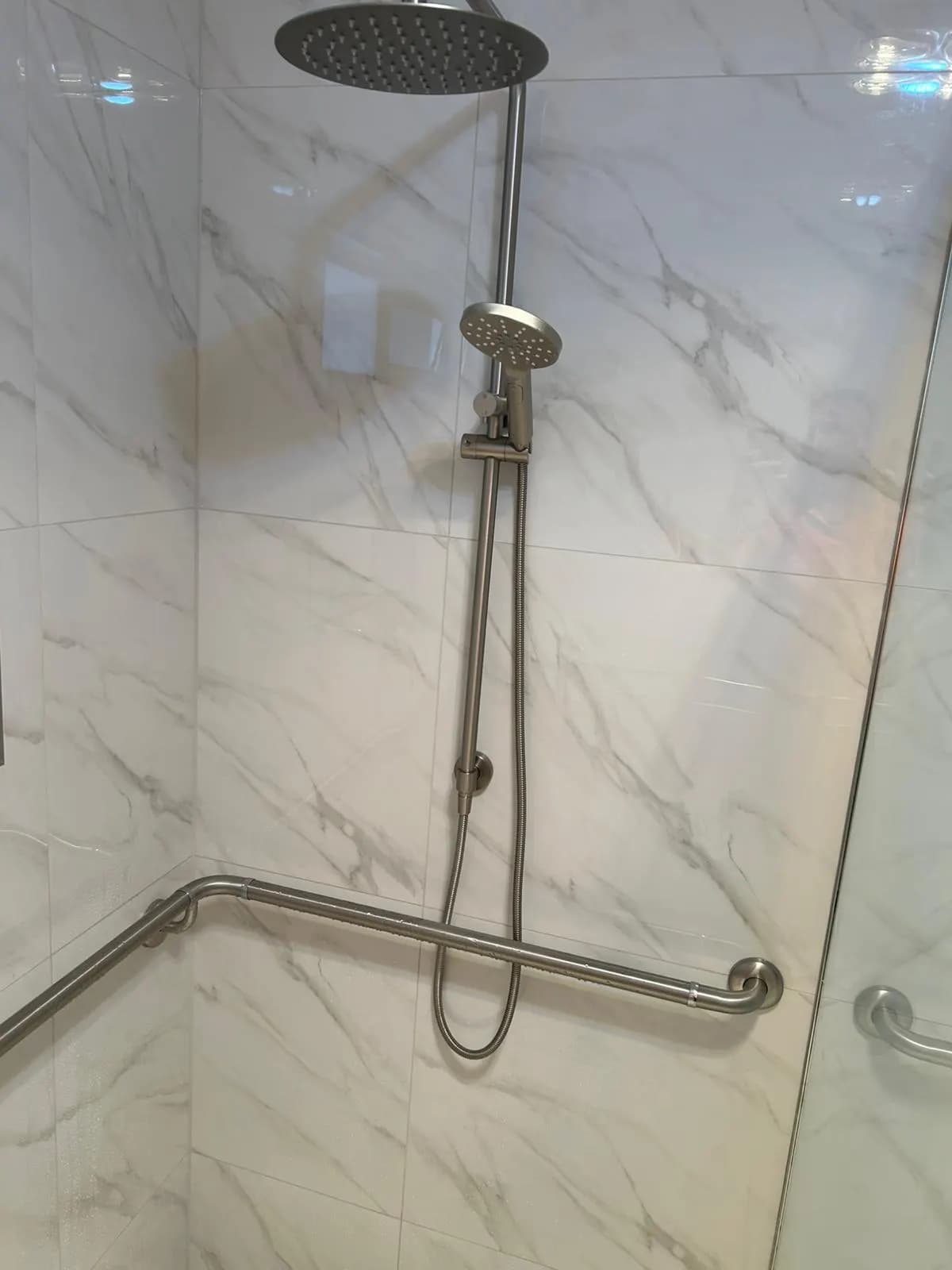
When a standard railwon’t fit.
Most bathrooms suit a standard grab rail. Some don’t. There may be a window in the way, a shower that is not square, or a toilet close to the wall.
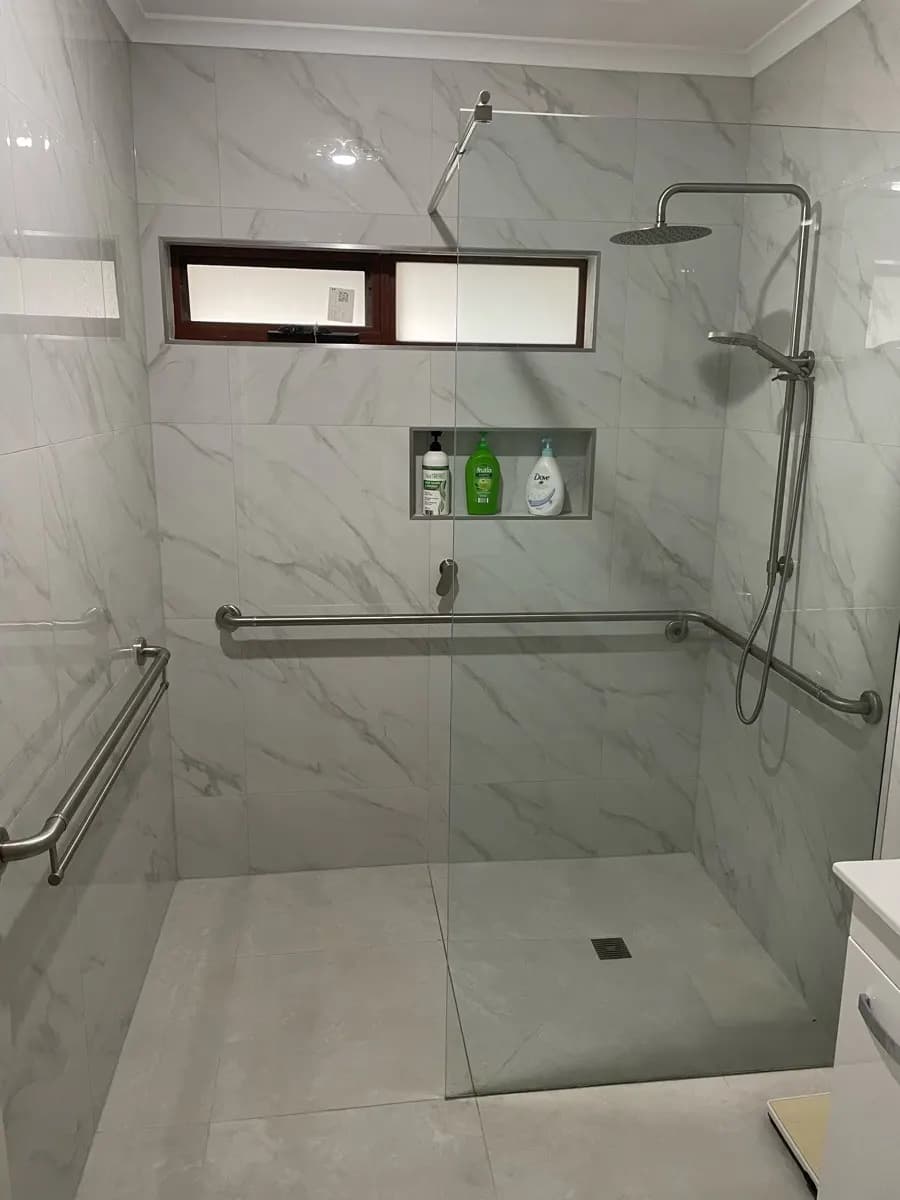
A modular grab rail is made from sections that join together. It can turn corners and change direction, so the rail goes exactly where you need to hold.
We watch how you move around the room, then place each rail where your hand naturally reaches.
Shapes wecan make.
We work out the right shape with you at the site visit.
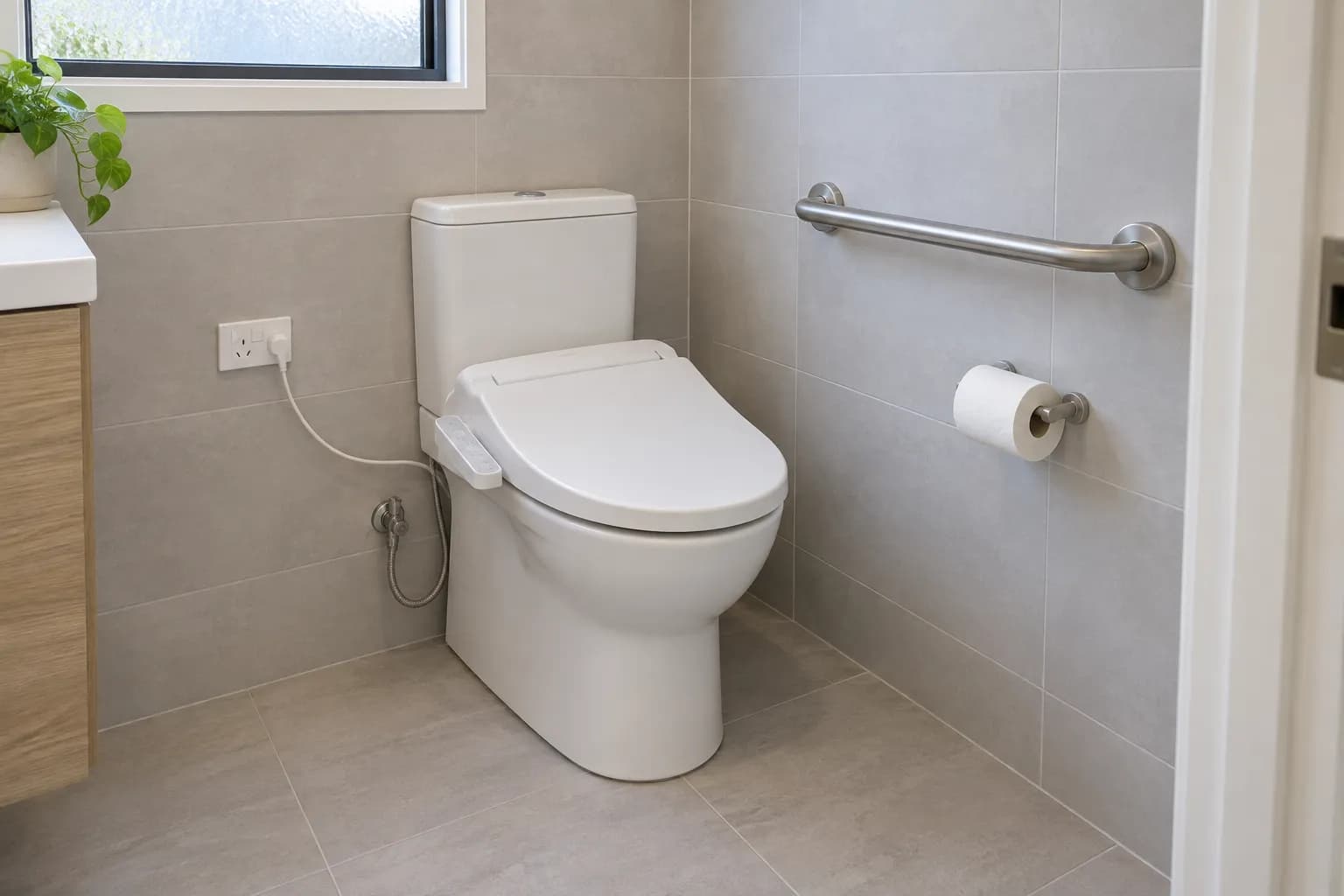
L-shaped, beside the toilet
One part to push up from and one to pull up on. It is the pair most people use.
Straight runs
Along a wall, beside a bath, or down a hallway, where you need support for longer.
T and U shapes, in the shower
Something to hold at the entry, near the seat, and under the shower head.
Floor-to-ceiling poles
For the middle of a room, beside a bed or a chair, where no wall is in reach.
Angled rails
Set at the angle you naturally follow as you stand up.
Towel rails you can hold
People grab towel rails anyway, but most aren’t fixed to take it. These are fixed as strongly as a grab rail.
Vital Ease at a glance
- Projects completed
- 2,000+
Projects completed
- Agreements with Home Care Package and NDIS providers
- 250+
Agreements with Home Care Package and NDIS providers
- Valued customers
- 1,000+
Valued customers



It’s the fixingthat keeps you safe.
A rail is only as strong as what it is fixed to. Tiles and plasterboard alone won’t hold a fall. So we fix every rail into the wall frame, and add extra support inside the wall where needed.
We mark each position on the wall before we drill, so you can check it first. If a wall can’t hold a rail, we will tell you and suggest a floor-to-ceiling pole instead.
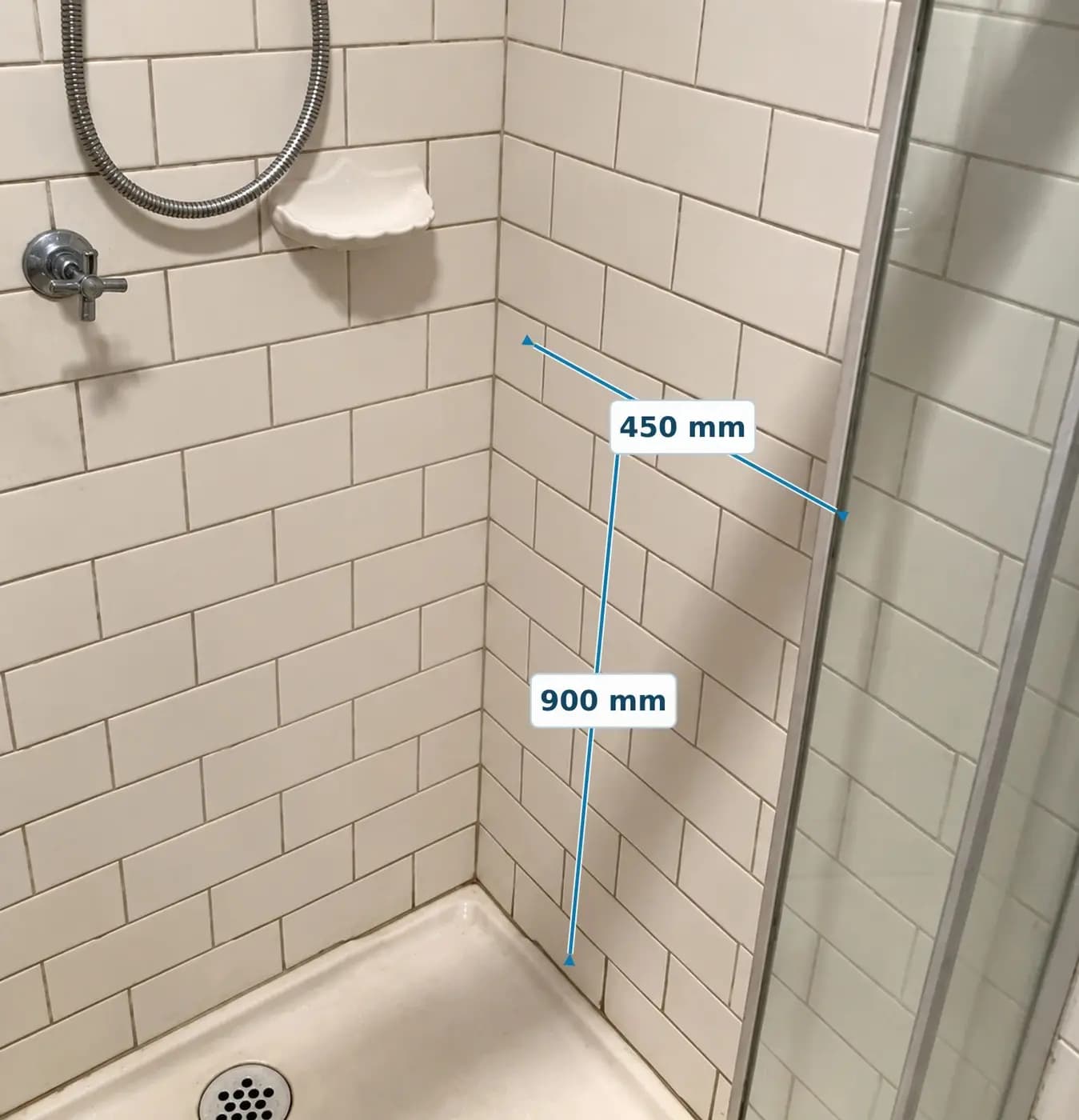
How itworks.
Home visit
We see how you use the bathroom and mark where the rails should go.
A clear, fixed quote
You get a written price, set out so your plan manager, case manager, or occupational therapist can approve it easily.
We check the wall
We find solid fixing points, or add support inside the wall where needed. This is what makes a rail safe.
Fitted, usually in a morning
Most bathroom rails are fitted in a morning, and you can use the room the same day.
Backed by warranty
All work is done by licensed tradespeople and backed by the relevant warranties. If anything is not right, just call us.
Bathroom rails we haveinstalled.
Real photos of our own work. Each caption explains where the rail sits and why.
Need astandard grab rail?
Most bathrooms only need a standard grab rail: straight, T-shaped, or a stabiliser. It is quicker and costs less to fit.
Not sure which is right for you? We will tell you at the site visit.
Not sure what you need? Call us for a free phone consultation, and we’ll talk you through the options. No obligation.
Questions
What people ask aboutmodular grab rails.
Frequently Asked Questions
What makes a rail “modular”?
Is a modular system funded the same way as a standard rail?
Can a rail be fixed to a tiled wall?
Who decides where the rails go?
Can’t see your question? Call us on +61 3 8658 1358 — we’re happy to talk it through.
Part of Hand Rails
More fromHand Rails.
More from Vital Ease
The rest of whatwe do.
Let us make your homework for you.
Ready to start your modification journey? Contact our team.
Ready to make your home safer and more accessible? Our team is here to help from your first consultation through to the final handover. Let’s talk about what’s possible for your home.